Adaptive Leadership Strategies for the 2026 U.S. Workplace

The Future of Leadership: Developing Adaptive Strategies for the 2026 U.S. Workplace
The U.S. workplace is a dynamic entity, constantly evolving under the influence of technological advancements, shifting societal values, economic fluctuations, and global events. As we cast our gaze towards 2026, it becomes abundantly clear that the traditional paradigms of leadership are no longer sufficient. The future demands a new breed of leader – one who is not just resilient in the face of change, but actively adaptive, capable of steering their organizations through uncharted waters with agility and foresight. This article delves into the critical need for Adaptive Leadership Strategies in the 2026 U.S. workplace, exploring the core tenets of adaptive leadership, the challenges leaders will face, and the actionable strategies they can implement to thrive.
The very fabric of work is undergoing a profound transformation. Hybrid models, remote work, the gig economy, and the increasing integration of artificial intelligence and automation are reshaping how, where, and by whom work is done. These shifts necessitate a fundamental rethinking of leadership approaches. Leaders must move beyond hierarchical command-and-control structures, embracing instead a more fluid, empathetic, and innovative style that empowers teams and fosters a culture of continuous learning and adaptation. The ability to pivot quickly, embrace ambiguity, and inspire collective action will be the hallmarks of successful leadership in the coming years. Understanding and implementing effective Adaptive Leadership Strategies will be paramount for any organization aiming to maintain relevance and competitive advantage.
Understanding Adaptive Leadership: More Than Just Resilience
Before diving into specific strategies, it’s crucial to define what adaptive leadership truly entails. It’s often mistakenly conflated with resilience, but while resilience is about bouncing back from adversity, adaptive leadership is about learning and evolving from it. It’s a proactive approach to leading change, not just reacting to it. Adaptive leaders don’t just solve problems; they challenge the status quo, identify underlying systemic issues, and mobilize people to tackle complex, often ill-defined, challenges that lack clear-cut solutions. This type of leadership is particularly vital when facing novel challenges where past solutions are inadequate.
Ron Heifetz, one of the pioneers of adaptive leadership theory, distinguishes between ‘technical problems’ and ‘adaptive challenges.’ Technical problems have known solutions and can be solved by experts. Adaptive challenges, however, require individuals and organizations to change their values, beliefs, habits, or priorities. They demand learning, experimentation, and a willingness to let go of old ways of thinking and operating. The 2026 U.S. workplace will be rife with adaptive challenges, from navigating the ethical implications of AI to fostering inclusive cultures in increasingly diverse workforces. Therefore, mastering Adaptive Leadership Strategies is not merely an option, but a necessity.
Key Principles of Adaptive Leadership:
- Distinguish Between Technical and Adaptive Challenges: Leaders must accurately diagnose the nature of the challenge to apply the appropriate solution.
- Get on the Balcony: Step back from the immediate situation to gain perspective, observe patterns, and identify systemic issues.
- Regulate Distress: Manage the pace of change and the level of discomfort within the organization to prevent overwhelming people while still encouraging necessary shifts.
- Maintain Disciplined Attention: Keep the focus on the core adaptive challenge, preventing diversion to easier, technical problems.
- Give the Work Back to the People: Empower individuals and teams to take ownership of solving adaptive challenges, rather than providing all the answers.
- Protect Voices from Below: Create an environment where dissenting opinions and novel ideas are welcomed and heard, as they often hold crucial insights.
These principles form the bedrock upon which effective Adaptive Leadership Strategies are built. They emphasize a shift from hierarchical control to collaborative problem-solving, from knowing all the answers to asking the right questions, and from stability to continuous evolution.
The 2026 U.S. Workplace: A Landscape of Constant Change
To effectively develop and implement Adaptive Leadership Strategies, leaders must first understand the landscape they are navigating. The 2026 U.S. workplace will be characterized by several key trends, each presenting unique adaptive challenges:
1. Hyper-Digitalization and AI Integration:
Artificial intelligence, machine learning, and advanced automation will be deeply embedded in daily operations. This will necessitate leaders who can guide their teams through significant reskilling and upskilling, manage ethical considerations around AI, and leverage technology to enhance human capabilities rather than replace them. The adaptive challenge here is not just adopting new tools, but fundamentally rethinking processes, job roles, and the very nature of human-machine collaboration.
2. Evolving Workforce Demographics and Expectations:
The workforce will continue to become more diverse across generations, cultures, and backgrounds. Younger generations will increasingly prioritize purpose, flexibility, and work-life integration. Leaders will need to adapt their approaches to motivation, engagement, and talent retention, fostering inclusive environments where every voice is valued and heard. This requires adaptive shifts in organizational culture, communication styles, and reward systems.
3. The Pervasence of Hybrid Work Models:
The hybrid work model, a blend of remote and in-office work, is likely to become the standard. This presents adaptive challenges in maintaining team cohesion, fostering a strong organizational culture, ensuring equitable opportunities for all employees regardless of location, and optimizing physical and virtual workspaces. Leaders must develop new competencies in managing distributed teams and leveraging technology for seamless collaboration.
4. Increased Focus on ESG (Environmental, Social, and Governance):
Stakeholders, including employees, customers, and investors, will demand greater accountability from organizations regarding their environmental impact, social responsibility, and ethical governance. Leaders will need to integrate ESG principles into core business strategy, requiring adaptive changes in supply chains, product development, and corporate values. This is not merely a compliance issue but a strategic imperative that demands genuine commitment and systemic change.
5. Economic Volatility and Global Interconnectedness:
The global economy remains susceptible to disruptions, from geopolitical tensions to supply chain shocks. Leaders must be prepared to navigate uncertainty, make rapid decisions with incomplete information, and build resilient business models that can withstand unforeseen challenges. This calls for a high degree of organizational agility and a global mindset.
Given these complex and interconnected trends, the need for robust Adaptive Leadership Strategies cannot be overstated. Leaders who fail to adapt risk not only their own professional stagnation but also the long-term viability of their organizations.
Developing Core Adaptive Leadership Competencies
So, what specific competencies do leaders need to cultivate to master Adaptive Leadership Strategies for the 2026 U.S. workplace? It’s a blend of cognitive, emotional, and relational skills.
1. Cultivating Emotional Intelligence and Empathy:
In an era of rapid change and increased stress, leaders must possess high emotional intelligence to understand and manage their own emotions, as well as those of their teams. Empathy becomes even more crucial in diverse and distributed workforces, allowing leaders to connect with employees, understand their unique challenges, and foster a supportive environment. An empathetic leader can better regulate distress within the team and build trust, which is essential for tackling adaptive challenges.
2. Fostering a Growth Mindset and Continuous Learning:
Adaptive leaders understand that learning is not a one-time event but a continuous journey. They model a growth mindset, embracing challenges as opportunities for learning and encouraging their teams to do the same. This involves actively seeking out new information, experimenting with new approaches, and being open to feedback. Organizations led by individuals with a strong growth mindset are inherently more agile and better equipped to implement Adaptive Leadership Strategies.
3. Enhancing Strategic Foresight and Scenario Planning:
While adaptive leadership is about responding to the present, it also involves anticipating the future. Leaders need to develop skills in strategic foresight, identifying emerging trends, and conducting scenario planning to prepare for various potential futures. This doesn’t mean predicting the future with certainty, but rather developing the organizational muscle to respond effectively to a range of possibilities. This proactive element is a key component of effective Adaptive Leadership Strategies.
4. Building Psychological Safety and Trust:
To encourage experimentation and learning from failure, leaders must create environments where employees feel psychologically safe to take risks, voice concerns, and admit mistakes without fear of punishment. Trust is the bedrock of such an environment, allowing teams to openly discuss adaptive challenges and co-create solutions. Without psychological safety, critical information may be withheld, hindering the organization’s ability to adapt.
5. Developing Strong Communication and Facilitation Skills:
Adaptive leaders are expert communicators and facilitators. They can articulate complex adaptive challenges clearly, engage diverse stakeholders in dialogue, and facilitate constructive discussions that lead to shared understanding and commitment. This includes the ability to listen actively, ask powerful questions, and mediate conflicts effectively. Clear and consistent communication is vital when implementing Adaptive Leadership Strategies across a dispersed workforce.
Actionable Strategies for Adaptive Leaders in 2026
With a clear understanding of the landscape and the necessary competencies, let’s explore actionable Adaptive Leadership Strategies that leaders can implement to prepare for and thrive in the 2026 U.S. workplace.
1. Empowering Decentralized Decision-Making:
In a rapidly changing environment, centralized decision-making can be a bottleneck. Adaptive leaders push decision-making authority down to the lowest appropriate levels, empowering teams and individuals closest to the action to make informed choices. This fosters agility, speeds up response times, and increases employee engagement. It requires trust in employees’ capabilities and a willingness to accept that not every decision will be perfect, but the learning derived from them is invaluable.

2. Fostering a Culture of Experimentation and Learning from Failure:
Adaptive challenges often have no clear solutions, necessitating experimentation. Leaders must create a culture where ‘fast failures’ are seen as learning opportunities, not reasons for blame. This involves encouraging pilots, prototypes, and iterative approaches. By de-stigmatizing failure, leaders unlock innovation and accelerate the learning cycles necessary for adaptation. This is a cornerstone of effective Adaptive Leadership Strategies, particularly in a tech-driven workplace.
3. Investing in Continuous Learning and Upskilling Programs:
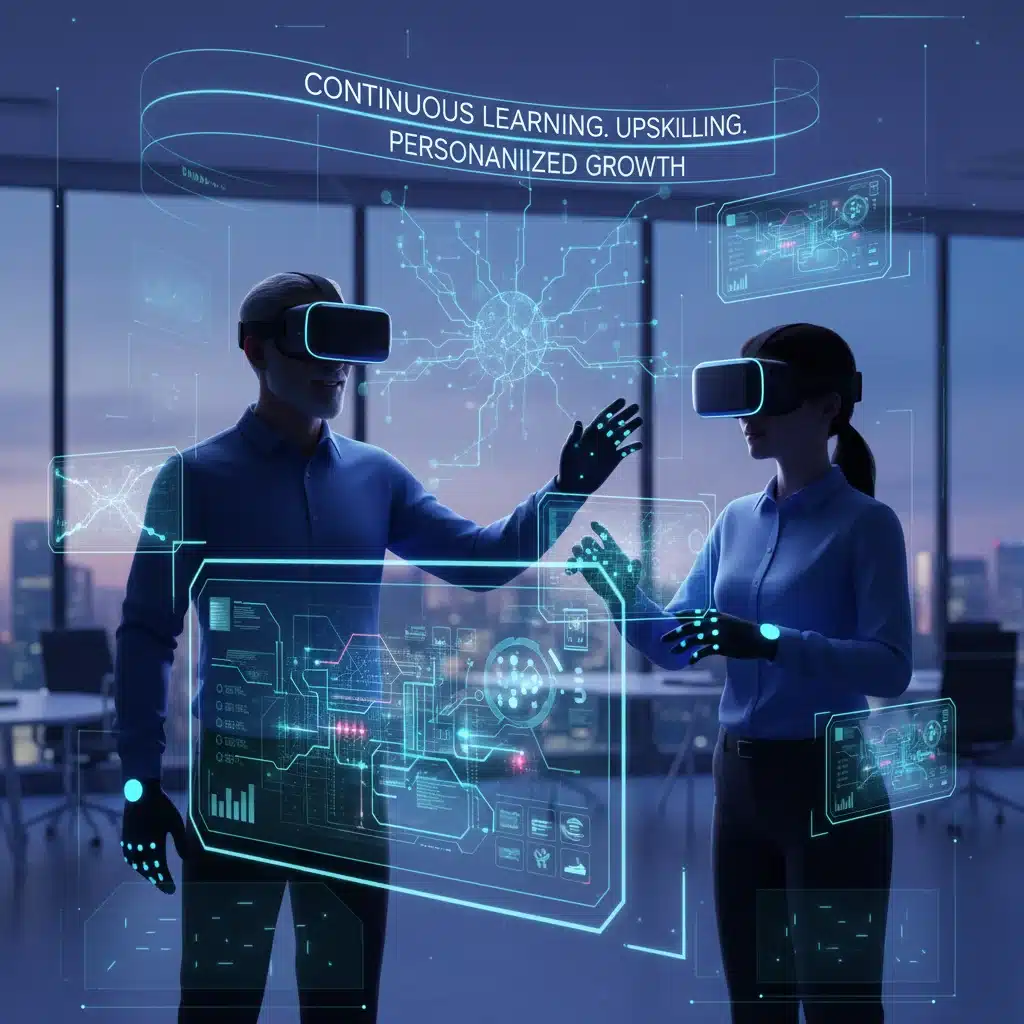
With the rapid pace of technological change, skills can quickly become obsolete. Adaptive leaders prioritize continuous learning, investing in robust upskilling and reskilling programs for their workforce. This not only keeps the organization competitive but also demonstrates a commitment to employee development, boosting morale and retention. This includes leveraging new technologies for learning, such as VR/AR training and AI-powered personalized learning paths. Implementing such programs is a tangible way to enact Adaptive Leadership Strategies.
4. Building Diverse and Inclusive Teams:
Diversity of thought, experience, and background is a powerful asset when tackling adaptive challenges. Diverse teams are more likely to generate innovative solutions, challenge assumptions, and identify blind spots. Adaptive leaders actively champion diversity, equity, and inclusion, ensuring that all voices are heard and valued. An inclusive environment is more resilient and better equipped to navigate the complexities of the 2026 workplace.
5. Practicing "Holding the Space" for Difficult Conversations:
Adaptive change often involves discomfort and resistance. Leaders must be skilled at "holding the space" for difficult conversations, allowing tensions to surface, and facilitating dialogue around conflicting values or perspectives. This means staying calm under pressure, listening deeply, and guiding the conversation towards productive outcomes, even when emotions run high. This emotional labor is a critical, often overlooked, aspect of Adaptive Leadership Strategies.
6. Leveraging Data and Analytics for Informed Decision-Making:
While adaptive leadership isn’t solely about data, data-driven insights are invaluable. Leaders should leverage analytics to understand trends, measure the impact of interventions, and identify areas requiring adaptive change. This involves investing in data literacy across the organization and using data not just to confirm biases, but to challenge assumptions and inform strategic pivots. Integrating data effectively enhances the robustness of any Adaptive Leadership Strategies.
7. Cultivating Networks and External Partnerships:
No organization exists in a vacuum. Adaptive leaders recognize the value of external networks and partnerships. Collaborating with other companies, industry associations, academic institutions, and even competitors can provide fresh perspectives, access to new resources, and opportunities for co-creation. These external engagements can be crucial for anticipating future trends and developing innovative solutions to shared adaptive challenges. Expanding one’s network is a proactive element of strong Adaptive Leadership Strategies.
8. Prioritizing Well-being and Mental Health:
The constant pressure of change can take a toll on employees. Adaptive leaders understand that a healthy workforce is a productive and adaptable one. They prioritize well-being and mental health initiatives, fostering a culture where employees feel supported and have access to resources. This includes promoting work-life balance, reducing burnout, and destigmatizing mental health discussions. A focus on human capital is integral to sustainable Adaptive Leadership Strategies.
Measuring the Impact of Adaptive Leadership
How do organizations know if their Adaptive Leadership Strategies are effective? Measuring the impact of adaptive leadership goes beyond traditional KPIs. It involves looking at indicators such as:
- Organizational Agility: The speed and effectiveness with which the organization can pivot in response to new challenges or opportunities.
- Innovation Rate: The number of new ideas, products, or processes generated and successfully implemented.
- Employee Engagement and Retention: High levels of engagement and low turnover indicate a thriving, adaptive culture.
- Learning Culture Index: Metrics around participation in learning programs, knowledge sharing, and feedback loops.
- Psychological Safety Scores: Surveys or assessments indicating employees’ comfort in taking risks and speaking up.
- Problem-Solving Effectiveness: The organization’s ability to successfully address complex, ambiguous challenges.
By regularly assessing these areas, leaders can refine their Adaptive Leadership Strategies and ensure they are building a truly future-ready organization. It’s an ongoing process of learning, adjustment, and improvement.
The Personal Journey of an Adaptive Leader
Becoming an adaptive leader is not just about implementing strategies; it’s a personal journey of self-awareness and continuous development. It requires a willingness to challenge one’s own assumptions, biases, and comfort zones. Leaders must be reflective, seeking feedback and engaging in self-assessment to identify areas for growth. They must also be resilient themselves, capable of navigating their own emotional responses to uncertainty and complexity. The journey towards mastering Adaptive Leadership Strategies is a marathon, not a sprint, demanding sustained effort and a deep commitment to personal and organizational evolution.
This personal transformation often involves:
- Self-Reflection: Regularly evaluating one’s leadership style, decisions, and impact.
- Seeking Feedback: Actively soliciting constructive criticism from peers, subordinates, and superiors.
- Mentorship and Coaching: Engaging with mentors or coaches who can provide guidance and challenge perspectives.
- Mindfulness Practices: Developing practices that enhance presence, focus, and emotional regulation.
- Embracing Discomfort: Recognizing that personal growth often occurs outside of one’s comfort zone.
Ultimately, the effectiveness of any Adaptive Leadership Strategies hinges on the leader’s own capacity for adaptation and growth. It’s about leading by example, demonstrating the very behaviors and mindsets that are being asked of the organization.
Conclusion: Leading into the Adaptive Future
The 2026 U.S. workplace will be a landscape of unprecedented change and opportunity. The leaders who will not only survive but thrive in this environment will be those who embrace Adaptive Leadership Strategies. This means moving beyond traditional management paradigms to cultivate a leadership style that is empathetic, agile, foresightful, and deeply committed to continuous learning and empowerment.
By understanding the nature of adaptive challenges, developing crucial competencies like emotional intelligence and strategic foresight, and implementing actionable strategies such as decentralized decision-making and fostering a culture of experimentation, leaders can build resilient, innovative, and human-centric organizations. The journey to becoming an adaptive leader is ongoing, requiring introspection, courage, and a steadfast commitment to evolving with the times. The future of work demands adaptive leaders, and those who answer the call will undoubtedly shape the success stories of tomorrow.
Embrace the challenge, cultivate the skills, and lead with adaptability – the 2026 U.S. workplace awaits your transformative leadership.