Manufacturing Reshoring: 3 Key Incentives Driving U.S. Production Growth in 2026
Manufacturing Reshoring: 3 Key Incentives Driving U.S. Production Growth in 2026
The landscape of global manufacturing has been undergoing a seismic shift in recent years, with a growing emphasis on bringing production back to domestic shores. This phenomenon, known as US manufacturing reshoring, is not merely a trend but a strategic imperative driven by a confluence of economic, geopolitical, and logistical factors. As we look towards 2026, the impetus for companies to reshore their operations is stronger than ever, fueled by a set of powerful incentives designed to bolster domestic production, enhance supply chain resilience, and create high-value jobs. This comprehensive analysis will delve into three key incentives that are acting as significant catalysts for this movement, examining their mechanisms, impact, and future implications for the American industrial base.
For decades, the allure of lower labor costs and less stringent regulations in overseas markets led to a mass exodus of manufacturing capabilities from the United States. However, recent global disruptions, including the COVID-19 pandemic, geopolitical tensions, and escalating shipping costs, have exposed the vulnerabilities inherent in extended global supply chains. These challenges have prompted a re-evaluation of offshore strategies, with many companies now recognizing the long-term benefits of localized production. The push for US manufacturing reshoring is a multifaceted endeavor, supported by both governmental policies and evolving corporate strategies, all aiming to foster a more robust and self-reliant domestic economy.
Understanding these incentives is crucial for businesses contemplating a return to American soil, policymakers seeking to strengthen the national industrial base, and investors looking to capitalize on emerging opportunities. By 2026, the cumulative effect of these incentives is projected to significantly reshape the manufacturing sector, leading to increased domestic output, technological innovation, and a more secure economic future. Let’s explore these pivotal drivers in detail.
1. Government Tax Credits and Financial Incentives
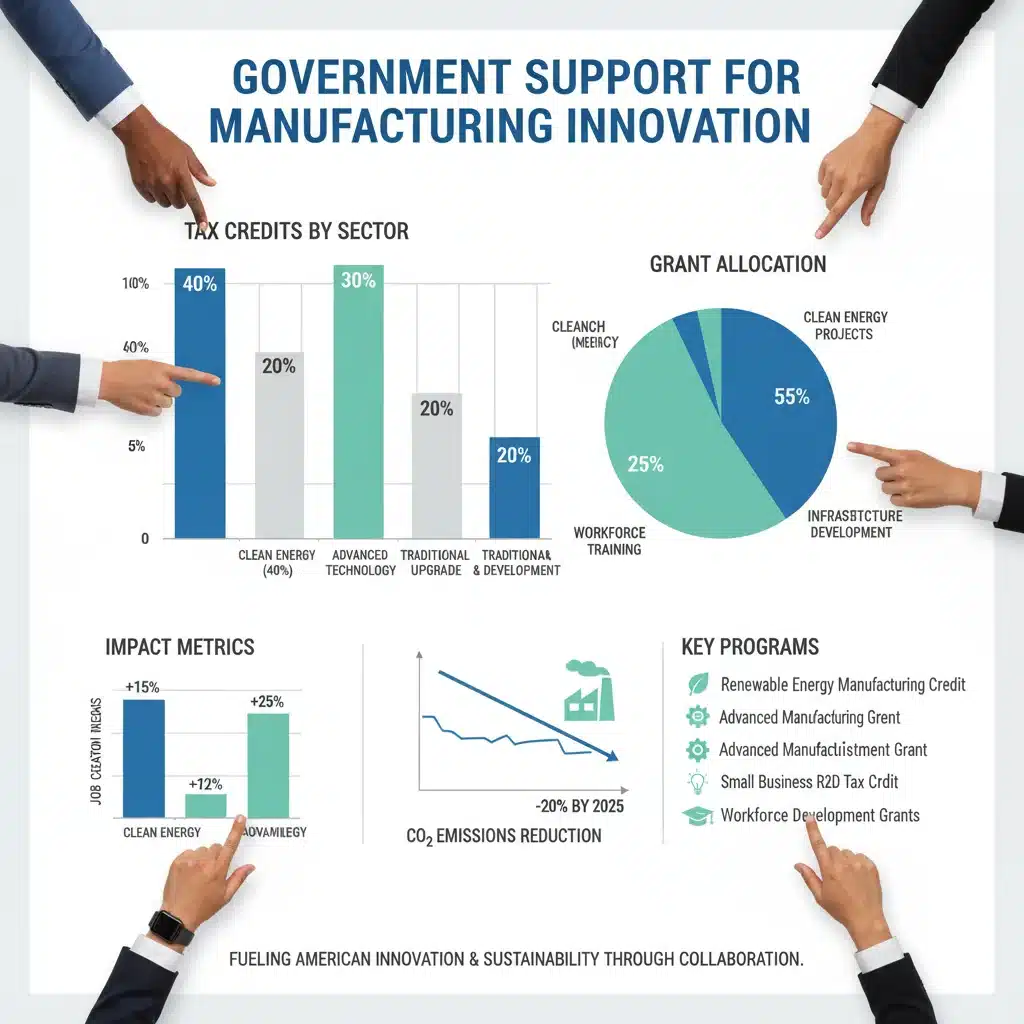
One of the most direct and potent incentives driving US manufacturing reshoring is the array of government tax credits and financial assistance programs. Both federal and state governments have recognized the strategic importance of revitalizing domestic manufacturing and have implemented policies specifically designed to make reshoring financially attractive. These incentives aim to offset the initial costs associated with relocating operations, investing in new equipment, and training a skilled workforce.
Federal Initiatives
At the federal level, several key pieces of legislation have been instrumental. The CHIPS and Science Act of 2022, for instance, is a landmark bill providing over $52 billion in subsidies for American semiconductor research, development, and production. This act is a prime example of targeted industrial policy aimed at bringing critical manufacturing capabilities back to the U.S., specifically in an industry vital for national security and economic competitiveness. The incentives include manufacturing investment tax credits, grants for facility construction and expansion, and funding for workforce development programs.
Beyond semiconductors, other federal programs, though not always explicitly labeled as ‘reshoring’ initiatives, offer significant financial benefits that indirectly support the movement. These include various tax deductions for domestic manufacturing activities, accelerated depreciation schedules for capital investments, and research and development (R&D) tax credits. These R&D credits are particularly appealing for companies looking to innovate and adopt advanced manufacturing technologies upon reshoring, effectively reducing their tax burden while fostering technological advancement.
State and Local Programs
Complementing federal efforts are numerous state and local incentive programs. These often include property tax abatements, sales tax exemptions on manufacturing equipment, low-interest loans, and direct grants for job creation. States actively compete to attract manufacturing businesses, offering bespoke incentive packages tailored to the specific needs of companies considering reshoring. For example, many states offer ‘clawback’ provisions, where incentives are tied to specific job creation or investment targets, ensuring accountability and tangible benefits for the local economy.
Economic development agencies at the state and local levels play a crucial role in connecting businesses with these incentives. They often provide assistance with site selection, permitting, and navigating regulatory landscapes, further easing the transition for companies looking to reshore. The competitive nature of these programs means that companies with strong business cases for reshoring can often negotiate highly favorable terms, significantly improving their financial viability.
The cumulative effect of these government tax credits and financial incentives is a powerful economic argument for US manufacturing reshoring. By reducing upfront costs, lowering operational expenses, and de-risking investments, these programs directly address some of the primary financial barriers that previously favored offshore production. As these incentives continue to evolve and become more targeted, their impact on encouraging domestic production growth is expected to intensify by 2026.
2. Enhanced Supply Chain Resilience and Risk Mitigation
The second major incentive driving US manufacturing reshoring is the imperative for enhanced supply chain resilience and comprehensive risk mitigation. The past few years have starkly illustrated the fragility of global supply chains, prompting a fundamental re-evaluation of strategies that prioritize cost savings over reliability and security. Companies are increasingly willing to absorb potentially higher domestic production costs in exchange for greater control, reduced lead times, and insulation from external shocks.
Lessons from Global Disruptions
The COVID-19 pandemic served as a wake-up call for many industries. Factory shutdowns in key overseas manufacturing hubs, coupled with unprecedented disruptions in global shipping and logistics, led to severe shortages of critical goods, from medical supplies to automotive components. These disruptions resulted in significant production delays, lost revenue, and damaged reputations for companies unable to meet demand. The experience highlighted the precariousness of relying heavily on single-source or geographically concentrated supply chains.
Beyond the pandemic, geopolitical tensions, trade disputes, and natural disasters continue to pose significant threats to global supply chain stability. Companies are now keenly aware that a localized supply chain, or at least a diversified one with a strong domestic component, offers a crucial buffer against such unforeseen events. By bringing production closer to home, businesses can reduce their exposure to international political instability, currency fluctuations, and tariffs.
Benefits of Localized Supply Chains
Reshoring manufacturing operations offers several tangible benefits in terms of supply chain resilience:
- Reduced Lead Times: Shorter distances between production facilities and end markets mean faster delivery, enabling companies to respond more quickly to changes in demand and market trends. This agility is a significant competitive advantage in today’s fast-paced economy.
- Improved Inventory Management: With shorter lead times, companies can adopt leaner inventory strategies, reducing carrying costs and the risk of obsolescence. Just-in-time (JIT) manufacturing becomes more feasible, optimizing capital utilization.
- Greater Control and Visibility: Domestic production allows for closer oversight of manufacturing processes, quality control, and labor practices. This enhanced visibility helps in maintaining product standards and ethical sourcing.
- Supply Chain Security: Localized production reduces the risk of intellectual property theft, counterfeiting, and reliance on foreign entities for critical components. This is particularly important for industries involving sensitive technologies or national security interests.
- Flexibility and Customization: Proximity to customers enables greater flexibility in product design, customization, and rapid prototyping, catering to specific market demands more effectively.
The drive for supply chain resilience is a strategic long-term play. While initial reshoring costs might be higher, the avoidance of future disruption-related losses, the ability to maintain consistent production, and the enhanced customer satisfaction derived from reliable delivery often outweigh these expenses. By 2026, companies prioritizing stability and risk mitigation will continue to view US manufacturing reshoring as a non-negotiable component of their operational strategy.
3. Access to Skilled Labor and Advanced Technology Integration
The third compelling incentive for US manufacturing reshoring lies in the access to a highly skilled workforce and the opportunity for seamless integration of advanced manufacturing technologies. While the perception of higher labor costs in the U.S. persists, the reality is that the American workforce offers a unique combination of technical expertise, innovation, and productivity, especially when coupled with cutting-edge automation and digital solutions.
A Highly Skilled Workforce
The U.S. boasts a robust educational infrastructure and a culture of innovation that fosters a highly skilled and adaptable labor pool. While certain manufacturing roles may require specific training, there is a strong foundation of engineering talent, IT professionals, and skilled tradespeople available. Furthermore, government programs, educational institutions, and industry associations are increasingly collaborating to develop specialized training programs and apprenticeships tailored to the needs of modern manufacturing, addressing any potential skill gaps.
The emphasis on STEM (Science, Technology, Engineering, and Mathematics) education and vocational training is creating a new generation of workers proficient in robotics, artificial intelligence, data analytics, and advanced materials – all critical for the factories of the future. This skilled workforce is not just about manual labor; it’s about problem-solving, continuous improvement, and the ability to operate complex machinery and software systems.
Integration of Advanced Manufacturing Technologies
Reshoring to the U.S. provides an unparalleled opportunity for companies to embrace and integrate advanced manufacturing technologies, often referred to as Industry 4.0. These technologies include:
- Automation and Robotics: Implementing collaborative robots (cobots) and advanced automation systems can significantly increase efficiency, reduce manual labor requirements, and improve safety, thereby mitigating the impact of higher wage costs.
- Artificial Intelligence (AI) and Machine Learning (ML): AI and ML can optimize production processes, predict equipment failures, enhance quality control, and streamline supply chain logistics within a domestic setting.
- Additive Manufacturing (3D Printing): This technology allows for rapid prototyping, on-demand production of complex parts, and customized manufacturing, reducing waste and lead times.
- Internet of Things (IoT): Connecting machines, sensors, and systems across a factory floor enables real-time data collection and analysis, leading to predictive maintenance, optimized energy consumption, and improved operational efficiency.
- Data Analytics: Leveraging big data to gain insights into production performance, customer demand, and market trends empowers companies to make more informed decisions and drive continuous improvement.
By investing in these technologies, companies can achieve higher levels of productivity, precision, and innovation, making their domestic operations highly competitive. The combination of a skilled workforce capable of managing these advanced systems and the proximity to technology developers and research institutions creates a powerful ecosystem for manufacturing excellence. The perceived cost disadvantage of U.S. labor is increasingly offset by the gains in productivity and quality achieved through technological integration.
By 2026, the synergy between a skilled American workforce and the rapid adoption of advanced manufacturing technologies will be a cornerstone of the US manufacturing reshoring movement, driving efficiency, innovation, and global competitiveness.

The Broader Impact of US Manufacturing Reshoring by 2026
The combined force of these three incentives—government financial support, the drive for supply chain resilience, and access to skilled labor and advanced technology—is poised to have a transformative impact on the U.S. economy by 2026. The implications extend far beyond individual companies, influencing national economic stability, technological leadership, and geopolitical standing.
Economic Growth and Job Creation
A significant increase in US manufacturing reshoring will undoubtedly lead to substantial job creation across various sectors. These jobs will not only be in direct manufacturing roles but also in supporting industries such as logistics, technology development, engineering, and service sectors. The multiplier effect of manufacturing jobs is well-documented, meaning each manufacturing position supports several other jobs throughout the economy. This influx of employment will boost local economies, increase consumer spending, and contribute to overall GDP growth.
Furthermore, the nature of these new manufacturing jobs will often be higher-skilled and higher-paying, reflecting the integration of advanced technologies. This shift will contribute to a stronger middle class and reduce income inequality, fostering a more equitable economic landscape.
Technological Advancement and Innovation Hubs
As more manufacturing returns to the U.S., there will be a natural acceleration of technological advancement and innovation. Domestic factories will become living laboratories for the development and deployment of cutting-edge technologies. This concentration of manufacturing and R&D will foster the growth of innovation hubs, attracting talent and investment, and positioning the U.S. at the forefront of global industrial innovation. The feedback loop between manufacturing operations, research institutions, and technology developers will shorten, leading to faster commercialization of new ideas and processes.
National Security and Strategic Autonomy
From a national security perspective, US manufacturing reshoring is paramount. Relying on foreign supply chains for critical goods, especially in defense, healthcare, and advanced technology sectors, poses significant vulnerabilities. Reshoring production of essential items ensures that the U.S. has the capacity to produce what it needs, when it needs it, without being subject to the whims of geopolitical rivals or global crises. This enhances strategic autonomy and strengthens national defense capabilities.
Environmental and Social Benefits
While often overlooked, reshoring can also yield environmental and social benefits. Shorter supply chains generally mean reduced transportation emissions. Moreover, U.S. manufacturing operations typically adhere to stricter environmental regulations and labor standards compared to many offshore locations. This can lead to more sustainable production practices and improved working conditions, aligning with corporate social responsibility goals and consumer preferences for ethically produced goods.
Challenges and Considerations for Reshoring
Despite the compelling incentives, US manufacturing reshoring is not without its challenges. Companies must carefully consider:
- Initial Capital Investment: The cost of building new facilities or upgrading existing ones, coupled with investment in advanced machinery, can be substantial.
- Workforce Training: While a skilled workforce exists, specific training programs may be necessary to adapt to new technologies and processes.
- Regulatory Compliance: Navigating U.S. environmental, labor, and safety regulations can be complex, though government agencies are often available to assist.
- Supply Chain Ecosystem Development: Re-establishing a robust domestic supplier network for raw materials and components may take time and effort.
However, the long-term benefits, particularly the enhanced resilience, strategic control, and access to innovation, are increasingly outweighing these initial hurdles. The proactive stance of the U.S. government through various incentives further mitigates many of these challenges, making the transition more feasible.
Conclusion: A Resilient Future for US Manufacturing by 2026
The drive for US manufacturing reshoring is a multifaceted and powerful movement, propelled by a strategic combination of government support, the critical need for supply chain resilience, and the unparalleled advantages of a skilled domestic workforce coupled with advanced technological integration. As we approach 2026, these three key incentives are not just encouraging but actively catalyzing a significant shift in the global manufacturing landscape.
The economic imperative of creating jobs and fostering growth, the strategic necessity of securing critical supply chains, and the competitive advantage of leveraging innovation are all converging to make reshoring a cornerstone of future U.S. industrial policy and corporate strategy. Companies that strategically embrace these incentives and navigate the associated challenges are positioning themselves for long-term success, stability, and competitiveness in an increasingly unpredictable world.
The vision for 2026 is clear: a stronger, more resilient, and technologically advanced U.S. manufacturing sector, capable of meeting domestic demand, leading global innovation, and underpinning national security. The incentives are in place, the need is evident, and the momentum for US manufacturing reshoring continues to build, promising a robust and prosperous future for American industry.