Automation’s Impact: US Productivity & Labor Market 2026 Outlook
Automation’s Role in US Productivity: A 2026 Outlook on Labor Market Shifts
The relentless march of technological progress continues to reshape our world, and few areas are experiencing as profound a transformation as the intersection of automation, US productivity, and the labor market. As we cast our gaze towards 2026, the outlines of an economy deeply influenced by intelligent machines, advanced robotics, and sophisticated algorithms are becoming increasingly clear. This comprehensive analysis will delve into the projected impact of automation on US productivity, examine the anticipated shifts within the labor market, and explore the strategies necessary for businesses, policymakers, and individuals to navigate this evolving landscape successfully.
The concept of automation is not new; industrial revolutions throughout history have been characterized by innovations that reduce manual labor and enhance output. However, the current wave of automation, driven by artificial intelligence (AI), machine learning (ML), and robotics, is fundamentally different. It’s not just about automating repetitive physical tasks; it’s about automating cognitive processes, decision-making, and even creative endeavors. This advanced form of automation has the potential to unlock unprecedented levels of US productivity, but it also brings significant implications for job roles, skill requirements, and societal structures.
Understanding the Current Landscape of Automation and US Productivity
Before we project into 2026, it’s crucial to understand the current state of automation and its nascent effects on US productivity. Over the past decade, investment in automation technologies has surged across various sectors, from manufacturing and logistics to healthcare and finance. Companies are adopting automation to improve efficiency, reduce operational costs, enhance quality, and increase output. The COVID-19 pandemic further accelerated this trend, as businesses sought ways to maintain operations amidst labor shortages and social distancing protocols.
Key Drivers of Automation Adoption:
- Technological Advancements: The rapid evolution of AI, machine learning, computer vision, and robotic capabilities makes automation more powerful, versatile, and cost-effective than ever before.
- Economic Imperatives: Global competition, rising labor costs, and the demand for faster, more customized production cycles compel businesses to seek efficiency gains through automation.
- Demographic Shifts: Aging populations and declining birth rates in many developed countries, including the US, contribute to labor shortages in certain sectors, making automation an attractive solution.
- Increased Data Availability: The proliferation of big data provides the fuel for AI-driven automation, enabling systems to learn, adapt, and optimize processes with greater accuracy.
The impact on US productivity has been a subject of intense debate. While some economists point to a ‘productivity paradox’ where significant technological investment hasn’t translated into commensurate productivity growth across the board, others argue that the benefits are still accumulating and will become more evident as these technologies mature and are more widely integrated. The lag between technological adoption and measurable productivity gains is a recurring theme in economic history, and the current wave of automation may be no exception. However, early indicators in specific industries demonstrate clear productivity enhancements, suggesting a broader trend is on the horizon.
Projecting Automation’s Impact on US Productivity by 2026
By 2026, we anticipate a more pronounced and widespread impact of automation on US productivity. The initial investments and pilot programs will have matured, leading to greater integration of automated systems into core business operations. This will translate into several key areas of growth and change:
Enhanced Operational Efficiency:
Automation will continue to streamline processes, reduce waste, and optimize resource allocation across industries. In manufacturing, advanced robotics will lead to higher production volumes and consistent quality. In logistics, autonomous vehicles and automated warehousing systems will accelerate supply chains. In service industries, AI-powered chatbots and automated customer support systems will handle routine inquiries, freeing human agents for more complex tasks. This increased efficiency directly contributes to higher US productivity.
Innovation and New Product Development:
Beyond efficiency, automation will catalyze innovation. AI-driven research and development will accelerate the discovery of new materials, drugs, and technologies. Automated design tools will allow engineers and designers to iterate faster and explore more possibilities. This innovation cycle, fueled by automation, will create new industries, products, and services, further boosting economic output and US productivity.
Improved Data-Driven Decision Making:
The synergy between automation and big data analytics will empower organizations with unprecedented insights. Automated data collection and analysis will provide real-time information, enabling more agile and informed decision-making. This will lead to better strategic planning, optimized marketing campaigns, and more effective resource deployment, all contributing to a more productive economy.
Challenges to Maximizing US Productivity Gains:
Despite the immense potential, realizing these productivity gains won’t be without challenges. The successful integration of automation requires significant upfront investment, robust cybersecurity measures, and a skilled workforce capable of managing and maintaining these advanced systems. Furthermore, regulatory frameworks will need to adapt to address ethical considerations and ensure equitable distribution of the benefits of automation. Overcoming these hurdles will be crucial for maximizing US productivity increases.
The Evolving US Labor Market by 2026: Shifts and Transformations
Perhaps the most talked-about aspect of automation is its effect on the labor market. By 2026, the US labor market will have undergone significant transformations, characterized by both job displacement and job creation, alongside a fundamental shift in required skills. The narrative is not simply one of ‘robots taking jobs,’ but rather a more nuanced story of job evolution and augmentation.
Job Displacement and Augmentation:
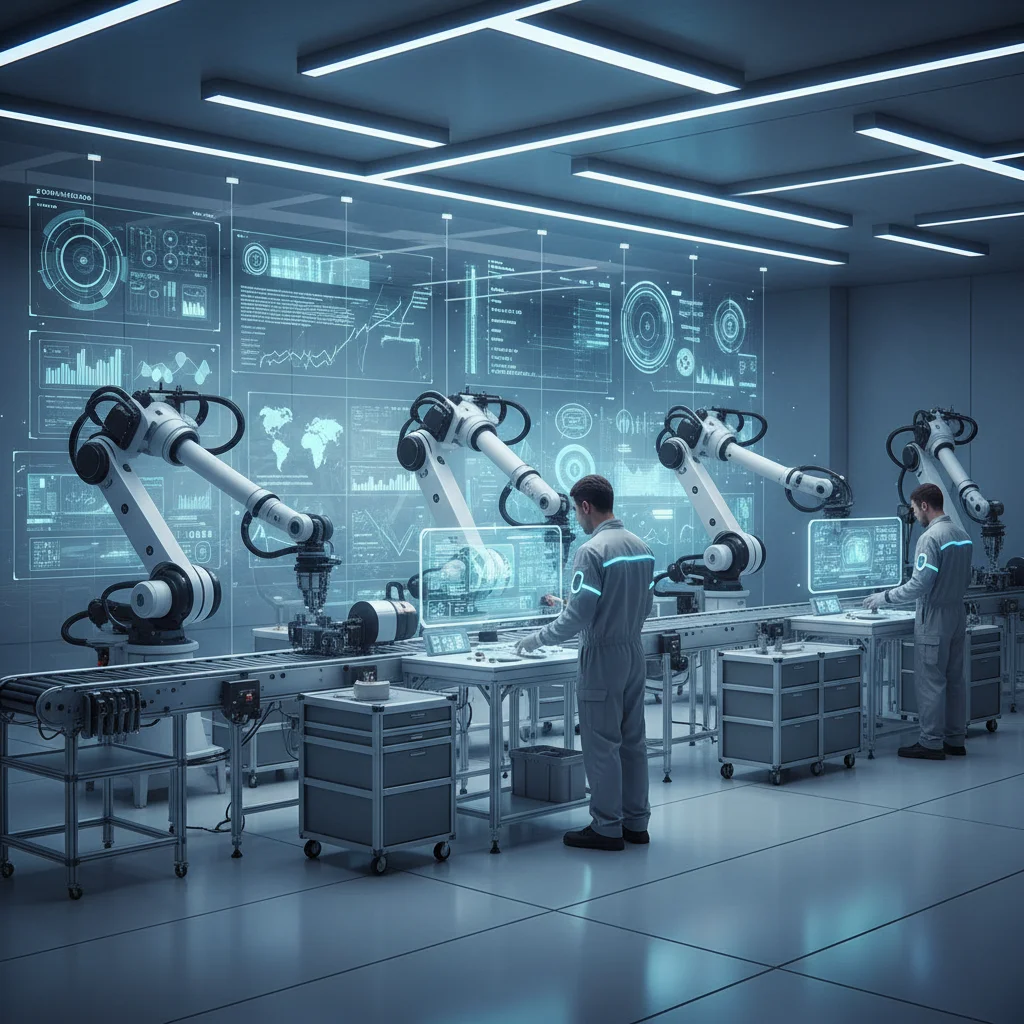
Certain routine, repetitive, and predictable tasks are most susceptible to automation. This includes roles in manufacturing assembly, data entry, administrative support, and some aspects of customer service. However, it’s important to differentiate between job displacement and task automation. Often, automation augments human capabilities rather than entirely replacing them. For example, a robotic assistant might handle heavy lifting, allowing a human worker to focus on precision assembly or quality control.
By 2026, we will see a clearer division of labor, where machines excel at tasks requiring speed, precision, and endurance, while humans focus on tasks demanding creativity, critical thinking, emotional intelligence, and complex problem-solving. This shift will necessitate a reevaluation of job descriptions and career paths.
Emergence of New Job Roles:
While some jobs may diminish, automation also creates entirely new roles. These include:
- Automation Specialists: Engineers and technicians to design, implement, and maintain automated systems.
- AI Trainers and Data Scientists: Professionals to develop, train, and manage AI algorithms.
- Robot Coordinators: Individuals who oversee fleets of robots and ensure their smooth operation.
- Human-AI Collaboration Managers: Roles focused on optimizing the interaction between human workers and AI systems.
- Ethical AI Oversight: Specialists to ensure AI systems operate fairly and transparently.
These new roles will require a blend of technical expertise, analytical skills, and soft skills, emphasizing the importance of adaptability and continuous learning in the future workforce.

The Growing Skills Gap:
The most significant challenge for the US labor market by 2026 will be addressing the widening skills gap. The skills required for the new economy are often vastly different from those emphasized in traditional education and training programs. There will be a high demand for STEM (Science, Technology, Engineering, and Mathematics) skills, as well as digital literacy, data analysis, and critical thinking. Equally important will be ‘human-centric’ skills such as communication, collaboration, creativity, and emotional intelligence – qualities that are difficult for machines to replicate.
Strategies for Navigating the Automated Future by 2026
To harness the benefits of automation for US productivity and mitigate its potential negative impacts on the labor market, a multi-faceted approach involving businesses, government, and individuals is essential.
For Businesses:
- Strategic Adoption: Companies should adopt automation not just for cost-cutting, but as a strategic tool to enhance innovation, improve quality, and create new value propositions. A ‘human-in-the-loop’ approach, where automation augments human capabilities, often yields the best results.
- Investment in Reskilling and Upskilling: Proactive investment in training programs for existing employees is crucial. Companies should identify roles at risk of automation and provide pathways for employees to acquire new, in-demand skills. This fosters loyalty and retains valuable institutional knowledge.
- Fostering a Culture of Lifelong Learning: Encourage continuous learning and adaptability within the workforce. This can involve offering internal courses, partnering with educational institutions, or providing access to online learning platforms.
- Ethical AI Implementation: Develop clear guidelines and ethical frameworks for the use of AI and automation to ensure fairness, transparency, and accountability.
For Government and Policymakers:
- Education Reform: Modernize educational curricula from K-12 through higher education to emphasize STEM, digital literacy, and critical thinking skills. Promote vocational training programs aligned with the needs of the automated economy.
- Support for Workforce Transition: Implement policies that support workers displaced by automation, such as expanded unemployment benefits, retraining subsidies, and job placement services. Explore concepts like universal basic income or wage insurance as potential safety nets.
- Incentivize Innovation and R&D: Provide tax incentives and funding for research and development in automation and AI, ensuring the US remains at the forefront of technological advancement.
- Develop Regulatory Frameworks: Create adaptable regulations that address the societal implications of automation, including data privacy, algorithmic bias, and labor protections, without stifling innovation.
For Individuals:
- Embrace Lifelong Learning: The most critical skill in an automated world is the ability to continuously learn and adapt. Individuals should proactively seek opportunities to acquire new skills, particularly in digital and analytical areas.
- Develop Human-Centric Skills: Focus on strengthening soft skills such as creativity, emotional intelligence, communication, collaboration, and critical thinking, which are inherently human and less susceptible to automation.
- Be Adaptable and Resilient: Understand that career paths may no longer be linear. Be open to new roles, industries, and learning experiences.
- Network and Collaborate: Build strong professional networks and collaborate with others. Many future jobs will involve complex problem-solving that requires diverse perspectives.
Sector-Specific Outlooks for Automation and US Productivity in 2026
The impact of automation will not be uniform across all sectors. Here’s a glance at how some key industries might evolve by 2026:
Manufacturing:
Expect continued high levels of automation, with advanced robotics handling more complex assembly, inspection, and logistics tasks. This will lead to ‘lights-out’ factories in some areas, but also to a greater demand for skilled technicians to manage and program these systems. Overall US productivity in manufacturing will see substantial gains.
Healthcare:
AI will revolutionize diagnostics, drug discovery, and personalized medicine. Robotic surgery will become more common. Automation will streamline administrative tasks, freeing healthcare professionals to focus on patient care. Demand for medical AI specialists and data scientists will surge, significantly boosting US productivity in medical research and routine operations.
Retail and E-commerce:
Automated warehouses, drone delivery, and AI-powered personalized shopping experiences will be standard. While some retail jobs may be displaced, new roles in e-commerce logistics management, data analytics, and customer experience design will emerge. Automation will dramatically improve the efficiency of supply chains and customer service, contributing to US productivity.
Finance and Banking:
AI will enhance fraud detection, algorithmic trading, and personalized financial advice. Automation will handle routine transactions and compliance checks. This will lead to a shift from transactional roles to those requiring strategic analysis, client relationship management, and ethical AI oversight, enhancing US productivity in financial analysis and service delivery.
Transportation and Logistics:
Autonomous vehicles, from self-driving trucks to delivery robots, will become more prevalent. Automated port operations and smart warehousing will be common. This will create new jobs in fleet management, remote operation, and infrastructure maintenance, while potentially displacing traditional driving roles. The efficiency gains will significantly boost US productivity in this sector.
The Ethical and Societal Dimensions of Automation by 2026
Beyond economic metrics, the rise of automation brings significant ethical and societal considerations that need to be addressed by 2026. These include:
Algorithmic Bias:
AI systems are only as unbiased as the data they are trained on. If training data reflects existing societal biases, the automated systems can perpetuate and even amplify these biases in hiring, lending, and other critical decisions. Ensuring fairness and transparency in algorithms will be a major ethical challenge.
Data Privacy and Security:
Increased automation relies on vast amounts of data, raising concerns about privacy, data ownership, and cybersecurity. Robust regulatory frameworks and technological safeguards will be necessary to protect sensitive information.
The Future of Work and Identity:
For many, work is tied to identity and purpose. As automation transforms job roles, society will need to grapple with how to provide meaningful opportunities and support for individuals, especially those whose traditional roles are automated. This touches upon broader questions of social safety nets and the distribution of wealth generated by increased US productivity.
The Digital Divide:
The benefits of automation and increased US productivity may not be evenly distributed. There’s a risk of exacerbating the digital divide, where those with access to technology and relevant skills thrive, while others lag behind. Policies aimed at equitable access to education and technology will be vital.

Conclusion: A Future Defined by Adaptability and Innovation for US Productivity
By 2026, automation will be an undeniable force driving US productivity and reshaping the labor market. While the prospect of such rapid change can seem daunting, it also presents an unparalleled opportunity for economic growth, innovation, and the creation of more fulfilling human-centric roles. The key to successfully navigating this future lies in a collective commitment to adaptability, continuous learning, and strategic foresight.
Businesses must embrace automation not as a mere cost-cutting measure, but as a catalyst for innovation and a tool for augmenting human potential. Governments must invest in education and social safety nets, fostering an environment where all citizens can thrive in the new economy. And individuals must cultivate a mindset of lifelong learning, developing both technical prowess and uniquely human skills that automation cannot replicate.
The future of US productivity and the labor market in 2026 is not predetermined; it will be shaped by the choices we make today. By working together, we can ensure that the automation revolution leads to a more prosperous, equitable, and innovative society for all.