Employee Well-being 2026: The Rise of Mental Health Support in US Companies

The landscape of corporate responsibility and employee care is undergoing a profound transformation. As we navigate the complexities of the 21st century, the health and well-being of a company’s most valuable asset – its people – have taken center stage. While physical health has long been a staple of employer-provided benefits, the crucial importance of employee mental health is now receiving the recognition it deserves. In 2026, a significant milestone has been reached: an estimated 20% of US companies are actively and substantially investing in comprehensive mental health support for their workforce. This isn’t just a fleeting trend; it’s a fundamental shift in how businesses perceive productivity, retention, and corporate culture.
For too long, mental health in the workplace was a topic often swept under the rug, stigmatized, and misunderstood. Employees struggled in silence, fearing repercussions on their careers if they disclosed their challenges. The COVID-19 pandemic, however, acted as a stark catalyst, forcing organizations to confront the pervasive nature of stress, anxiety, and burnout among their teams. Remote work blurred the lines between professional and personal life, increasing isolation for some and overwhelming others with constant demands. This period of unprecedented change illuminated the urgent need for robust mental health infrastructure within companies, not just as a perk, but as an essential component of a sustainable and resilient workforce.
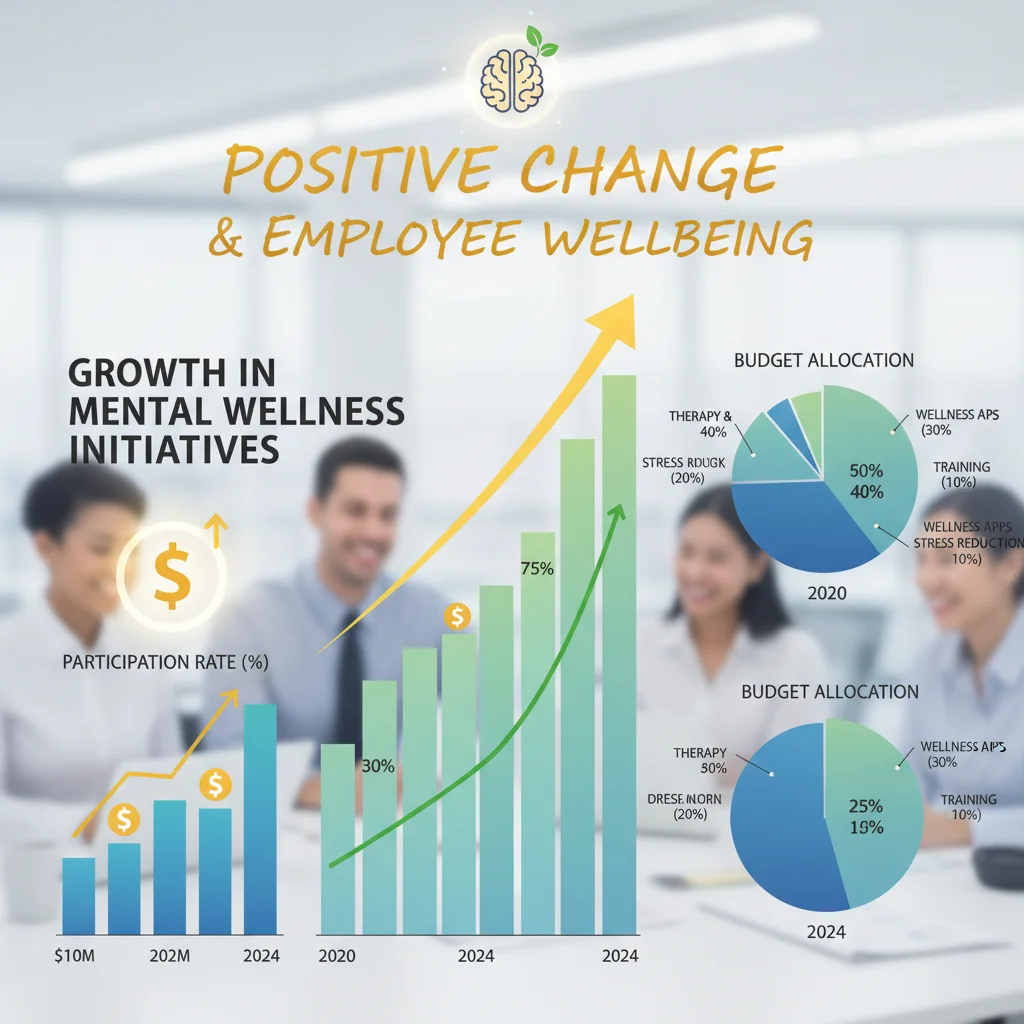
The statistic that 20% of US companies are now making significant investments in employee mental health by 2026 is not merely a number; it represents a growing awareness that a healthy mind is intrinsically linked to productivity, creativity, and overall job satisfaction. These investments manifest in various forms, from expanded Employee Assistance Programs (EAPs) and access to therapy and counseling services to proactive initiatives focused on stress reduction, mindfulness, and fostering a supportive work environment. This article will delve into the driving forces behind this pivotal shift, explore the types of programs being implemented, discuss the measurable benefits for both employees and employers, and offer insights into what the future of work holds for workplace mental health.
The Evolution of Workplace Wellness: From Physical to Psychological
Historically, workplace wellness programs primarily focused on physical health. Gym memberships, smoking cessation programs, and annual health screenings were common offerings. While undoubtedly beneficial, they often overlooked the silent battles many employees faced daily. The shift towards recognizing employee mental health as an equally, if not more, critical component of overall well-being has been gradual but accelerating. This evolution is driven by several interconnected factors.
Understanding the Costs of Neglecting Mental Health
The economic impact of poor mental health in the workplace is staggering. Studies from organizations like the World Health Organization (WHO) and various economic research bodies consistently highlight billions of dollars lost annually due to decreased productivity, absenteeism, presenteeism (being at work but not fully functional), and high turnover rates directly attributable to mental health issues. When employees struggle with anxiety, depression, or burnout, their ability to concentrate, make decisions, and interact effectively with colleagues diminishes significantly. Recognizing these tangible costs has provided a compelling business case for investing in mental health support.
Decreasing Stigma and Increasing Openness
A societal shift towards greater openness about mental health has played a crucial role. Public figures, celebrities, and even political leaders openly discussing their mental health journeys have helped to normalize these conversations. This trickles down into the workplace, making it easier for employees to seek help without fear of judgment or professional repercussions. Companies that actively promote an open dialogue about mental health are fostering environments where employees feel safe and supported, which is fundamental to successful intervention and prevention strategies for employee mental health.
The Rise of a Conscious Workforce
Today’s workforce, particularly younger generations, places a much higher value on work-life balance, purpose, and well-being. They are more likely to seek out employers who demonstrate genuine care for their employees’ holistic health, including their mental state. Companies that prioritize employee mental health are increasingly seen as employers of choice, attracting and retaining top talent in a competitive market. This conscious demand from employees has pushed organizations to re-evaluate their benefits packages and cultural offerings.
Key Investment Areas: What 20% of Companies Are Doing
The 20% of US companies leading the charge in employee mental health investment are not just offering token gestures. Their strategies are comprehensive, multi-faceted, and often integrated into the very fabric of their corporate culture. Here are some of the key areas where these companies are making significant strides:
1. Enhanced Employee Assistance Programs (EAPs)
While EAPs have existed for decades, their scope and accessibility have been dramatically expanded. Modern EAPs offer more than just crisis intervention; they provide proactive support, including a wider range of counseling options (e.g., cognitive-behavioral therapy, mindfulness-based stress reduction), financial counseling, legal advice, and even eldercare resources. Crucially, these enhanced EAPs often feature easier access, shorter wait times, and a greater emphasis on confidentiality to encourage utilization.
2. Direct Access to Mental Health Professionals
Beyond EAPs, many companies are directly partnering with mental health providers to offer subsidized or fully covered therapy and psychiatry services. This might include on-site counselors, virtual therapy platforms, or preferred provider networks. The goal is to remove financial and logistical barriers that often prevent employees from seeking professional help. Some innovative companies are even integrating mental health professionals into their broader HR or wellness teams, making support a more seamless part of the employee experience.
3. Training and Education for Managers and Employees
A critical component of effective employee mental health support is education. Companies are investing in training programs for managers to help them recognize signs of mental distress in their team members, initiate supportive conversations, and direct employees to appropriate resources. This training often includes mental health first aid, empathy building, and communication skills. Similarly, employees are offered workshops on stress management, resilience, mindfulness, and building healthy coping mechanisms.
4. Promoting Work-Life Balance and Flexibility
Recognizing that workplace stressors often stem from an imbalance between professional and personal life, leading companies are implementing policies that promote greater flexibility. This includes flexible work hours, remote or hybrid work options, generous paid time off, and discouraging a culture of ‘always-on’ availability. The emphasis is on creating an environment where employees feel empowered to manage their time and energy effectively, thereby reducing burnout and supporting their mental well-being.
5. Cultivating a Culture of Psychological Safety
Perhaps the most impactful, yet intangible, investment is in fostering a culture of psychological safety. This means creating an environment where employees feel safe to express their ideas, ask questions, admit mistakes, and discuss personal challenges without fear of negative consequences. Leaders play a crucial role in modeling this behavior, demonstrating vulnerability, and actively promoting empathy and understanding. Regular check-ins, open-door policies, and anonymous feedback mechanisms contribute to building this vital trust.
The Business Case for Prioritizing Employee Mental Health
The argument for investing in employee mental health extends far beyond altruism; it is a sound business strategy with demonstrable returns. Companies that prioritize the psychological well-being of their workforce experience a cascade of positive outcomes that directly impact their bottom line and overall success.
Increased Productivity and Performance
When employees are mentally healthy, they are more focused, engaged, and productive. Reduced stress and anxiety lead to better concentration, improved decision-making, and enhanced problem-solving abilities. This translates into higher quality work, fewer errors, and greater overall output for the organization. A workforce free from the debilitating effects of mental distress is a workforce operating at its peak potential.
Higher Employee Retention and Reduced Turnover
In today’s competitive job market, employees are increasingly seeking workplaces that value their well-being. Companies known for their robust mental health support programs are more likely to attract and retain top talent. High turnover is costly, involving recruitment expenses, onboarding time, and lost institutional knowledge. By creating a supportive environment, companies can significantly reduce turnover rates, saving substantial resources and fostering a more stable and experienced workforce.
Decreased Absenteeism and Presenteeism
Mental health conditions are a leading cause of absenteeism. When employees are struggling, they are more likely to take sick days or be unable to come to work. Equally damaging is presenteeism, where employees are physically at work but are too preoccupied or unwell to be effective. Investing in employee mental health helps address the root causes of these issues, leading to a healthier, more consistent attendance record and a more engaged presence when employees are at their desks.
Enhanced Employee Engagement and Morale
When employees feel cared for and supported by their employer, their morale and engagement naturally increase. A positive work environment, coupled with accessible mental health resources, fosters a sense of loyalty and belonging. Engaged employees are more motivated, more collaborative, and more likely to act as advocates for their organization, contributing to a positive employer brand and a thriving internal culture.
Improved Innovation and Creativity
Mental well-being is closely linked to cognitive functions such as creativity and innovation. When employees are not burdened by stress and anxiety, their minds are free to explore new ideas, think critically, and contribute fresh perspectives. Companies that foster psychological safety and support mental health are creating fertile ground for innovation, giving them a competitive edge in rapidly evolving markets.
Challenges and Considerations in Implementation
While the benefits are clear, implementing effective employee mental health programs is not without its challenges. Companies embarking on this journey must navigate several key considerations to ensure their efforts are impactful and sustainable.
Ensuring Confidentiality and Trust
One of the biggest hurdles is overcoming the fear of stigma and ensuring employees trust that their mental health concerns will be handled with utmost confidentiality. Companies must establish clear policies and communication around privacy, ensuring that personal health information is protected and that seeking help will not negatively impact an employee’s career trajectory.
Tailoring Programs to Diverse Needs
A one-size-fits-all approach rarely works for mental health. The workforce is diverse, with varying cultural backgrounds, socio-economic statuses, and personal experiences. Effective programs must be inclusive and accessible, offering a range of options that cater to different needs and preferences. This might include culturally competent therapists, support groups for specific demographics, or flexible access methods (e.g., virtual, in-person, text-based).
Measuring Impact and ROI
Demonstrating the return on investment (ROI) for mental health programs can be challenging, as many benefits are qualitative. However, companies are increasingly developing metrics to track program utilization, employee feedback, absenteeism rates, turnover related to well-being, and even productivity changes. Regularly evaluating these metrics helps refine programs and justify continued investment in employee mental health.
Leadership Buy-in and Consistent Communication
For any mental health initiative to succeed, it requires strong leadership buy-in and consistent communication from the top down. Leaders must champion these programs, model healthy behaviors, and regularly communicate the company’s commitment to employee well-being. Without this visible support, even the best-designed programs may fail to gain traction.

The Future of Employee Mental Health: Beyond 2026
The current trend of 20% of US companies investing significantly in employee mental health by 2026 is just the beginning. The future promises even deeper integration and innovation in workplace mental health strategies. We can anticipate several key developments:
Proactive and Preventative Approaches
The focus will increasingly shift from reactive crisis intervention to proactive prevention. This includes embedding mental well-being into daily work practices, promoting resilience training from day one, and creating environments that actively reduce stressors rather than just managing their aftermath. Wellness challenges, mindfulness breaks, and stress-reduction techniques will become commonplace.
Leveraging Technology and AI
Technology will play an even greater role in delivering scalable and personalized mental health support. AI-powered chatbots for initial assessments, personalized wellness apps, virtual reality (VR) for stress reduction, and data analytics to identify at-risk populations (while maintaining privacy) are just a few examples of how technology will enhance accessibility and effectiveness of employee mental health programs.
Integration with Physical Health and Total Well-being
The artificial divide between physical and mental health will continue to erode. Comprehensive well-being programs will seamlessly integrate both aspects, recognizing their interconnectedness. Nutritional guidance, sleep hygiene, physical activity, and mental resilience will be offered as a holistic package, promoting overall health and preventing chronic conditions.
Focus on Manager Training and Leadership Accountability
Managers will be increasingly recognized as frontline responders in mental health support. Their training will become more sophisticated, focusing not just on recognition and referral, but on creating psychologically safe team environments. Leadership accountability for employee well-being will also grow, with mental health metrics potentially influencing performance reviews and executive compensation.
Global Standards and Cross-Cultural Adaptations
As companies operate on a global scale, there will be a greater need for global standards in mental health support, coupled with nuanced cross-cultural adaptations. Understanding diverse cultural attitudes towards mental health and tailoring programs accordingly will be crucial for companies with international footprints.
Conclusion: A Healthier, Happier, and More Productive Workforce
The commitment of 20% of US companies to significantly invest in employee mental health by 2026 marks a pivotal moment in corporate history. It signifies a profound understanding that a thriving business is built upon a thriving workforce, and that mental well-being is as critical as physical health. This isn’t merely a compliance exercise or a feel-good initiative; it is a strategic imperative that yields tangible benefits in productivity, retention, engagement, and innovation.
As more companies follow suit, we can anticipate a future where mental health support is not an optional add-on but an integral, expected component of the employee experience. The ripple effects will extend beyond the workplace, contributing to a healthier society overall. By fostering environments where employees feel seen, heard, and supported in their mental health journeys, businesses are not only doing the right thing but are also building more resilient, adaptable, and ultimately, more successful organizations for the long term. The movement towards prioritizing employee mental health is a testament to progress, empathy, and enlightened leadership, paving the way for a more human-centric future of work.