Build High-Performance Sales Teams: 7 Steps to 150% Quota Attainment for US Startups

Building a High-Performance Sales Team: 7 Steps to Achieve 150% Quota Attainment for US Startups
In the fiercely competitive landscape of US startups, achieving rapid growth and market penetration is paramount. The engine that drives this growth is undeniably a robust and effective sales force. But it’s not enough to just have a sales team; you need a high-performance sales team capable of consistently exceeding expectations and hitting, or even surpassing, 150% quota attainment. This isn’t a pipe dream; it’s an achievable reality with a strategic, well-executed plan.
For many startups, the initial focus is often on product development and securing funding. However, once a viable product exists, the spotlight shifts to revenue generation, and that’s where the sales team becomes the linchpin of success. A sales team that operates at peak performance can transform a promising idea into a market leader, attracting further investment and ensuring long-term sustainability. This comprehensive guide will walk US startups through seven critical steps to cultivate such a team, ensuring you not only meet but dramatically exceed your sales targets.
Understanding the ‘High-Performance’ Sales Team Mindset
Before diving into the actionable steps, it’s crucial to define what a high-performance sales team truly embodies. It’s more than just individual top performers; it’s a cohesive unit where each member contributes to a synergistic whole, driven by shared goals, clear processes, and a culture of continuous improvement. These teams are characterized by:
- Consistent Over-Performance: Regularly exceeding quotas, often by significant margins.
- Exceptional Customer Relationships: Building trust and long-term partnerships, leading to repeat business and referrals.
- Adaptability and Resilience: Quickly adjusting to market changes, competitive pressures, and setbacks.
- Data-Driven Decisions: Utilizing analytics to refine strategies, identify opportunities, and optimize performance.
- Strong Internal Collaboration: Working seamlessly with marketing, product, and customer success teams.
- Continuous Learning and Development: A commitment to improving skills, knowledge, and processes.
Achieving 150% quota attainment isn’t about working harder; it’s about working smarter, with precision and purpose. It requires a foundational understanding of your market, your product, and most importantly, your sales talent.
Step 1: Define Your Ideal Sales Persona and Recruitment Strategy
The foundation of any high-performance sales team is its people. For a startup, hiring mistakes are costly, both in terms of time and resources. Therefore, defining your ideal sales persona is the crucial first step. This goes beyond just looking for ‘experience.’ Consider:
- Startup DNA: Does the candidate thrive in fast-paced, ambiguous environments? Can they wear multiple hats? Are they comfortable with rapid change?
- Industry Expertise: While not always mandatory, a candidate with experience in your specific industry or selling to your target market can significantly shorten ramp-up time.
- Specific Sales Skills: Are you selling a complex B2B SaaS product requiring consultative selling, or a transactional B2C product needing speed and volume? Tailor your search to these specific skill sets.
- Cultural Fit: This is paramount for a startup. Do they align with your company’s values? Are they collaborative, resilient, and proactive?
- Coachability and Growth Mindset: Can they absorb feedback, learn new techniques, and adapt their approach? A willingness to grow is more important than a polished resume for many startups.
Recruitment Strategy:
Once you have your persona, craft a recruitment strategy that attracts these individuals. Don’t just post on generic job boards. Consider:
- Referrals: Your network and existing employees are often the best source of quality candidates.
- Specialized Recruiters: Engage recruiters who understand the startup sales ecosystem and your specific industry.
- Online Platforms: LinkedIn, AngelList, and industry-specific forums can be valuable.
- Interview Process: Design a structured interview process that includes behavioral questions, role-playing scenarios, and technical assessments to gauge skills and cultural fit. Always involve multiple team members to get diverse perspectives.
Remember, you’re not just filling a seat; you’re building the core of your growth engine. Invest time and effort in finding the right people who can truly elevate your high-performance sales team.
Step 2: Implement Robust Onboarding and Continuous Training Programs
Hiring top talent is only half the battle; integrating them effectively and continuously developing their skills is equally vital for a high-performance sales team. A robust onboarding program ensures new hires are productive quickly, while ongoing training keeps the entire team sharp and adaptable.
Onboarding for Speed and Success:
- Structured 30-60-90 Day Plan: Outline clear objectives and milestones for new sales reps. This includes product knowledge, sales process mastery, CRM proficiency, and initial sales activities.
- Product Immersion: Ensure new hires deeply understand your product, its features, benefits, and competitive differentiators. They should be able to articulate its value proposition fluently.
- Sales Process and Methodology Training: Train them on your specific sales methodology (e.g., Challenger Sale, SPIN Selling, MEDDIC), your lead qualification process, and CRM usage.
- Shadowing and Mentorship: Pair new reps with experienced team members for shadowing calls, meetings, and demos. A mentorship program can provide invaluable guidance and support.
- Role-Playing and Practice: Create safe environments for new reps to practice their pitch, handle objections, and refine their closing techniques before engaging with real prospects.
Continuous Training for Peak Performance:
The market evolves, products change, and competitors emerge. Your high-performance sales team must evolve with them. Continuous training should include:
- Advanced Sales Skills Workshops: Focus on areas like negotiation, complex deal management, strategic account planning, and executive-level communication.
- Product Updates and New Features: Regular sessions to ensure the team is knowledgeable about all product developments and can articulate their value.
- Market Intelligence: Keep the team informed about industry trends, competitor analysis, and customer insights.
- Technology and Tools: Provide training on new sales enablement tools, CRM updates, and analytics platforms.
- Soft Skills Development: Communication, active listening, empathy, and resilience are critical for long-term success.
Investing in training isn’t an expense; it’s an investment in your team’s ability to drive 150% quota attainment.
Step 3: Develop a Clear, Repeatable Sales Process
A high-performance sales team doesn’t rely on individual heroics; it thrives on a well-defined, repeatable sales process. This process provides a roadmap for every sales interaction, ensuring consistency, efficiency, and predictability in your revenue generation.
Key elements of a robust sales process include:
- Lead Generation & Qualification: How do leads enter the funnel? What criteria define a qualified lead (e.g., BANT: Budget, Authority, Need, Timeline; MEDDIC)? Establish clear hand-off procedures between marketing and sales.
- Discovery & Needs Analysis: Define the questions and techniques reps should use to uncover prospect pain points, goals, and desired outcomes. This is where truly understanding the customer begins.
- Solution Presentation & Demonstration: How do you effectively showcase your product’s value? What materials are used? How do you tailor presentations to specific prospect needs?
- Objection Handling Strategy: Develop common objection responses and train reps on frameworks for effectively addressing concerns and building confidence.
- Proposal & Negotiation: Standardize your proposal structure and define negotiation boundaries.
- Closing Techniques: Provide reps with a variety of ethical closing techniques suitable for different situations.
- Post-Sale Follow-up & Hand-off: Ensure a smooth transition to customer success or account management to foster long-term relationships and reduce churn.
Document your sales process clearly and make it accessible to everyone. Regularly review and refine it based on performance data and market feedback. A well-defined process reduces ramp-up time for new hires, provides a framework for coaching, and allows you to identify bottlenecks and areas for improvement, all contributing to a more efficient and effective high-performance sales team.

Step 4: Implement a Performance-Driven Compensation and Incentive Structure
Motivation is a powerful driver for any sales professional. A carefully designed compensation plan and incentive structure are crucial for inspiring your high-performance sales team to reach 150% quota attainment and beyond. For US startups, this often needs to be both aggressive and sustainable.
Key Considerations for Compensation:
- Base Salary vs. Commission Split: Find the right balance. A higher base might attract more experienced talent, while a more aggressive commission structure can incentivize higher performance. For startups, a slightly lower base with a strong commission upside is common, reflecting the growth potential.
- Quota Attainment Tiers: Structure commissions to reward not just hitting quota, but exceeding it significantly. For example, a higher commission rate might kick in at 100%, 120%, and 150% of quota.
- Clear, Transparent Structure: Sales reps need to understand exactly how they earn their money. Ambiguity leads to demotivation.
- Spiffs and Bonuses: Introduce short-term incentives for specific behaviors (e.g., closing deals quickly, selling a new product, generating high-quality leads).
- Team-Based Incentives: While individual performance is key, consider small team bonuses or recognition for collaborative efforts, fostering a sense of shared success within your high-performance sales team.
- Long-Term Incentives: For startups, equity or stock options can be a powerful motivator, aligning reps’ success with the company’s long-term growth.
Regularly review your compensation plan to ensure it remains competitive and continues to drive the desired behaviors. Gather feedback from your sales team to understand what motivates them most. A well-constructed compensation plan is not just a cost; it’s an investment in inspiring your team to achieve extraordinary results.
Step 5: Leverage Technology and Sales Enablement Tools
In today’s digital age, a high-performance sales team is amplified by the right technology. Sales enablement tools streamline processes, provide valuable insights, and free up reps to do what they do best: sell. For US startups, efficient use of technology can be a significant competitive advantage.
Essential Tools for Your Sales Stack:
- Customer Relationship Management (CRM): A robust CRM (e.g., Salesforce, HubSpot, Zoho CRM) is non-negotiable. It serves as the central hub for all customer data, tracks interactions, manages pipelines, and provides reporting. Ensure your team is trained and actually uses it consistently.
- Sales Engagement Platforms: Tools like Salesloft or Outreach automate outreach sequences, track email opens, clicks, and replies, and help reps personalize communication at scale.
- Lead Intelligence & Prospecting Tools: ZoomInfo, Apollo.io, or Lusha provide contact data, company insights, and technographic information, helping reps identify and qualify leads more effectively.
- Sales Content Management: Platforms like Highspot or Seismic organize and distribute sales collateral, ensuring reps have access to the most up-to-date and relevant content for every stage of the sales cycle.
- Conversation Intelligence: Tools like Gong or Chorus record and analyze sales calls, identifying key trends, coaching opportunities, and successful talk tracks. This is invaluable for refining your sales process and training a high-performance sales team.
- E-signature and Contract Management: Streamline the closing process with tools like DocuSign or PandaDoc.
The goal is not to implement every tool available, but to strategically select those that genuinely enhance productivity, provide actionable insights, and support your sales process. Proper integration and ongoing training are key to maximizing the ROI of your sales tech stack and empowering your team to achieve 150% quota attainment.
Step 6: Foster a Culture of Accountability, Coaching, and Feedback
A truly high-performance sales team thrives in an environment of clear expectations, consistent coaching, and open feedback. This culture ensures everyone understands their role, feels supported in their development, and is continuously striving for improvement.
Accountability:
- Clear KPIs and Metrics: Define what success looks like beyond just quota attainment. Track activity metrics (calls, emails, meetings), conversion rates at each stage, average deal size, and sales cycle length.
- Regular Performance Reviews: Conduct consistent 1:1 meetings to review individual performance against KPIs, discuss progress, and identify challenges.
- Transparent Reporting: Make individual and team performance visible (within reason) to foster healthy competition and shared responsibility.
Coaching:
Sales managers are coaches, not just administrators. Effective coaching involves:
- Active Listening: Understanding the rep’s challenges and perspectives.
- Situational Coaching: Providing specific guidance on current deals, objection handling, or prospecting strategies.
- Skill Development: Identifying areas for improvement and providing resources or training to address them.
- Role-Playing: Practicing difficult scenarios in a safe environment.
- Positive Reinforcement: Recognizing and celebrating successes, even small ones, to build confidence and morale.
Feedback:
A two-way street, feedback should be:
- Constructive and Specific: Focus on observable behaviors and their impact, rather than personal traits.
- Timely: Deliver feedback as close to the event as possible.
- Actionable: Provide clear steps for improvement.
- Encouraged from Reps: Create an environment where reps feel comfortable providing upward feedback to management and peer feedback.
This culture of continuous improvement, driven by accountability, coaching, and feedback, is essential for maintaining a high-performance sales team and consistently hitting 150% quota attainment.
Step 7: Analyze, Optimize, and Celebrate Successes
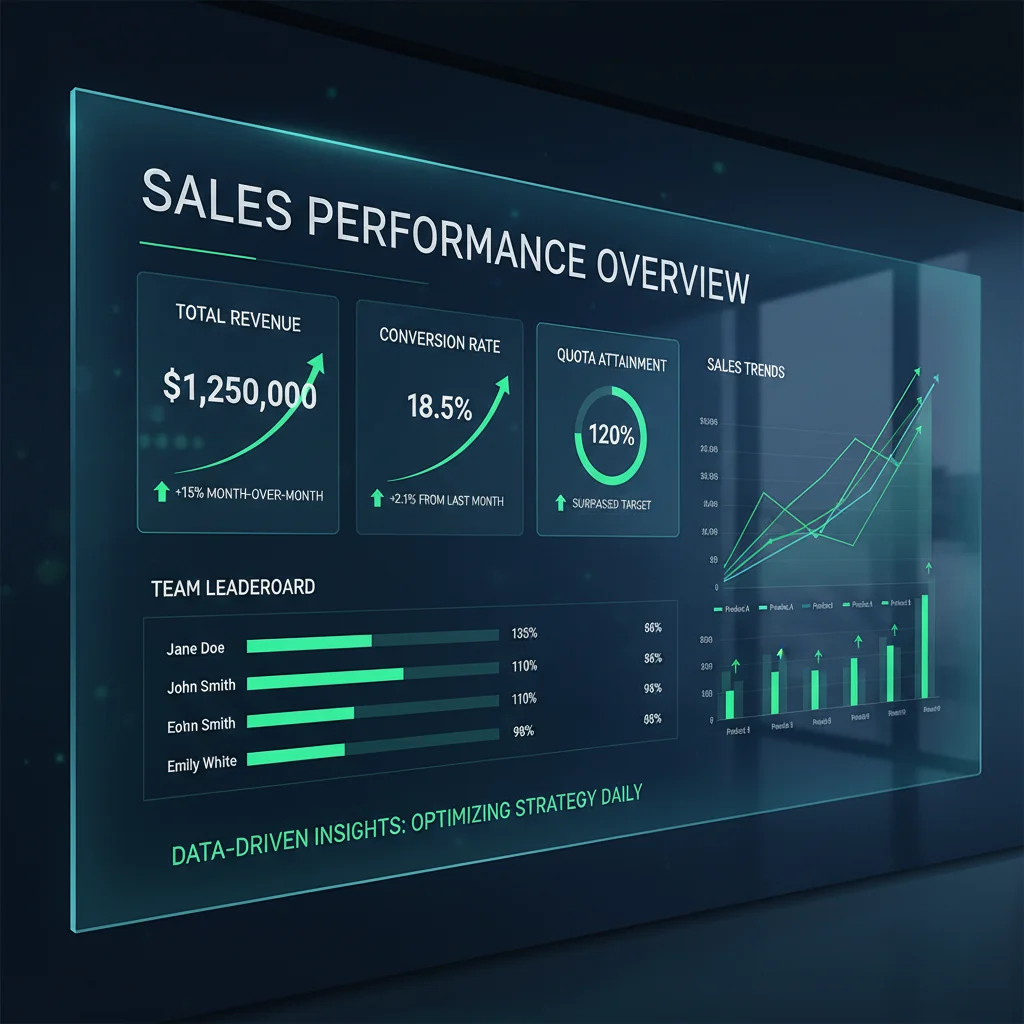
The journey to building a high-performance sales team is not a one-time event; it’s an ongoing cycle of analysis, optimization, and reinforcement. To consistently achieve 150% quota attainment, you must continuously monitor your efforts and adapt.
Analyze Performance Data:
- Sales Funnel Analysis: Where are deals getting stuck? What are the conversion rates at each stage? This helps pinpoint bottlenecks in your sales process.
- Individual Performance Metrics: Beyond quota, track average deal size, win rates, sales cycle length, and activity levels for each rep. Identify top performers and learn from their strategies.
- Source of Leads: Which marketing channels are generating the highest quality leads that convert into closed deals? Optimize your marketing efforts accordingly.
- Product Feedback: What are customers saying during sales calls? What objections are frequently raised? Feed this information back to product development and marketing teams.
Optimize Strategies:
- A/B Test Sales Messaging: Experiment with different email subject lines, call scripts, and presentation approaches to see what resonates best with your target audience.
- Refine Sales Process: Based on data, make iterative improvements to your sales process to improve efficiency and effectiveness.
- Adjust Training: If a specific skill gap emerges across the team (e.g., negotiation, prospecting for a new segment), tailor your training programs to address it.
- Market Adaptation: Stay agile and adapt your strategies to new market conditions, competitive moves, or economic shifts.
Celebrate Successes:
Recognizing achievements is vital for morale and motivation within a high-performance sales team. This can include:
- Public Recognition: Acknowledge top performers in team meetings, company-wide announcements, or internal newsletters.
- Monetary Rewards: Beyond commissions, consider bonuses, gift cards, or experiences for exceptional achievements.
- Growth Opportunities: Offer opportunities for advancement, leadership roles, or special projects to high-achievers.
- Team Celebrations: Organize team lunches, outings, or events to celebrate collective milestones and foster camaraderie.
By continuously analyzing, optimizing, and celebrating, you create a positive feedback loop that reinforces high performance and propels your sales team towards sustained success and well beyond 150% quota attainment.
Conclusion: The Path to 150% Quota Attainment for Your US Startup
Building a high-performance sales team is an investment, not an overnight fix. It requires strategic planning, consistent effort, and a deep commitment to your people and processes. For US startups aiming to achieve and exceed 150% quota attainment, these seven steps provide a robust framework:
- Define Your Ideal Sales Persona and Recruitment Strategy
- Implement Robust Onboarding and Continuous Training Programs
- Develop a Clear, Repeatable Sales Process
- Implement a Performance-Driven Compensation and Incentive Structure
- Leverage Technology and Sales Enablement Tools
- Foster a Culture of Accountability, Coaching, and Feedback
- Analyze, Optimize, and Celebrate Successes
By meticulously executing each of these steps, you will not only recruit and retain top sales talent but also equip them with the tools, training, and motivation to consistently outperform. A high-performance sales team is your startup’s most valuable asset in the quest for market dominance and sustainable growth. Start implementing these strategies today and watch your revenue soar.