Optimize Customer Acquisition: Slash CAC by 20% for US Startups in 2026
In the dynamic landscape of US startups, the pursuit of growth often comes at a significant cost: customer acquisition. The Customer Acquisition Cost (CAC) is a critical metric that can make or break a nascent business. As we look towards 2026, the imperative to optimize customer acquisition and reduce CAC by a formidable 20% becomes not just a goal, but a strategic necessity for sustainable success. This comprehensive guide delves into actionable strategies, innovative approaches, and data-driven methodologies that US startups can leverage to achieve this ambitious target.
Understanding CAC is the first step towards controlling it. CAC represents the total cost associated with convincing a prospective customer to buy a product or service. This includes all marketing and sales expenses, salaries, and overheads, divided by the number of new customers acquired during a specific period. A high CAC erodes profitability and hinders scalability, making its reduction a top priority for any growth-focused startup.
The US startup ecosystem is fiercely competitive. From Silicon Valley to the burgeoning tech hubs across the nation, new businesses are vying for attention and market share. In this environment, inefficient spending on customer acquisition is a luxury few can afford. By proactively working to optimize customer acquisition, startups can free up capital for product development, talent acquisition, and market expansion, fueling a healthier, more sustainable growth trajectory.
The Current State of Customer Acquisition for US Startups
Before we can optimize, we must diagnose. The current state of customer acquisition for many US startups is characterized by a mix of opportunities and challenges. Digital marketing channels have democratized access to audiences, but they have also intensified competition. Paid advertising, while effective, can quickly become a significant drain on resources if not meticulously managed. Organic channels, though offering a lower CAC in the long run, often require substantial upfront investment in content, SEO, and community building.
Many startups fall into the trap of chasing vanity metrics or relying on a single acquisition channel. This can lead to an inflated CAC and a fragile growth model. The rise of privacy regulations, changes in platform algorithms, and increasing customer skepticism towards traditional advertising further complicate the landscape. Therefore, a multi-faceted, adaptive strategy is essential to effectively optimize customer acquisition.
Moreover, the cost of talent in sales and marketing continues to rise, adding another layer to the CAC equation. Startups must find ways to empower their teams with efficient tools and processes, ensuring every dollar spent on personnel translates into measurable customer growth.
Setting the 20% CAC Reduction Goal for 2026
A 20% reduction in CAC by 2026 is an ambitious yet achievable goal. It requires a commitment to continuous improvement, data-driven decision-making, and a willingness to experiment. This target isn’t just about cutting costs; it’s about optimizing efficiency and maximizing the return on every marketing and sales dollar. To achieve this, startups need to embrace a holistic approach that touches every aspect of their customer acquisition funnel.
The timeline to 2026 provides ample opportunity for iterative improvements. Instead of aiming for a single, drastic cut, startups should implement a series of smaller, targeted optimizations that cumulatively lead to the 20% goal. This approach allows for learning and adaptation, ensuring that changes are effective and sustainable.
Core Strategies to Optimize Customer Acquisition and Reduce CAC
1. Deep Dive into Customer Segmentation and Targeting
One of the most common reasons for high CAC is a broad, untargeted marketing approach. When you try to appeal to everyone, you often appeal to no one effectively. To optimize customer acquisition, startups must refine their understanding of their ideal customer profiles (ICPs) and buyer personas.
- Granular Segmentation: Go beyond basic demographics. Segment your audience based on psychographics, behavioral data, pain points, motivations, and purchasing power.
- Data-Driven Persona Development: Utilize analytics tools, CRM data, customer interviews, and market research to build detailed personas. What problems do they face? How does your solution address them?
- Precision Targeting: Once you know your ICPs, focus your marketing efforts exclusively on reaching them. This means choosing the right channels, crafting highly relevant messages, and allocating budget where it matters most. For example, if your ICP is a small business owner struggling with inventory management, target online forums, trade publications, and LinkedIn groups where they are active, rather than broad social media campaigns.
By narrowing your focus, you increase the likelihood of engaging genuinely interested prospects, leading to higher conversion rates and a lower CAC.
2. Content Marketing for Organic Growth and Authority
Content marketing is a long-term investment that pays dividends in reduced CAC. By creating valuable, relevant content, startups can attract organic traffic, build brand authority, and nurture leads without direct advertising spend.
- Strategic Content Pillars: Identify core topics and questions relevant to your ICPs. Develop content pillars around these themes, creating a rich library of blog posts, whitepapers, case studies, videos, and infographics.
- SEO Optimization: Ensure all content is optimized for search engines. This includes keyword research, on-page SEO, technical SEO, and building high-quality backlinks. Appearing organically in search results for relevant queries is a powerful way to optimize customer acquisition at a lower cost.
- Value-Driven Content: Focus on providing genuine value to your audience. Solve their problems, answer their questions, and educate them. This builds trust and positions your startup as a thought leader, making customers more receptive to your offerings.
- Content Distribution: Don’t just create content; distribute it effectively. Share across social media, email newsletters, industry partnerships, and relevant online communities.
While content marketing requires an initial investment of time and resources, its cumulative effect on brand visibility and lead generation significantly lowers CAC over time.
3. Conversion Rate Optimization (CRO) Across the Funnel
A high CAC often indicates inefficiencies in the conversion process. Even if you’re attracting the right audience, if your website, landing pages, or sales process are not optimized, you’re losing potential customers and wasting acquisition spend. CRO is about maximizing the percentage of visitors who complete a desired action.
- Website and Landing Page Optimization: Analyze user behavior on your website. Are there bottlenecks? Is the call-to-action clear? Conduct A/B tests on headlines, copy, images, and forms to identify what resonates best with your audience.
- Streamlined User Experience (UX): A smooth, intuitive user experience is paramount. Reduce friction points in the sign-up or purchase process. Ensure mobile responsiveness and fast loading times.
- Personalization: Tailor content, offers, and recommendations based on user behavior and preferences. Personalized experiences often lead to higher engagement and conversion rates.
- Clear Value Proposition: Articulate your unique selling proposition clearly and concisely on every touchpoint. Why should a customer choose you over competitors?
- A/B Testing and Iteration: CRO is an ongoing process. Continuously test different elements of your conversion funnel and use the data to make informed improvements.
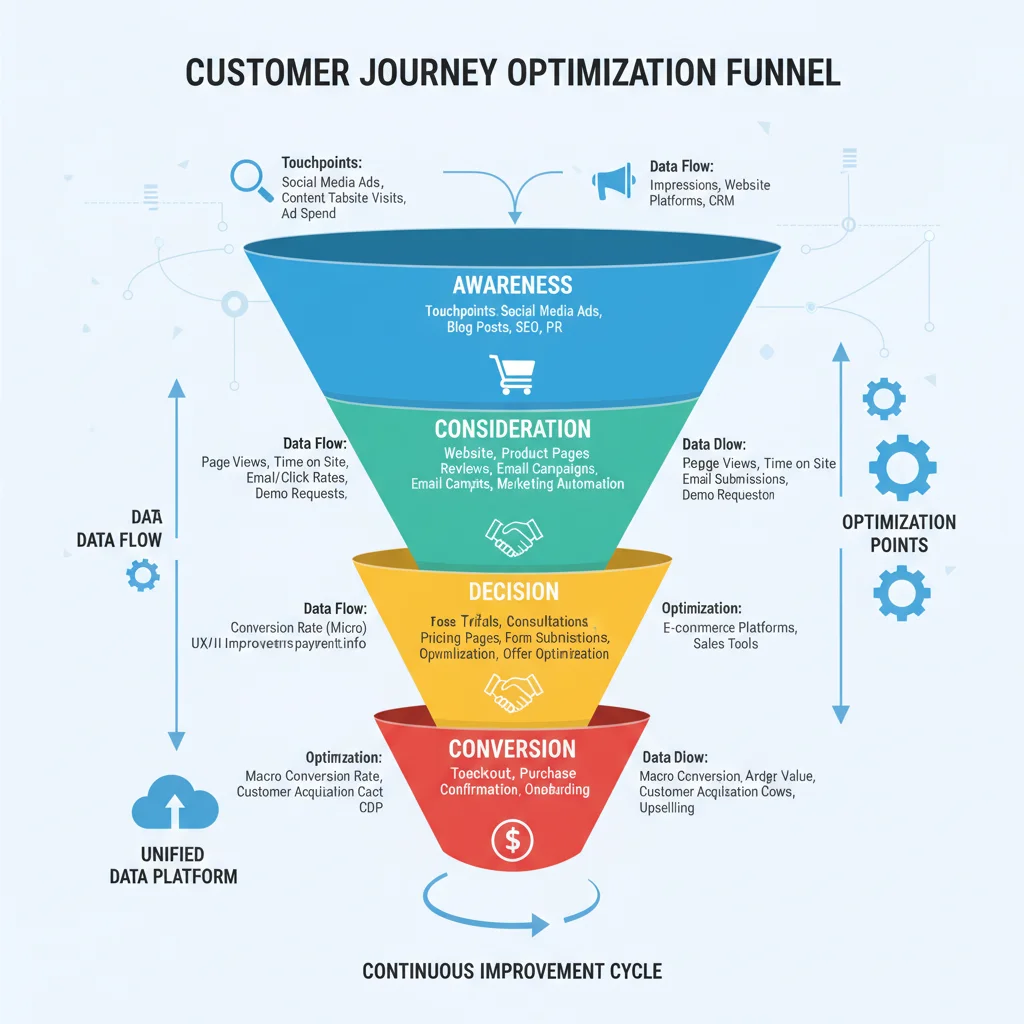
By improving conversion rates at every stage, you can optimize customer acquisition by getting more customers from the same amount of traffic or leads, effectively reducing your CAC.
4. Leveraging Referrals and Word-of-Mouth Marketing
The most cost-effective customer acquisition channel is often one that leverages your existing customer base: referrals. Satisfied customers can become powerful advocates, bringing in new leads at a fraction of the cost of traditional marketing.
- Referral Programs: Implement a structured referral program that incentivizes existing customers to spread the word. Offer rewards for both the referrer and the referred customer.
- Exceptional Customer Experience: The foundation of any successful referral program is an outstanding product and customer service. Happy customers are more likely to refer others.
- Social Proof: Actively collect and showcase customer testimonials, reviews, and case studies. Social proof builds trust and reduces the perceived risk for new customers.
- Community Building: Foster a sense of community around your brand. Engage with customers on social media, create user groups, and host events. A strong community can organically drive word-of-mouth.
Investing in customer success and loyalty is a direct path to a lower CAC, as it turns your existing customer base into a powerful acquisition engine.
5. Data-Driven Channel Optimization and Budget Allocation
To truly optimize customer acquisition, startups must continuously analyze the performance of each marketing channel and allocate budget accordingly. This moves beyond simply tracking CAC to understanding the lifetime value (LTV) of customers acquired through different channels.
- Attribution Modeling: Implement sophisticated attribution models (e.g., multi-touch attribution) to understand which touchpoints contribute to a conversion. This moves beyond last-click attribution, providing a more accurate picture of channel effectiveness.
- Channel-Specific CAC Analysis: Calculate CAC for each marketing channel. Identify underperforming channels and reallocate budget to those that consistently deliver high-value customers at a lower cost.
- LTV:CAC Ratio: Focus on the LTV:CAC ratio. Aim for a ratio of 3:1 or higher, meaning the lifetime value of a customer is at least three times the cost to acquire them. This ensures sustainable growth.
- Experimentation and Testing: Continuously run A/B tests and pilot programs on new channels or strategies. Don’t be afraid to pivot if a channel isn’t delivering the desired results.
By rigorously analyzing data and making informed decisions about budget allocation, startups can significantly reduce their overall CAC and maximize their marketing ROI.
6. Sales Process Efficiency and Automation
For startups with a sales team, optimizing the sales process is crucial for CAC reduction. Inefficiencies in sales can lead to longer sales cycles, higher personnel costs, and ultimately, a higher CAC.
- CRM Implementation and Optimization: A robust CRM system is essential for managing leads, tracking interactions, and automating administrative tasks. Ensure your CRM is fully utilized and integrated with other marketing tools.
- Sales Enablement Tools: Provide your sales team with the resources they need to be effective: up-to-date product information, compelling sales collateral, and training on best practices.
- Lead Scoring and Qualification: Implement a lead scoring system to prioritize high-quality leads. This ensures sales teams focus their efforts on prospects most likely to convert, reducing wasted time and resources.
- Automation of Repetitive Tasks: Automate tasks like email follow-ups, meeting scheduling, and data entry. This frees up sales representatives to focus on what they do best: building relationships and closing deals.
- Sales Training and Coaching: Continuously train and coach your sales team to improve their skills in prospecting, objection handling, and closing. A more effective sales team translates to a lower CAC.
By streamlining the sales process, startups can close deals faster and more efficiently, directly impacting their CAC.
7. Product-Led Growth (PLG) Strategies
Product-led growth is a powerful strategy for startups looking to optimize customer acquisition by allowing the product itself to drive user acquisition, retention, and expansion. This often involves offering a free trial, freemium model, or self-service onboarding.
- Freemium or Free Trial Model: Allow users to experience the core value of your product without a significant upfront commitment. This lowers the barrier to entry and can lead to viral adoption.
- Seamless Onboarding: Design an intuitive and engaging onboarding process that quickly demonstrates the product’s value. The quicker users experience a ‘aha! moment,’ the higher the conversion to paid plans.
- In-Product Referrals: Integrate referral mechanisms directly into your product, encouraging users to invite others.
- Self-Service Support: Empower users with comprehensive documentation, tutorials, and FAQs, reducing the need for extensive (and costly) human support in the early stages.
- Iterative Product Development: Continuously collect user feedback and iterate on your product to improve its stickiness and value proposition, which naturally attracts and retains customers.
PLG can dramatically reduce CAC by relying on the product’s inherent value to convert users, rather than expensive marketing and sales efforts.
8. Strategic Partnerships and Integrations
Collaborating with complementary businesses can unlock new customer segments and significantly reduce acquisition costs. Strategic partnerships allow you to tap into established audiences and leverage shared marketing efforts.
- Co-Marketing Initiatives: Partner with non-competing businesses that share your target audience for joint webinars, content creation, or promotional campaigns.
- Integrations and App Marketplaces: If your product integrates with other platforms, leverage their app marketplaces to gain visibility and attract users already within that ecosystem.
- Affiliate Marketing: Establish an affiliate program where partners earn a commission for referring customers. This is a performance-based model, meaning you only pay for successful acquisitions.
- Channel Partnerships: Work with resellers or distributors who can introduce your product to their existing customer base.
These partnerships can provide access to highly qualified leads at a much lower cost than direct advertising, helping to optimize customer acquisition.
Measuring Success: KPIs for CAC Reduction
To effectively reduce CAC, startups must continuously monitor key performance indicators (KPIs) and adapt their strategies based on the data. Beyond the raw CAC figure, consider these metrics:
- CAC Payback Period: How long does it take to recoup the cost of acquiring a customer? A shorter payback period indicates healthier unit economics.
- LTV:CAC Ratio: As mentioned, this ratio is crucial for understanding the long-term profitability of your customer base.
- Conversion Rates: Track conversion rates at every stage of your funnel – from website visitor to lead, lead to MQL (Marketing Qualified Lead), MQL to SQL (Sales Qualified Lead), and SQL to customer.
- Channel Performance: Regularly review the performance of individual marketing channels based on cost, conversion, and quality of leads.
- Customer Retention Rate: While not directly a CAC metric, high retention means a higher LTV, which justifies a higher (though still optimized) CAC.
- Churn Rate: High churn negates acquisition efforts. Reducing churn effectively lowers the ‘true’ cost of maintaining your customer base.

Regular reporting and analysis of these KPIs will provide the insights needed to refine your strategies and stay on track for the 20% CAC reduction goal by 2026.
Challenges and How to Overcome Them
Reducing CAC isn’t without its challenges. Startups often face:
- Limited Resources: Small teams and tight budgets can make it difficult to invest in comprehensive data analytics or advanced marketing tools. Overcome this by prioritizing high-impact strategies and leveraging cost-effective tools.
- Data Silos: Marketing, sales, and product data often reside in separate systems, making a holistic view of the customer journey difficult. Invest in integrations and a unified data platform.
- Resistance to Change: Teams may be comfortable with existing acquisition methods. Foster a culture of experimentation and data-driven decision-making to encourage adoption of new strategies.
- Market Volatility: Economic shifts, new competitors, and changes in consumer behavior can impact CAC. Maintain flexibility in your strategies and be prepared to adapt quickly.
Overcoming these challenges requires strong leadership, cross-functional collaboration, and a relentless focus on the customer.
Conclusion: A Path to Sustainable Growth by 2026
The journey to optimize customer acquisition and achieve a 20% CAC reduction for US startups by 2026 is multifaceted, demanding strategic planning, meticulous execution, and continuous optimization. It’s not merely about cutting expenses but about building a more efficient, customer-centric acquisition machine.
By deeply understanding your target audience, leveraging the power of content and organic channels, optimizing conversion paths, fostering customer loyalty, making data-driven decisions about channel allocation, streamlining sales processes, and embracing product-led growth, startups can transform their acquisition efforts. The payoff is not just a healthier bottom line but a more resilient, scalable business model capable of thriving in the competitive US market.
Start now. Analyze your current CAC, identify your biggest inefficiencies, and begin implementing these strategies. The road to 2026 is an opportunity to redefine your growth narrative, ensuring that every customer acquired is a step towards long-term success and profitability.