Measuring Remote Work Success: 4 Key Performance Indicators for US Teams in 2026

The landscape of work has undergone a seismic shift, with remote work transitioning from a niche perk to a fundamental operational model for countless organizations across the United States. As we look towards 2026, the initial scramble to adapt has evolved into a strategic imperative: how do we not just facilitate but truly measure remote work success? The answer lies in identifying and consistently tracking the right Remote Work KPIs.
For US teams navigating this evolving environment, understanding what constitutes ‘success’ in a distributed setting is paramount. It’s no longer sufficient to simply track hours worked or tasks completed. A holistic approach that encompasses productivity, engagement, well-being, and operational efficiency is crucial. This article delves into four key performance indicators (KPIs) that will be instrumental in gauging the effectiveness of remote work strategies for US teams in 2026 and beyond.
The Evolving Definition of Remote Work Success
Before diving into specific Remote Work KPIs, it’s essential to acknowledge that the definition of remote work success has matured. Early on, simply keeping operations running and preventing significant dips in output was considered a win. However, as organizations have gained more experience with distributed models, the focus has shifted towards optimizing performance, fostering a thriving culture, and ensuring sustainable growth. In 2026, success for US remote teams will be characterized by by:
- Sustained Productivity: Not just maintaining, but potentially enhancing, output and efficiency.
- High Employee Engagement: Ensuring team members feel connected, valued, and motivated, regardless of their physical location.
- Employee Well-being: Prioritizing mental and physical health to prevent burnout and foster a positive work environment.
- Operational Resilience: The ability of the remote infrastructure and processes to withstand challenges and adapt quickly.
- Talent Attraction and Retention: Leveraging remote work as a competitive advantage to attract top talent and reduce turnover.
These pillars form the foundation upon which effective Remote Work KPIs are built. Without a clear understanding of these overarching goals, selecting the right metrics becomes a shot in the dark. The era of ‘seat time’ as a measure of productivity is firmly in the past; objective, outcome-based metrics are the future.
KPI 1: Output-Based Productivity Metrics
Measuring productivity in a remote setting requires a pivot from traditional, presence-based evaluations to outcome-based assessments. For US teams in 2026, this means focusing on tangible results and value creation rather than hours spent at a desk. These Remote Work KPIs offer a clearer picture of actual contribution.
Key Metrics:
- Project Completion Rates & Timeliness: Track the percentage of projects completed on time and within scope. This is a direct measure of efficiency and effectiveness.
- Quality of Deliverables: Implement clear quality standards and measure adherence. This could involve client feedback scores, error rates, or peer reviews.
- Revenue Generated/Cost Savings: For roles directly impacting the bottom line, quantify the financial contribution. Remote work can lead to significant cost savings (e.g., office space), which should also be tracked.
- Customer Satisfaction (CSAT) Scores: For customer-facing roles, CSAT scores are a direct indicator of successful remote service delivery.
- Innovation & Contribution to New Initiatives: Measure the number of new ideas proposed, prototypes developed, or successful contributions to strategic initiatives. This goes beyond routine tasks to assess value creation.
Why it Matters for Remote Work KPIs:
Output-based metrics depersonalize performance evaluations, focusing on what is achieved rather than how or where. This fosters trust and autonomy, critical ingredients for successful remote teams. By clearly defining expected outcomes and providing the tools to achieve them, organizations empower their remote workforce to manage their own time and processes, leading to increased job satisfaction and sustained high performance. Furthermore, these metrics provide concrete data points for performance reviews and strategic planning, making it easier to identify areas for improvement or recognize high-performing individuals and teams.
For instance, a sales team might track the number of qualified leads generated, conversion rates, and average deal size. A software development team might focus on lines of code deployed, bug fix rates, and feature completion. The key is to tailor these Remote Work KPIs to the specific roles and objectives within your organization, ensuring they are measurable, relevant, and actionable.
KPI 2: Employee Engagement & Connection
One of the biggest challenges in remote work is maintaining a strong sense of team cohesion and individual engagement. Disconnection can lead to lower morale, reduced collaboration, and increased turnover. Therefore, robust Remote Work KPIs for engagement are non-negotiable for US teams in 2026.
Key Metrics:
- Employee Net Promoter Score (eNPS): A simple yet powerful metric that gauges employee loyalty and satisfaction by asking how likely they are to recommend their workplace to others. Regular eNPS surveys provide a quick pulse check.
- Participation in Virtual Team Activities: Track attendance and engagement in virtual meetings, team-building events, and informal social gatherings. Low participation can signal disengagement.
- Internal Communication Platform Activity: Monitor activity levels on collaboration platforms (e.g., Slack, Microsoft Teams). Look at message volume, response times, and participation in relevant channels. This can indicate active collaboration and information flow.
- One-on-One Meeting Frequency & Quality: Ensure managers are consistently holding productive one-on-one meetings with their direct reports. Qualitative feedback from employees about the value of these meetings is also crucial.
- Survey Feedback & Actionable Insights: Beyond eNPS, conduct regular, anonymous surveys covering topics like workload, support from management, opportunities for growth, and feelings of belonging. The crucial part is not just collecting data, but acting on the insights.
Why it Matters for Remote Work KPIs:
Engaged employees are more productive, innovative, and less likely to leave. In a remote setting, where spontaneous interactions are limited, intentional efforts to foster connection are vital. Tracking engagement Remote Work KPIs helps identify potential issues early, allowing management to intervene with targeted support or initiatives. It also reinforces a culture where employee voice is heard and valued, strengthening trust and commitment. High engagement directly correlates with better business outcomes, making it a critical area for measurement and improvement.
Consider implementing tools that facilitate virtual water cooler chats or regular themed discussions. Encourage managers to create opportunities for informal interaction, such as virtual coffee breaks or game nights. The goal is to replicate, as much as possible, the serendipitous connections that occur in a physical office, ensuring that remote team members feel part of a cohesive unit.
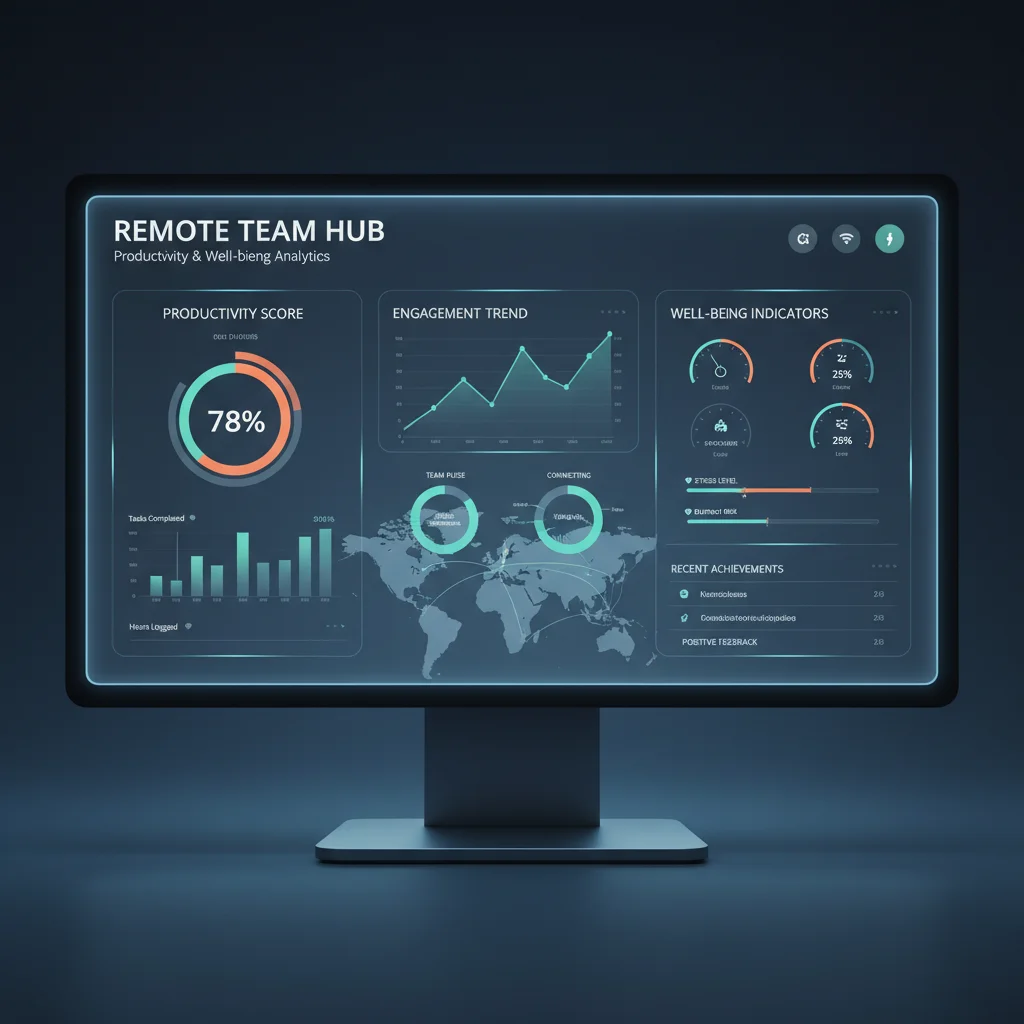
KPI 3: Employee Well-being & Work-Life Integration
The lines between work and personal life can easily blur in a remote environment, leading to increased stress and burnout. For US teams in 2026, prioritizing employee well-being is not just a moral imperative but a strategic necessity for long-term remote work success. These Remote Work KPIs focus on the human element of distributed teams.
Key Metrics:
- Burnout Risk Scores: Utilize surveys or specialized tools to assess indicators of burnout, such as feelings of exhaustion, cynicism, or reduced professional efficacy.
- Utilization of Well-being Programs: Track participation rates in company-sponsored wellness initiatives, mental health support programs, or flexible work arrangements.
- Average Workday Length & After-Hours Activity: Monitor the average duration of employee workdays and the frequency of activity outside of standard business hours. While not a direct measure of burnout, excessive after-hours work can be a red flag.
- Absenteeism & Presenteeism Rates: While absenteeism (sick days) can be a general indicator, presenteeism (working while ill or distracted) is harder to measure but equally damaging. Regular check-ins and anonymous surveys can help uncover this.
- Employee Feedback on Work-Life Balance: Direct feedback through surveys, focus groups, or one-on-one discussions about their perception of work-life balance and their ability to disconnect.
Why it Matters for Remote Work KPIs:
A healthy and balanced workforce is a productive and sustainable workforce. Neglecting employee well-being in a remote setting can lead to high turnover, decreased morale, and significant productivity losses. By tracking these Remote Work KPIs, organizations can proactively identify individuals or teams at risk, implement supportive measures, and foster a culture that values personal time and mental health. This not only benefits the employees but also strengthens the company’s employer brand, making it more attractive to prospective talent.
Implementing policies such as ‘no meetings on Fridays’ or encouraging strict core working hours can help reinforce boundaries. Providing access to mental health resources, ergonomic advice for home offices, and opportunities for physical activity are also crucial. The goal is to create an environment where employees feel supported in managing their well-being, leading to greater job satisfaction and sustained performance.
KPI 4: Operational Efficiency & Infrastructure Reliability
The backbone of successful remote work is a robust and reliable operational infrastructure. For US teams in 2026, measuring the efficiency of remote operations and the reliability of supporting technologies is crucial. These Remote Work KPIs ensure that the technical and procedural aspects of remote work are running smoothly.
Key Metrics:
- IT Support Ticket Resolution Times & Satisfaction: Track how quickly IT issues are resolved for remote employees and their satisfaction with the support received. This indicates the effectiveness of remote IT infrastructure.
- Tool Adoption Rates & Utilization: Measure the usage of collaboration tools, project management software, and other remote work technologies. Low adoption can indicate usability issues or lack of training.
- Network Uptime & Connectivity Issues: While often dependent on individual internet providers, organizations can track reported connectivity problems and ensure internal networks (VPNs, cloud services) are stable and accessible.
- Process Streamlining & Automation: Measure the number of manual tasks that have been automated or processes that have been streamlined specifically to enhance remote work efficiency.
- Cybersecurity Incident Rates: With a distributed workforce, cybersecurity risks can increase. Tracking incident rates, response times, and the effectiveness of security protocols is critical.
Why it Matters for Remote Work KPIs:
Inefficient operations or unreliable technology can quickly erode productivity and employee morale in a remote setting. If employees constantly struggle with technical issues or cumbersome processes, their ability to perform effectively is compromised. By monitoring these Remote Work KPIs, organizations can identify bottlenecks, invest in necessary upgrades, and ensure that remote teams have the seamless technological support they need to thrive. This proactive approach minimizes downtime, reduces frustration, and maximizes the return on technology investments.
Regular audits of remote work tools, user training programs, and clear communication channels for technical support are essential. Investing in robust cloud solutions, secure VPNs, and reliable communication platforms is no longer optional but a fundamental requirement for any organization committed to long-term remote work success.

Implementing and Adapting Remote Work KPIs for 2026
Simply identifying these Remote Work KPIs is only the first step. Effective implementation requires a strategic approach:
1. Define Clear Goals and Baselines:
Before you can measure success, you need to define what success looks like for each KPI. Establish clear, measurable, achievable, relevant, and time-bound (SMART) goals. Gather baseline data to understand your current state before implementing new initiatives.
2. Choose the Right Tools:
Leverage technology to automate data collection and analysis. Project management software, HR information systems (HRIS), employee engagement platforms, and IT service management (ITSM) tools can provide invaluable insights into your Remote Work KPIs. Ensure these tools integrate seamlessly to provide a holistic view.
3. Communicate Transparently:
Share your KPI framework and its purpose with your remote teams. Explain why these metrics are being tracked and how the data will be used (e.g., to improve processes, support well-being, celebrate successes). Transparency fosters trust and encourages buy-in.
4. Regular Review and Feedback Loops:
KPIs are not static. Regularly review your chosen metrics to ensure they remain relevant and effective. Establish feedback loops with employees and managers to understand the qualitative aspects behind the quantitative data. Be prepared to adapt your Remote Work KPIs as your organization evolves.
5. Focus on Actionable Insights, Not Just Data:
The ultimate goal of tracking Remote Work KPIs is to drive informed decisions and improvements. Don’t just collect data; analyze it to identify trends, pinpoint areas for intervention, and celebrate successes. Use the insights to refine strategies, provide targeted training, or adjust policies.
6. Training and Development:
Ensure managers are trained on how to effectively lead and evaluate remote teams using these new metrics. Provide employees with the necessary skills and resources to thrive in a remote environment, including time management, digital collaboration, and self-care strategies.
7. Culture of Trust and Autonomy:
Remember that the success of any KPI framework for remote work hinges on a culture of trust. Empower employees with autonomy, focus on outcomes, and avoid micromanagement. The Remote Work KPIs should serve as guides for improvement, not tools for surveillance.
The Future of Remote Work Measurement
As we move deeper into 2026, the sophistication of measuring remote work success will only increase. We can expect greater integration of AI and machine learning to predict burnout, personalize employee support, and optimize team configurations. Data privacy and ethical considerations will become even more prominent, requiring careful attention to how Remote Work KPIs are collected and utilized.
The organizations that master the art and science of measuring remote work success will be those that not only survive but thrive in the future of work. By focusing on output, engagement, well-being, and operational efficiency, US teams can build resilient, productive, and highly satisfied remote workforces. The investment in robust Remote Work KPIs today will yield significant returns in talent retention, innovation, and overall business performance tomorrow.
The journey towards optimized remote work is continuous. It requires constant learning, adaptation, and a genuine commitment to creating an environment where every employee, regardless of their location, can perform at their best and feel a strong sense of belonging and purpose. These four Remote Work KPIs provide a powerful framework to guide that journey.