
Navigating the New Data Privacy Landscape in 2026: 3 Key Marketing Compliance Strategies for US Businesses
The digital age, while offering unprecedented opportunities for businesses, also presents a complex web of challenges, especially concerning consumer data. As we approach 2026, the landscape of data privacy is undergoing significant transformations, with new regulations emerging and existing ones evolving. For US businesses, understanding and adapting to these changes is not just about legal obligation; it’s about building and maintaining consumer trust, safeguarding brand reputation, and ensuring sustainable growth. The focus on data privacy compliance is more critical than ever, impacting every facet of marketing operations from data collection to personalized advertising.
Gone are the days when a generic privacy policy was sufficient. Today, consumers are more aware of their digital rights, and regulators are more stringent in enforcing compliance. The penalties for non-compliance can be severe, ranging from hefty fines to irreparable damage to brand image. This comprehensive guide will delve into the anticipated 2026 data privacy landscape, highlighting the crucial shifts and providing three actionable marketing compliance strategies that US businesses must adopt to thrive in this new era. We’ll explore how to proactively prepare for these changes, ensuring your marketing efforts are both effective and ethically sound.
The Evolving Data Privacy Landscape: What to Expect by 2026
Before diving into strategies, it’s essential to grasp the evolving regulatory environment. While the European Union’s GDPR set a global precedent, the United States has seen a proliferation of state-level privacy laws, creating a patchwork of regulations that can be challenging to navigate. By 2026, we anticipate further maturation and potentially even more harmonization or, conversely, increased fragmentation of these laws. Key legislative developments to watch include the continued enforcement and expansion of the California Consumer Privacy Act (CCPA) and its successor, the California Privacy Rights Act (CPRA), along with similar laws enacted in states like Virginia (VCDPA), Colorado (CPA), Utah (UCPA), and Connecticut (CTDPA). Each of these laws, while sharing common principles, has unique nuances that demand careful attention from businesses operating across state lines.
The core tenets of these laws revolve around consumer rights: the right to know what data is collected, the right to delete personal data, the right to opt-out of the sale or sharing of personal data, and the right to correct inaccurate data. For marketers, this means a fundamental shift from a ‘collect-all’ mentality to a ‘privacy-by-design’ approach. Consent mechanisms are becoming more sophisticated, requiring clear, unambiguous, and granular consent for various data processing activities. The concept of ‘sensitive personal information’ is also gaining prominence, necessitating heightened protection and often explicit consent for its collection and use. US businesses must prepare for a future where data privacy compliance is not an afterthought but an integral part of their operational DNA.
Furthermore, the debate around a potential federal data privacy law in the US continues. While a comprehensive federal law could simplify compliance by creating a single standard, the likelihood and specific provisions of such a law by 2026 remain uncertain. Regardless, the trend points towards greater consumer control over personal data and increased accountability for businesses. This necessitates a proactive and adaptive approach to marketing strategies, ensuring they are built on a foundation of transparency, fairness, and respect for individual privacy rights. The era of ‘implied consent’ is rapidly fading, replaced by a demand for explicit, informed choices from consumers.
Anticipated Regulatory Trends and Enforcement
Beyond new legislation, enforcement actions are becoming more frequent and impactful. Regulatory bodies are increasingly scrutinizing how companies handle personal data, especially concerning targeted advertising, data sharing with third parties, and data breach responses. We can expect to see a continued focus on transparency in data practices, with regulators demanding clear, accessible privacy notices and easily navigable mechanisms for consumers to exercise their rights. The concept of ‘dark patterns’ – user interfaces designed to trick users into giving consent or sharing more data than they intend – is also under intense regulatory scrutiny. Marketers must ensure their consent flows and user experiences are genuinely user-friendly and privacy-respecting.
Another significant trend is the increasing collaboration between international and state-level regulatory bodies. While the US doesn’t have a single federal privacy authority akin to some European counterparts, state attorneys general and other agencies are actively pursuing enforcement actions. This means businesses with a national presence must be prepared to comply with multiple, potentially conflicting, sets of regulations. The global nature of digital marketing further complicates this, as businesses may inadvertently fall under the jurisdiction of international laws like GDPR if they process data of EU residents. This underscores the need for a robust and comprehensive data privacy compliance framework that can adapt to diverse legal requirements.
Finally, the role of artificial intelligence (AI) and machine learning (ML) in marketing will also come under the privacy microscope. As AI models become more sophisticated in processing and analyzing personal data for personalization and targeting, questions around algorithmic transparency, bias, and the ethical use of data will intensify. Businesses leveraging AI in their marketing must ensure their models are trained on ethically sourced data and that their AI-driven decisions align with privacy principles. The future of marketing is deeply intertwined with ethical data practices and strong data privacy compliance.
Strategy 1: Fortify Your Data Governance and Consent Management
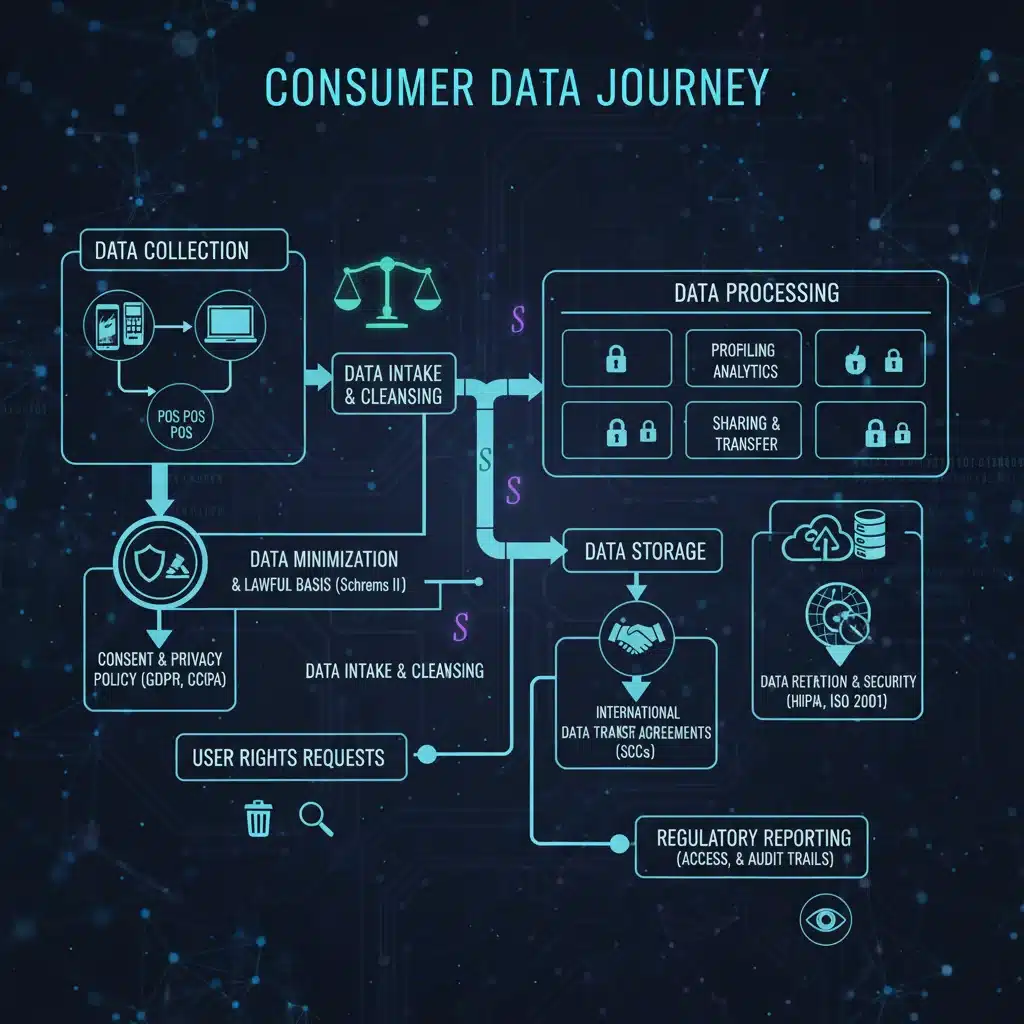
The bedrock of effective data privacy compliance lies in robust data governance and sophisticated consent management. Without a clear understanding of what data you collect, why you collect it, where it’s stored, and who has access to it, compliance becomes an insurmountable task. By 2026, businesses must have a comprehensive data map that details every piece of personal data flowing through their marketing ecosystem. This includes data collected via websites, mobile apps, CRM systems, social media, and third-party integrations.
Implementing a Granular Consent Management Platform (CMP)
A crucial component of fortified data governance is a state-of-the-art Consent Management Platform (CMP). Traditional ‘cookie banners’ are no longer sufficient. Modern CMPs allow consumers to give granular consent for different types of data processing (e.g., analytics, personalization, advertising, social media tracking). They also provide easy mechanisms for consumers to revoke or modify their consent at any time. For US businesses, this means implementing CMPs that can dynamically adapt to various state laws, presenting different consent options based on the user’s geographical location.
Beyond initial consent, businesses must maintain a detailed record of all consent decisions, including when and how consent was obtained. This ‘proof of consent’ is vital in the event of a regulatory audit. Furthermore, CMPs should be integrated seamlessly with your marketing technology stack, ensuring that data is only processed according to the user’s expressed preferences. This requires close collaboration between marketing, IT, and legal teams to configure and maintain the CMP effectively. Embracing a sophisticated CMP is not just a compliance measure; it’s an opportunity to build trust by empowering consumers with control over their data, thereby enhancing your brand’s reputation for ethical practices and strong data privacy compliance.
Data Minimization and Purpose Limitation
Two fundamental principles of data privacy are data minimization and purpose limitation. Data minimization dictates that businesses should only collect the personal data that is absolutely necessary for a specific, stated purpose. If you don’t need a piece of data, don’t collect it. This reduces your risk exposure and simplifies your compliance efforts. Purpose limitation means that once collected, data should only be used for the specific purposes for which it was originally gathered and for which consent was obtained. Any new use case requires fresh consent.
Marketers need to critically evaluate every data point they collect. For instance, do you truly need a user’s date of birth for an email newsletter subscription, or is an email address sufficient? By adopting a ‘less is more’ approach to data collection, businesses can significantly reduce their compliance burden and mitigate the risks associated with data breaches. This also aligns with consumer expectations for greater privacy. Regularly auditing your data collection points and processing activities against these principles will be essential for maintaining robust data privacy compliance by 2026 and beyond.
Strategy 2: Re-evaluate Third-Party Data Sharing and Vendor Management
In today’s interconnected marketing ecosystem, businesses rarely operate in isolation. They often rely on a multitude of third-party vendors for analytics, advertising, CRM, email marketing, and more. Each of these vendors represents a potential point of data leakage and a significant compliance risk. By 2026, a critical strategy for US businesses will be to thoroughly re-evaluate their third-party data sharing practices and implement stringent vendor management protocols to ensure comprehensive data privacy compliance.
Auditing and Vetting Third-Party Vendors
The first step is to conduct a comprehensive audit of all third-party vendors that access, process, or store your consumer data. This includes advertising partners, data brokers, cloud service providers, and even seemingly innocuous tools like website analytics platforms. For each vendor, you need to understand:
- What personal data do they access or collect?
- How do they process and store that data?
- What are their own data privacy and security measures?
- Are they compliant with relevant US state laws (e.g., CCPA, CPRA, VCDPA, etc.)?
- Do they have appropriate contractual clauses (e.g., Data Processing Addendums – DPAs) in place?
Many privacy laws hold the primary business (the ‘controller’ of the data) responsible for the actions of its vendors (the ‘processors’). This means that if a third-party vendor experiences a data breach or violates privacy regulations, your business could still be held liable. Therefore, rigorous vetting of new vendors and ongoing monitoring of existing ones are paramount. This involves not just legal review but also technical assessments of their security practices. Prioritizing vendors with strong commitments to data privacy compliance is no longer optional; it’s a business imperative.
Strengthening Data Processing Agreements (DPAs)
Once vendors are vetted, robust Data Processing Agreements (DPAs) are essential. DPAs are legally binding contracts that dictate how a third-party vendor can process personal data on your behalf. By 2026, these agreements must be more specific and comprehensive than ever. They should clearly define the scope of data processing, the types of data involved, the purposes for which data can be processed, and the security measures the vendor must implement. Crucially, DPAs should also include clauses that ensure the vendor will assist your business in fulfilling consumer rights requests (e.g., data access, deletion requests).
Furthermore, DPAs should address data transfer mechanisms, especially if vendors operate internationally or use sub-processors. They should also outline audit rights, allowing your business to verify the vendor’s compliance with the DPA. Regular review and updates to these agreements are necessary, particularly as privacy laws evolve. Ignoring this aspect of vendor management is a significant oversight that can lead to severe compliance breaches. A proactive approach to DPAs is a cornerstone of effective data privacy compliance in a complex digital supply chain.
Minimizing Data Sharing
Beyond contractual obligations, businesses should also critically evaluate whether they need to share certain types of data with third parties at all. Can you achieve your marketing objectives with aggregated or anonymized data instead of identifiable personal data? Can you reduce the amount or sensitivity of data shared? Implementing data minimization principles extends to your third-party relationships. The less personal data you share, the lower your risk exposure. This might involve exploring privacy-enhancing technologies or adopting a ‘first-party data strategy‘ where you rely more heavily on data collected directly from your customers, with their explicit consent, rather than purchasing data from brokers. This strategic shift not only enhances data privacy compliance but can also lead to more accurate and effective marketing campaigns.
Strategy 3: Empower Consumer Rights and Build Trust Through Transparency
At the heart of modern data privacy regulations is the empowerment of consumer rights. By 2026, US businesses must move beyond merely providing a privacy policy and actively facilitate consumers in exercising their rights. This strategy is not just about avoiding penalties; it’s about building lasting trust, which is an invaluable asset in a privacy-conscious market. Transparency and user-friendliness in data practices will become key differentiators for brands.
Streamlining Consumer Rights Request (CRR) Processes
Consumers have various rights, including the right to access their data, correct inaccuracies, delete their data, and opt-out of its sale or sharing. Businesses must establish clear, easily accessible, and efficient mechanisms for consumers to submit these requests. This typically involves a dedicated portal or a clearly advertised email address/toll-free number. The process should be intuitive, and businesses must be able to verify the identity of the requester to prevent unauthorized access.
Crucially, businesses must have internal processes and systems in place to respond to these requests within legally mandated timelines (e.g., 30 or 45 days, depending on the state law). This often requires cross-functional collaboration between marketing, IT, legal, and customer service teams. Automation can play a significant role in managing the volume of CRRs, but human oversight remains essential. Failure to honor consumer rights requests promptly and effectively is a common trigger for regulatory complaints and enforcement actions. Proactive investment in CRR management systems demonstrates a commitment to data privacy compliance and consumer respect.

Enhancing Privacy Policies and Notices for Clarity
While privacy policies have long been a staple, their effectiveness in conveying information to consumers has often been limited by their length and legal jargon. By 2026, businesses should strive for greater clarity and accessibility in their privacy policies and notices. This means:
- Plain Language: Avoid overly technical or legalistic terms. Explain data practices in language that the average consumer can understand.
- Layered Approach: Provide a concise, easy-to-read summary of key privacy practices upfront, with options for users to drill down into more detailed information if they choose.
- Specifics, Not Generalities: Clearly state what data is collected, why it’s collected, how it’s used, with whom it’s shared, and how long it’s retained. Avoid vague statements.
- Accessibility: Ensure privacy information is easily findable on your website and applications, not buried in obscure footers.
Beyond the main privacy policy, consider contextual privacy notices at the point of data collection (e.g., next to a sign-up form explaining why an email address is needed). This ‘just-in-time’ information helps build trust and ensures informed consent. Transparent communication about your data practices is a powerful tool for building consumer confidence and demonstrating your commitment to robust data privacy compliance.
Building a Culture of Privacy Within Your Organization
Ultimately, effective data privacy compliance is not just about technology or legal documents; it’s about fostering a culture of privacy within your entire organization. This means regular training for all employees, especially those in marketing, sales, and customer service, on privacy principles, company policies, and relevant regulations. Employees should understand their roles and responsibilities in protecting personal data.
This culture shift also involves appointing a dedicated privacy officer or team, conducting regular privacy impact assessments for new projects and technologies, and embedding privacy considerations into every stage of product development and marketing campaign planning (Privacy by Design and Default). When privacy becomes an inherent value rather than a burdensome obligation, businesses are better equipped to navigate the evolving regulatory landscape, innovate responsibly, and cultivate long-term customer loyalty. By 2026, businesses that prioritize privacy will not only be compliant but will also gain a significant competitive advantage.
Conclusion: Embracing Data Privacy as a Competitive Advantage
The year 2026 marks a pivotal moment for US businesses in the realm of data privacy. The days of treating privacy as a secondary concern are long gone. The evolving regulatory landscape, coupled with increasing consumer awareness and demand for control over their personal information, necessitates a proactive and strategic approach to data privacy compliance. The three strategies outlined – fortifying data governance and consent management, re-evaluating third-party data sharing, and empowering consumer rights through transparency – are not merely checkboxes to avoid penalties. They represent fundamental shifts in how businesses should operate in the digital age.
By embracing these strategies, US businesses can transform the challenge of compliance into a distinct competitive advantage. Brands that are seen as trustworthy stewards of personal data will attract and retain more customers, foster deeper loyalty, and build stronger reputations. Conversely, those that lag in their privacy efforts risk not only significant financial penalties but also irreparable damage to their brand equity. The future of marketing is inextricably linked to ethical data practices and a steadfast commitment to consumer privacy. Prepare now, adapt continuously, and position your business at the forefront of responsible data stewardship for sustained success in 2026 and beyond.