US Manufacturing Reshoring: 3 Steps to 2026 Incentive Maximization
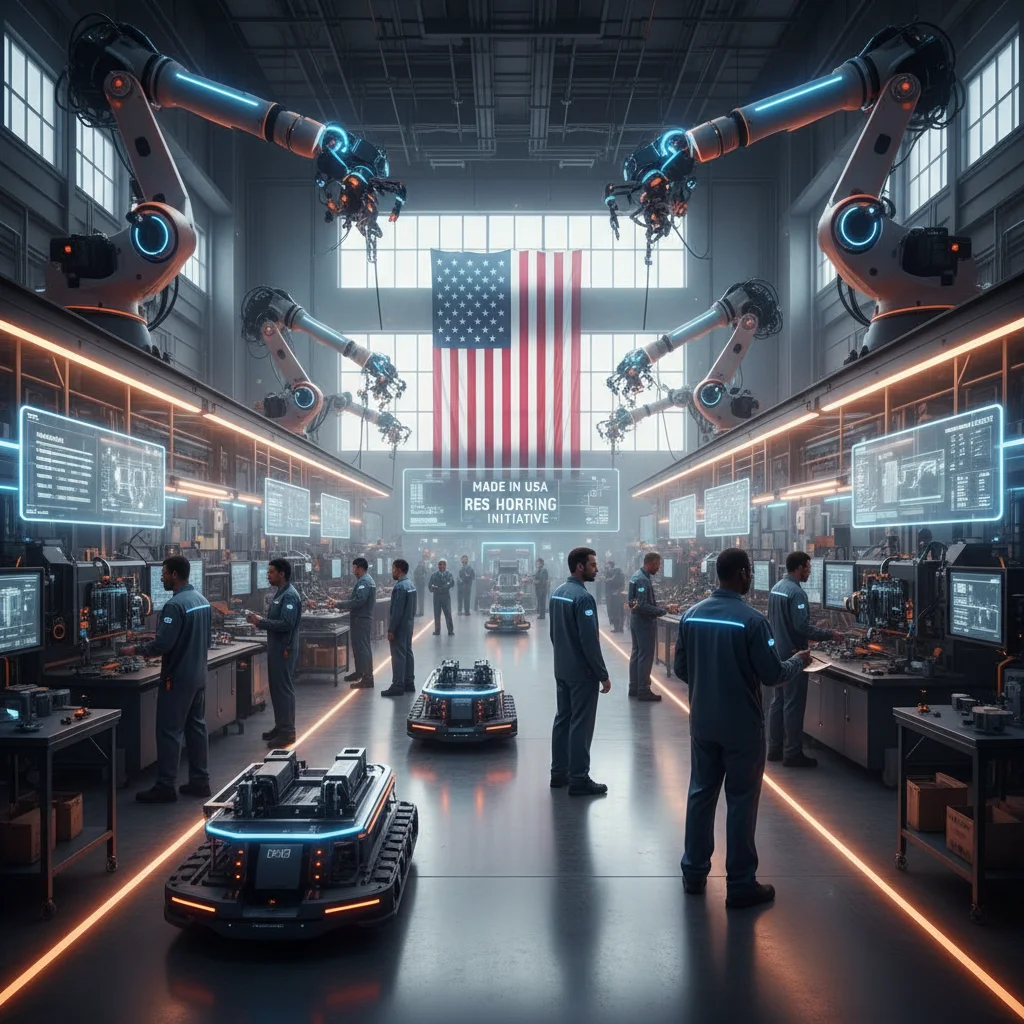
The landscape of global manufacturing is undergoing a profound transformation, with a significant pivot towards US Manufacturing Reshoring. This strategic shift is not merely a response to recent supply chain disruptions but a calculated move driven by economic incentives, national security concerns, and a desire for greater control over production processes. As we approach 2026, the impetus for bringing manufacturing back to American shores is stronger than ever, supported by a robust framework of federal and state programs designed to facilitate this transition. For businesses looking to capitalize on this trend, understanding the evolving policy environment and developing a proactive strategy is paramount. This comprehensive guide will outline a 3-step approach to maximizing the plethora of incentives available, ensuring your business is well-positioned for sustainable growth and operational resilience in the new era of American manufacturing.
The narrative of globalization, which once championed offshore production for cost efficiency, has been reevaluated in light of unforeseen challenges. Geopolitical tensions, trade wars, and a global pandemic have exposed the vulnerabilities inherent in extended, complex supply chains. The call for US Manufacturing Reshoring has thus intensified, driven by a collective realization that economic sovereignty and national resilience are inextricably linked to a strong domestic industrial base. The period leading up to 2026 represents a critical window of opportunity, as government bodies at all levels are rolling out unprecedented support to encourage and incentivize this repatriation of manufacturing capabilities. Navigating this landscape requires not only an understanding of the incentives themselves but also a strategic foresight to align business operations with the broader national agenda.
This article delves deep into the actionable steps businesses can take to leverage these opportunities. From deciphering the latest legislative acts to building robust domestic supply chains and fostering a skilled workforce, each step is designed to provide a clear roadmap. The goal is to empower manufacturers, both large and small, to make informed decisions that not only benefit their bottom line but also contribute to the revitalization of American industry. By focusing on US Manufacturing Reshoring, companies can unlock new avenues for innovation, reduce lead times, enhance quality control, and build a more resilient future. The time to act is now, as the incentives and supportive environment are converging to create an unparalleled moment for domestic industrial growth.
Step 1: Understand the Evolving Policy and Incentive Landscape
The first and most crucial step in maximizing US Manufacturing Reshoring incentives is to gain a comprehensive understanding of the current and anticipated policy and incentive landscape. This environment is dynamic, with new legislation, grants, tax credits, and loan programs being introduced regularly at both federal and state levels. Staying abreast of these developments is not just about compliance; it’s about identifying strategic advantages that can significantly reduce the cost and risk associated with reshoring initiatives.
Federal Initiatives Driving US Manufacturing Reshoring
The federal government has been a primary driver of the US Manufacturing Reshoring movement, enacting several landmark pieces of legislation. Key among these are:
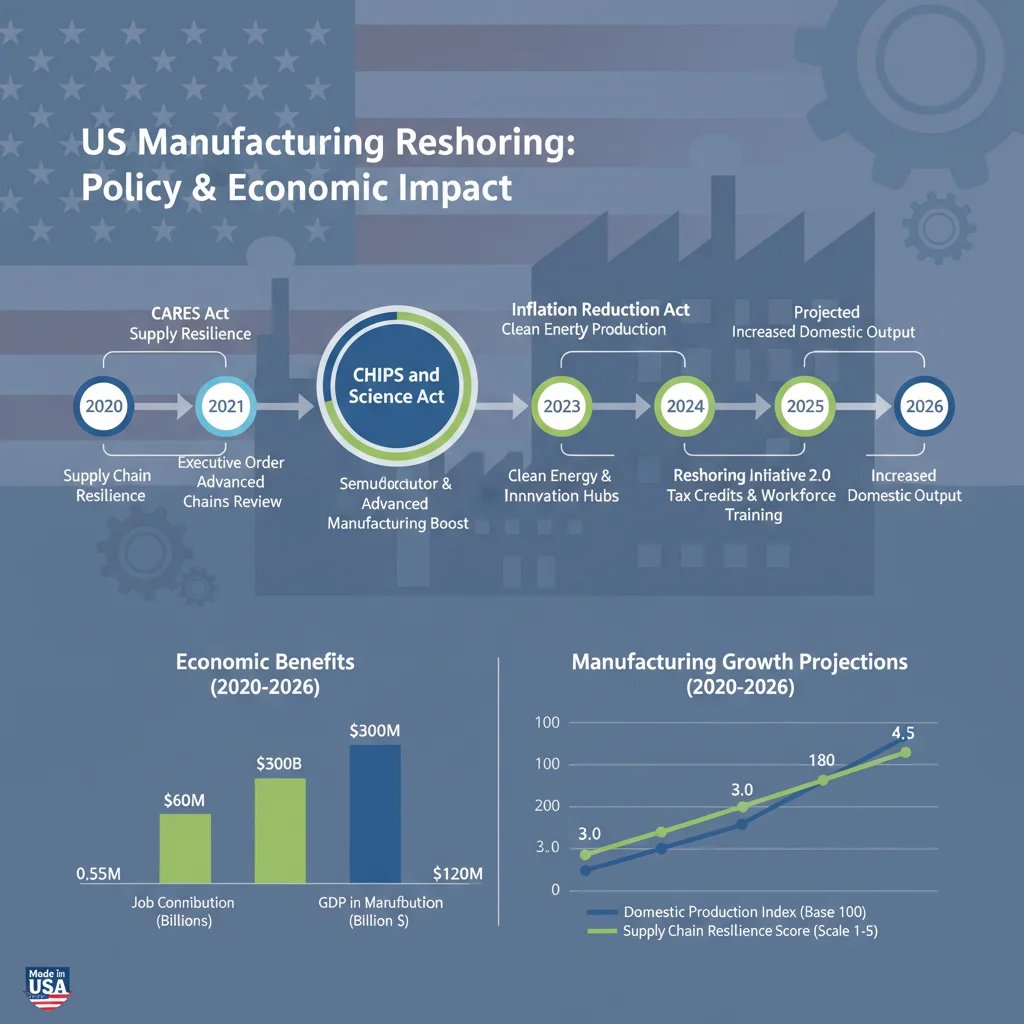
- The CHIPS and Science Act (2022): This act is a cornerstone for reshoring, particularly in the semiconductor industry. It provides over $52 billion in subsidies for US-based semiconductor manufacturing and research, aiming to reduce reliance on foreign supply chains for these critical components. Beyond semiconductors, the act also includes broader investments in scientific research and workforce development, which indirectly support other manufacturing sectors.
- The Inflation Reduction Act (IRA) (2022): While primarily focused on climate change and healthcare, the IRA contains significant manufacturing provisions. It offers substantial tax credits and incentives for domestic production of clean energy technologies, electric vehicles, and critical minerals. For instance, the advanced manufacturing production credit (45X) provides a tax credit for the domestic production of certain components, such as solar and wind components, and battery cells/modules. This directly encourages US Manufacturing Reshoring in these high-growth sectors.
- Infrastructure Investment and Jobs Act (IIJA) (2021): This bipartisan infrastructure law allocates billions of dollars to rebuild America’s infrastructure. It includes ‘Buy America’ provisions that mandate the use of American-made iron, steel, and manufactured products in federally funded infrastructure projects. This creates a guaranteed market for domestic manufacturers, providing a strong incentive for companies to reshore production to meet this demand.
- Department of Defense (DoD) Initiatives: The DoD has its own set of programs and preferences for domestic sourcing, especially for critical defense components. Manufacturers looking to supply the defense sector will find significant advantages in establishing or expanding their operations within the US.
Understanding the specific eligibility criteria, application processes, and reporting requirements for each of these federal programs is essential. Many of these incentives are designed to be competitive, requiring a well-articulated proposal that demonstrates how a company’s reshoring efforts align with national strategic goals.
State and Local Incentives
Beyond federal programs, states and local municipalities are fiercely competing to attract manufacturing investment. These regional incentives can often be the deciding factor in location decisions for US Manufacturing Reshoring projects. They typically include:
- Tax Credits and Exemptions: Many states offer corporate income tax credits, property tax abatements, sales tax exemptions on equipment, and research and development (R&D) tax credits specifically for manufacturers.
- Grants: Direct grants for job creation, capital investment, workforce training, or infrastructure development are common.
- Low-Interest Loans and Loan Guarantees: State-sponsored financing programs can provide access to capital at favorable rates.
- Workforce Development Programs: States often partner with community colleges and vocational schools to provide customized training programs to ensure a skilled labor pool is available for new or expanded manufacturing facilities.
- Site Selection Assistance: Economic development agencies can assist with identifying suitable industrial sites, navigating permitting processes, and connecting businesses with local resources.
Researching the specific incentives offered by target states and localities is critical. This often involves engaging with state economic development organizations, local chambers of commerce, and site selection consultants who specialize in identifying and negotiating these regional benefits. The aggregation of federal, state, and local incentives can dramatically alter the financial viability of a US Manufacturing Reshoring project, making thorough due diligence in this area indispensable.
Step 2: Develop a Strategic Reshoring and Supply Chain Optimization Plan
Once the incentive landscape is understood, the next step is to translate that knowledge into a concrete, strategic plan for US Manufacturing Reshoring and supply chain optimization. This involves a comprehensive assessment of current operations, a detailed financial analysis, and the development of a phased implementation strategy. It’s not simply about moving production; it’s about reimagining and rebuilding a more resilient and efficient operational model.
Comprehensive Cost-Benefit Analysis
A thorough cost-benefit analysis is the bedrock of any successful reshoring initiative. This analysis must go beyond direct labor and shipping costs to include a wider array of factors that impact the true cost of ownership and operational efficiency:
- Total Cost of Ownership (TCO): This includes not just direct production costs but also inventory carrying costs, quality control expenses, intellectual property risks, communication overheads, travel expenses, and the cost of supply chain disruptions. Often, when these factors are fully accounted for, the perceived cost advantage of offshore manufacturing diminishes significantly.
- Incentive Quantification: Accurately quantify the financial impact of identified federal, state, and local incentives. This includes tax credits, grants, reduced interest rates on loans, and the value of workforce training programs. These incentives can significantly offset initial relocation and setup costs.
- Risk Mitigation: Evaluate the costs associated with supply chain risks, such as geopolitical instability, natural disasters, trade policy changes, and intellectual property theft. Reshoring can dramatically reduce these risks, leading to more predictable operations and fewer costly disruptions.
- Market Responsiveness: Assess the value of reduced lead times and increased flexibility. Being closer to the customer allows for faster response to market changes, quicker product iterations, and improved customer satisfaction, which can translate into higher revenues and increased market share.
- Brand and Reputation: Quantify the potential boost to brand image and customer loyalty from marketing products as ‘Made in USA.’ For many consumers, this carries a premium and signifies quality and ethical production.
This comprehensive analysis will provide a clear financial justification for US Manufacturing Reshoring and help prioritize which product lines or components are best suited for repatriation.
Supply Chain Mapping and Reconfiguration
Reshoring one part of the manufacturing process often necessitates a re-evaluation of the entire supply chain. This requires detailed mapping and strategic reconfiguration:
- Identify Critical Components: Pinpoint which components or sub-assemblies are most critical to your operations and most vulnerable to disruption when sourced internationally. These are often the prime candidates for domestic sourcing or production.
- Domestic Supplier Vetting: Develop a robust process for identifying, vetting, and onboarding new domestic suppliers. This includes evaluating their capacity, quality standards, financial stability, and ability to meet your specific requirements. Building strong relationships with local suppliers is key to a resilient domestic supply chain for US Manufacturing Reshoring.
- Vertical Integration Opportunities: Explore opportunities for vertical integration where it makes strategic sense. Bringing more stages of production in-house can offer greater control, reduce reliance on external suppliers, and potentially unlock additional efficiencies.
- Logistics and Distribution Network: Re-evaluate your logistics and distribution network to optimize for domestic production. This may involve establishing new warehousing facilities or partnering with domestic logistics providers to ensure efficient movement of goods from factory to customer.
- Technology Adoption: Leverage advanced manufacturing technologies such as automation, robotics, AI, and additive manufacturing (3D printing). These technologies can offset higher labor costs, improve efficiency, and enhance product quality, making US Manufacturing Reshoring more competitive.
Workforce Development and Training
A critical component of successful US Manufacturing Reshoring is ensuring access to a skilled workforce. The nature of manufacturing jobs has evolved, with a greater emphasis on technical skills related to automation, data analytics, and advanced machinery operation.
- Skills Gap Analysis: Conduct a thorough assessment of your current workforce capabilities and identify any skills gaps that need to be addressed for reshoring.
- Partnerships with Educational Institutions: Collaborate with local community colleges, vocational schools, and universities to develop customized training programs and apprenticeships. Many state and federal incentives specifically support these types of partnerships.
- Internal Training Programs: Invest in upskilling and reskilling your existing workforce through internal training programs. This not only enhances capabilities but also boosts employee morale and retention.
- Attracting New Talent: Develop strategies to attract new talent, including recent graduates from technical programs. Highlight the benefits of working in modern, technologically advanced manufacturing facilities.
A strategic plan for US Manufacturing Reshoring must address these interconnected elements to ensure a smooth and successful transition.

Step 3: Implement and Continuously Optimize
The final step in maximizing US Manufacturing Reshoring incentives is the effective implementation of your strategic plan, followed by continuous monitoring and optimization. Reshoring is not a one-time event but an ongoing process that requires agility and a commitment to continuous improvement.
Phased Implementation and Project Management
Breaking down the reshoring project into manageable phases is crucial for success:
- Pilot Projects: Consider starting with a pilot project for a smaller, less complex product line or component. This allows you to test processes, identify challenges, and refine your approach before scaling up.
- Dedicated Project Team: Assemble a cross-functional project team with representatives from production, supply chain, finance, HR, and legal departments. Assign clear roles, responsibilities, and timelines.
- Risk Management: Develop a comprehensive risk management plan that anticipates potential challenges, such as unexpected costs, delays in permitting, or difficulties in sourcing materials. Establish contingency plans for each identified risk.
- Communication Strategy: Implement a clear communication strategy to keep all stakeholders – employees, suppliers, customers, and investors – informed about the progress and benefits of your US Manufacturing Reshoring efforts.
- Compliance and Reporting: Ensure meticulous record-keeping and compliance with all requirements for federal, state, and local incentives. This often involves regular reporting on job creation, capital investment, and other metrics.
Leveraging Technology and Automation
To truly maximize the benefits of US Manufacturing Reshoring, companies must embrace advanced manufacturing technologies. These technologies are instrumental in making domestic production competitive with lower-cost regions:
- Automation and Robotics: Invest in automation and robotics to increase efficiency, reduce labor costs for repetitive tasks, and improve safety. This allows human workers to focus on higher-value activities.
- Industrial Internet of Things (IIoT): Implement IIoT sensors and connected devices to gather real-time data on production processes, equipment performance, and inventory levels. This data can be used to optimize operations, predict maintenance needs, and improve decision-making.
- Artificial Intelligence (AI) and Machine Learning (ML): Utilize AI and ML for predictive analytics, quality control, demand forecasting, and process optimization. These technologies can significantly enhance productivity and reduce waste.
- Additive Manufacturing (3D Printing): Explore additive manufacturing for rapid prototyping, production of complex parts, and on-demand manufacturing. This can reduce reliance on traditional tooling and long lead times associated with offshore production.
- Digital Twin Technology: Create digital twins of your manufacturing processes or entire factories to simulate operations, test changes, and optimize performance in a virtual environment before implementing them physically.
Many government incentives for US Manufacturing Reshoring are specifically geared towards investments in these advanced technologies, further enhancing their attractiveness.
Continuous Improvement and Adaptation
The manufacturing landscape is constantly evolving, and so too must your reshoring strategy. Continuous improvement is vital for long-term success:
- Performance Metrics: Establish key performance indicators (KPIs) to monitor the success of your reshoring initiatives. These might include production costs, lead times, quality defect rates, employee retention, and customer satisfaction.
- Regular Reviews: Conduct regular reviews of your operations and supply chain to identify areas for further optimization. This could involve exploring new technologies, refining processes, or expanding domestic sourcing.
- Feedback Loops: Implement feedback mechanisms from employees, suppliers, and customers to identify pain points and opportunities for improvement.
- Stay Informed on Policy Changes: The incentive landscape for US Manufacturing Reshoring is dynamic. Continuously monitor legislative changes and new programs that could offer additional benefits or require adjustments to your strategy.
- Adapt to Market Demands: Be prepared to adapt your manufacturing processes and product offerings in response to changing market demands and consumer preferences. The flexibility gained from domestic production can be a significant competitive advantage.
By treating US Manufacturing Reshoring as an ongoing journey of optimization, businesses can ensure they remain competitive, resilient, and maximally benefit from the supportive environment leading up to and beyond 2026.
The Broader Impact of US Manufacturing Reshoring
The strategic shift towards US Manufacturing Reshoring extends far beyond individual company benefits. It plays a pivotal role in strengthening the national economy, enhancing national security, and fostering technological innovation. By bringing production back home, the United States is investing in a more self-reliant and prosperous future.
Economic Revitalization and Job Creation
One of the most immediate and tangible benefits of US Manufacturing Reshoring is the revitalization of American communities through job creation. Manufacturing jobs, particularly those in advanced sectors, often provide competitive wages and benefits, supporting local economies. The ripple effect extends to ancillary industries, including logistics, raw materials, and service providers, further boosting economic activity. This creates a virtuous cycle of investment, employment, and economic growth, helping to rebuild the middle class and secure a more stable economic foundation for the nation.
Enhanced National Security and Supply Chain Resilience
The vulnerabilities exposed by recent global events have underscored the critical link between domestic manufacturing capacity and national security. Relying on foreign sources for essential goods, from medical supplies to defense components, poses significant risks. US Manufacturing Reshoring directly addresses these concerns by ensuring a reliable domestic supply of critical products. This not only bolsters defense capabilities but also safeguards public health and economic stability against future disruptions, making the nation more resilient to geopolitical shifts and unforeseen crises.
Innovation and Technological Advancement
The push for US Manufacturing Reshoring is inextricably linked to fostering innovation and technological advancement. As companies invest in new domestic facilities, they are often incorporating cutting-edge technologies such as advanced robotics, artificial intelligence, and sustainable manufacturing processes. This drives R&D, creates demand for highly skilled workers, and positions the US at the forefront of the next industrial revolution. The concentration of manufacturing and research activities closer together facilitates faster innovation cycles and the development of new, high-value products and processes.
Environmental Sustainability
While often overlooked, US Manufacturing Reshoring can also contribute to environmental sustainability. Domestic production often operates under stricter environmental regulations compared to some offshore locations. Furthermore, shorter supply chains reduce the carbon footprint associated with long-distance transportation of goods. By embracing green manufacturing practices and investing in renewable energy, reshoring initiatives can align economic growth with environmental stewardship, leading to more sustainable industrial practices.
Conclusion: Seizing the Moment for US Manufacturing Reshoring
The period leading up to 2026 represents an unprecedented opportunity for businesses to engage in US Manufacturing Reshoring. The confluence of supportive government policies, economic imperatives, and technological advancements has created a highly favorable environment for bringing production back to American soil. By meticulously following the three steps outlined in this guide – understanding the incentive landscape, developing a strategic plan, and committing to continuous optimization – companies can not only maximize their financial benefits but also contribute significantly to the nation’s economic resilience and technological leadership.
The decision to reshore is a complex one, requiring careful consideration and strategic planning. However, with the right approach, the advantages of reduced supply chain risk, enhanced innovation, closer proximity to markets, and substantial government support make a compelling case. As the world continues to navigate an era of uncertainty, investing in US Manufacturing Reshoring is not just a business decision; it is a strategic imperative for building a stronger, more secure, and more prosperous future for American industry.
Embrace this transformative moment. Leverage the incentives, optimize your operations, and become a part of the movement that is redefining the future of American manufacturing. The pathway to 2026 is clear, and the rewards for proactive engagement in US Manufacturing Reshoring are substantial.