US Tax Laws: Startup Reinvestment Changes & Impact

In the dynamic world of entrepreneurship, startups are constantly seeking avenues for growth, innovation, and, critically, reinvestment. The ability to channel profits back into the business, whether for research and development, hiring talent, or expanding operations, is often the lifeblood of a burgeoning enterprise. However, this crucial aspect of startup development is inextricably linked to the ever-evolving landscape of tax legislation. Over the past six months, the United States has seen several significant shifts in its tax laws that directly impact how startups approach reinvestment. These changes, some subtle and others more overt, carry profound implications for financial planning, operational strategies, and ultimately, the long-term viability of new ventures.
Understanding these modifications is not merely a matter of compliance; it’s a strategic imperative. For founders and investors alike, a clear grasp of the updated regulations can mean the difference between accelerated growth and unforeseen financial burdens. This comprehensive guide delves into the recent alterations in US tax laws, offering an in-depth analysis of what has changed, why it matters, and how startups can effectively navigate this new regulatory environment to optimize their startup tax reinvestment strategies.
The Shifting Sands of US Tax Policy: A Recent Overview
The last half-year has been particularly active for tax policy in the United States, with various legislative efforts and regulatory pronouncements aiming to address economic shifts, stimulate specific sectors, or close perceived loopholes. For startups, these changes often create a ripple effect, influencing everything from valuation to cash flow. While a full legislative overhaul might not have occurred, targeted adjustments to existing codes and the introduction of new provisions have certainly altered the playing field for startup tax reinvestment.
Key Areas of Impact for Startup Reinvestment
Several critical areas have seen modifications that directly bear on a startup’s ability and incentive to reinvest. These include, but are not limited to, adjustments to research and development (R&D) tax credits, changes in capital gains treatment, nuances in pass-through entity taxation, and evolving rules around depreciation and amortization. Each of these can either bolster or hinder a startup’s financial flexibility for reinvestment.
For instance, R&D tax credits have historically been a cornerstone for innovative startups, allowing them to offset qualified research expenses against their tax liability. Any alteration to these credits—whether in their scope, eligibility criteria, or the mechanism for claiming them—can significantly affect the financial calculus for reinvesting in innovation. Similarly, how capital gains are taxed can influence investor behavior, which in turn impacts the availability of funding for startups, and consequently, their capacity for internal reinvestment.
Deep Dive into Specific Tax Law Changes Affecting Startups
To truly understand the impact, we must examine the specific legislative and regulatory actions that have taken place. While the exact nature of these changes can be complex, their implications for startup tax reinvestment are often quite direct.
Research and Development (R&D) Expense Amortization
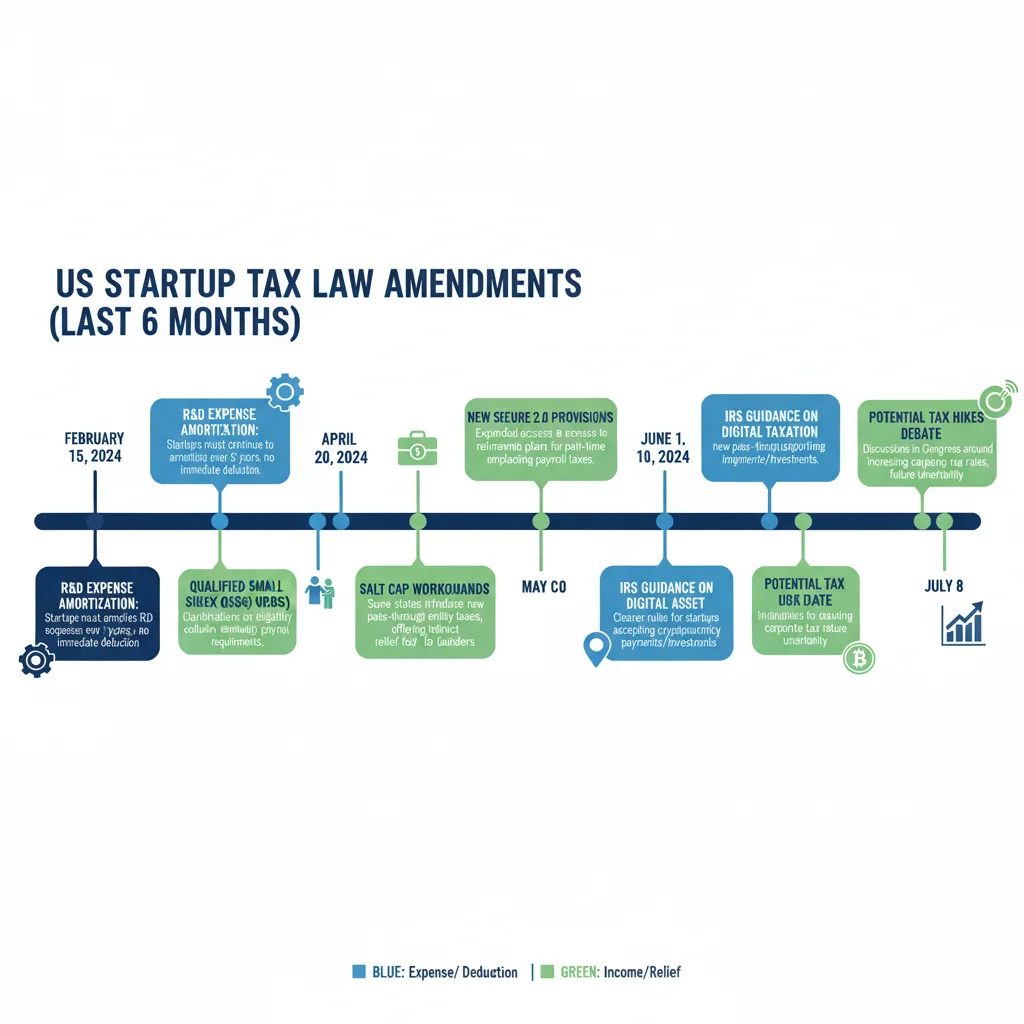
One of the most talked-about changes impacting startups has been the requirement, effective for tax years beginning after December 31, 2021, to amortize R&D expenses over five years (or fifteen years for foreign research) instead of immediately deducting them. While this change predates the six-month window we are primarily focusing on, its ongoing impact is still being felt profoundly by many startups. The original intent of tax code Section 174 was to encourage innovation by allowing immediate expensing. The shift to amortization has meant that many startups are facing higher taxable income and, consequently, higher tax bills, reducing the cash available for future reinvestment. This has been a significant point of concern for the startup community, leading to ongoing lobbying efforts for its repeal or deferral.
For a startup heavily reliant on R&D, this change fundamentally alters their financial planning. Instead of a dollar spent on R&D immediately reducing taxable income by a dollar, it now only reduces it by 20 cents in the current year, with the remaining deductions spread out over the next four years. This delay in tax benefits directly impacts cash flow, making it harder for early-stage companies to afford continuous innovation and growth-oriented reinvestment.
Changes in Depreciation and Capital Expenditures
Another area that has seen adjustments is the treatment of depreciation for capital expenditures. While full expensing for certain qualified property was a significant benefit under previous tax reforms, recent discussions and potential legislative actions have hinted at modifications. Any curtailment of accelerated depreciation or bonus depreciation provisions can directly affect a startup’s decision to invest in new equipment, facilities, or technology. When a startup can immediately expense a significant portion of a capital asset, it lowers their current tax liability, freeing up capital for other forms of startup tax reinvestment. If these benefits are reduced or phased out, the cost of capital investment effectively increases, potentially slowing down expansion and innovation.
Potential Adjustments to Section 1202 Qualified Small Business Stock (QSBS) Exclusion
While no definitive changes have been enacted in the last six months, there have been ongoing discussions and proposals regarding modifications to the Qualified Small Business Stock (QSBS) exclusion under Section 1202. This provision allows eligible shareholders to exclude a significant portion, or even all, of their capital gains from the sale of qualified small business stock, provided certain conditions are met. This incentive is crucial for attracting early-stage investment into startups. Any move to limit or repeal this exclusion could dampen investor enthusiasm, making it harder for startups to raise necessary capital. Reduced access to capital directly impacts a startup’s ability to fund its growth through reinvestment, as external funding often complements internal cash flow for scaling operations.
Impact of Inflation Reduction Act (IRA) Provisions on Clean Energy Startups
The Inflation Reduction Act (IRA), while signed into law prior to the six-month window, has seen its provisions come into fuller effect and interpretation over this period. For startups in the clean energy, sustainable technology, and climate tech sectors, the IRA offers substantial tax credits and incentives. These provisions can significantly reduce the cost of developing and deploying new technologies, effectively creating a powerful incentive for startup tax reinvestment in these specific areas. For example, expanded tax credits for manufacturing certain components, deploying renewable energy, or developing carbon capture technologies mean that startups in these fields have more disposable income to reinvest in further innovation, expansion, and job creation. Understanding the nuances of these credits and how to claim them has been a key focus for relevant startups in recent months.
Strategic Implications for Startup Reinvestment
The combined effect of these tax law changes, whether enacted or merely proposed and debated, necessitates a strategic re-evaluation for every startup. The era of ‘set it and forget it’ tax planning is long gone, especially for agile, growth-focused companies.
Revisiting Financial Models and Projections
Startups must revisit their financial models and projections to account for these new tax realities. This includes adjusting cash flow forecasts, re-evaluating the profitability of R&D heavy projects, and understanding the true after-tax cost of capital expenditures. For instance, the amortization of R&D expenses means that a startup’s tax liability in early, cash-strapped years might be higher than previously anticipated. This requires careful budgeting and potentially a re-prioritization of reinvestment opportunities.
Optimizing Capital Allocation for Growth
With changes in tax treatment, the optimal allocation of capital for growth also shifts. Startups might need to weigh the immediate tax benefits (or lack thereof) of certain investments against their long-term strategic value. For example, if R&D expensing is limited, a startup might explore other avenues for innovation funding or seek alternative tax-advantaged investments. The goal remains to maximize the impact of every dollar reinvested, but the path to achieving that maximum has become more complex.
Leveraging Available Incentives and Credits
Despite some unfavorable changes, new incentives and expanded credits, particularly those related to clean energy and specific technological advancements, present significant opportunities. Startups should actively seek out and leverage all available tax credits, grants, and deductions for which they qualify. This requires proactive engagement with tax professionals who specialize in startup taxation and an ongoing awareness of legislative developments. Effectively utilizing these incentives can offset the negative impacts of other tax changes and free up capital for further startup tax reinvestment.
Navigating the Regulatory Labyrinth: Best Practices for Startups
Successfully navigating the evolving tax landscape requires more than just a reactive approach; it demands foresight, adaptability, and expert guidance. Here are some best practices for startups to ensure their reinvestment strategies remain robust and tax-efficient.
Engage with Specialized Tax Advisors Early and Often
The complexity of US tax law, especially as it pertains to startups and their unique growth trajectories, cannot be overstated. Engaging with tax advisors who specialize in startup taxation is paramount. These professionals can provide tailored advice, help interpret new regulations, and identify eligible deductions and credits that might otherwise be overlooked. Regular consultations ensure that a startup’s financial strategies are always aligned with the latest tax provisions, optimizing their startup tax reinvestment potential.
Maintain Meticulous Record-Keeping and Documentation
Accurate and comprehensive record-keeping is critical for substantiating tax claims and weathering potential audits. This is particularly true for R&D expenses, capital expenditures, and any activities related to claiming specialized tax credits. Detailed documentation not only ensures compliance but also provides a clear audit trail, offering peace of mind and protecting the startup from future liabilities.
Stay Informed About Legislative Developments
Tax laws are not static. What is true today might be different tomorrow. Startups, therefore, must make a concerted effort to stay informed about ongoing legislative discussions, proposed bills, and regulatory updates. Subscribing to tax news alerts, attending industry webinars, and maintaining open communication with tax advisors can help startups anticipate changes and adapt their strategies proactively. This continuous awareness is key to agile startup tax reinvestment.

Consider Entity Structure and Its Tax Implications
While often decided in the early stages, a startup’s entity structure (e.g., C-Corp, S-Corp, LLC) has significant and ongoing tax implications, particularly concerning reinvestment. As tax laws evolve, it might be prudent to re-evaluate whether the current structure remains the most tax-efficient for the startup’s growth trajectory and reinvestment objectives. For example, changes in pass-through entity taxation could make one structure more favorable than another for retaining earnings and reinvesting them back into the business.
Scenario Planning and Stress Testing
Given the uncertainty inherent in tax policy, startups should engage in scenario planning and stress testing of their financial models. What if the R&D amortization rule is not repealed? What if QSBS benefits are curtailed? By modeling different tax scenarios, startups can better understand their potential exposure and develop contingency plans, ensuring they can continue their startup tax reinvestment efforts even under less favorable conditions.
The Broader Economic Context and Future Outlook
The recent changes in US tax laws affecting startup tax reinvestment do not occur in a vacuum. They are part of a broader economic and political context. Factors such as inflation, interest rates, global economic competition, and upcoming elections can all influence the direction of future tax policy. Understanding these broader trends can provide startups with a more holistic perspective on potential future changes.
For example, sustained high inflation might prompt lawmakers to consider tax measures aimed at stimulating specific sectors or encouraging domestic production, which could indirectly benefit certain startups. Conversely, a focus on fiscal austerity might lead to broader tax increases or the reduction of existing incentives. Startups that are attuned to these macroeconomic and political currents will be better positioned to adapt their reinvestment strategies.
Advocacy and Collective Action
The startup community is not without a voice. Industry associations, venture capital firms, and startup accelerators often engage in advocacy efforts to represent the interests of new ventures in policy discussions. Startups can benefit from supporting and participating in these collective actions, as a unified front can sometimes influence legislative outcomes, particularly concerning provisions like R&D expensing or QSBS. This collective advocacy can help shape a more favorable environment for startup tax reinvestment in the long run.
Conclusion: Adapting to a New Era of Startup Tax Reinvestment
The past six months have brought notable shifts in US tax laws, creating both challenges and opportunities for startups focused on reinvestment and growth. From the ongoing implications of R&D expense amortization to the targeted incentives for clean energy, the regulatory environment is more complex than ever. For startups to thrive, a proactive, informed, and strategic approach to startup tax reinvestment is absolutely essential.
By understanding the specific changes, revisiting financial models, leveraging available incentives, and engaging with expert tax advisors, startups can not only ensure compliance but also optimize their financial strategies to fuel sustainable growth. The ability to adapt to these evolving tax realities will be a defining characteristic of successful startups in the years to come, transforming potential headwinds into tailwinds for innovation and expansion.
The journey of a startup is inherently one of constant evolution. Just as products and markets change, so too do the rules governing financial operations. Embracing this reality and investing in robust tax planning will empower startups to navigate the complexities, ensuring that their valuable capital continues to be reinvested in a manner that maximizes both their bottom line and their societal impact.