Data Privacy Compliance in 2026: A Step-by-Step Guide for U.S. Companies Facing New State Regulations (PRACTICAL SOLUTIONS)
The digital age has ushered in an era of unprecedented data collection and utilization, making data a cornerstone of modern business. However, with great power comes great responsibility, and the regulatory landscape surrounding data privacy is evolving at a breakneck pace. For U.S. companies, 2026 is poised to be a pivotal year, with an increasing number of states enacting their own comprehensive data privacy laws, creating a complex patchwork of requirements that demand meticulous attention. Navigating these new mandates is not merely a legal obligation; it’s a strategic imperative that can significantly impact consumer trust, brand reputation, and financial stability. This comprehensive guide provides a step-by-step roadmap for U.S. businesses to achieve robust data privacy compliance in the face of these emerging state regulations, offering practical solutions to mitigate risks and foster a culture of privacy.
The Evolving Landscape of U.S. Data Privacy Regulations
For years, the U.S. has operated without a single, overarching federal data privacy law comparable to Europe’s General Data Protection Regulation (GDPR). Instead, a sector-specific approach (e.g., HIPAA for healthcare, COPPA for children’s online privacy) and a growing wave of state-level legislation have defined the regulatory environment. While California’s CCPA (now CPRA) led the charge, states like Virginia (VCDPA), Colorado (CPA), Utah (UCPA), Connecticut (CTDPA), and others have followed suit, with many more expected to introduce or strengthen their laws by 2026. This decentralized approach means businesses must contend with varying definitions of personal data, consumer rights, consent requirements, and enforcement mechanisms, making data privacy compliance a multi-faceted challenge.
Understanding the Core Principles of State Privacy Laws
Despite their differences, most state privacy laws share common foundational principles derived from global privacy frameworks. These include:
- Transparency: Companies must clearly inform consumers about what data they collect, why they collect it, how it’s used, and with whom it’s shared.
- Consumer Rights: Individuals are granted rights over their personal data, such as the right to access, correct, delete, and opt-out of the sale or sharing of their data.
- Data Minimization: Businesses should only collect and retain data that is necessary for the stated purpose.
- Purpose Limitation: Data collected for one purpose should not be used for another incompatible purpose without explicit consent.
- Security: Adequate security measures must be in place to protect personal data from unauthorized access, use, or disclosure.
- Accountability: Organizations are responsible for demonstrating compliance with privacy laws.
The challenge for businesses lies in operationalizing these principles across various state laws, each with its unique nuances and thresholds for applicability. A proactive and strategic approach to data privacy compliance is no longer optional; it’s essential for survival and growth in the modern digital economy.
Step-by-Step Guide to Achieving Data Privacy Compliance in 2026
Step 1: Conduct a Comprehensive Data Inventory and Mapping
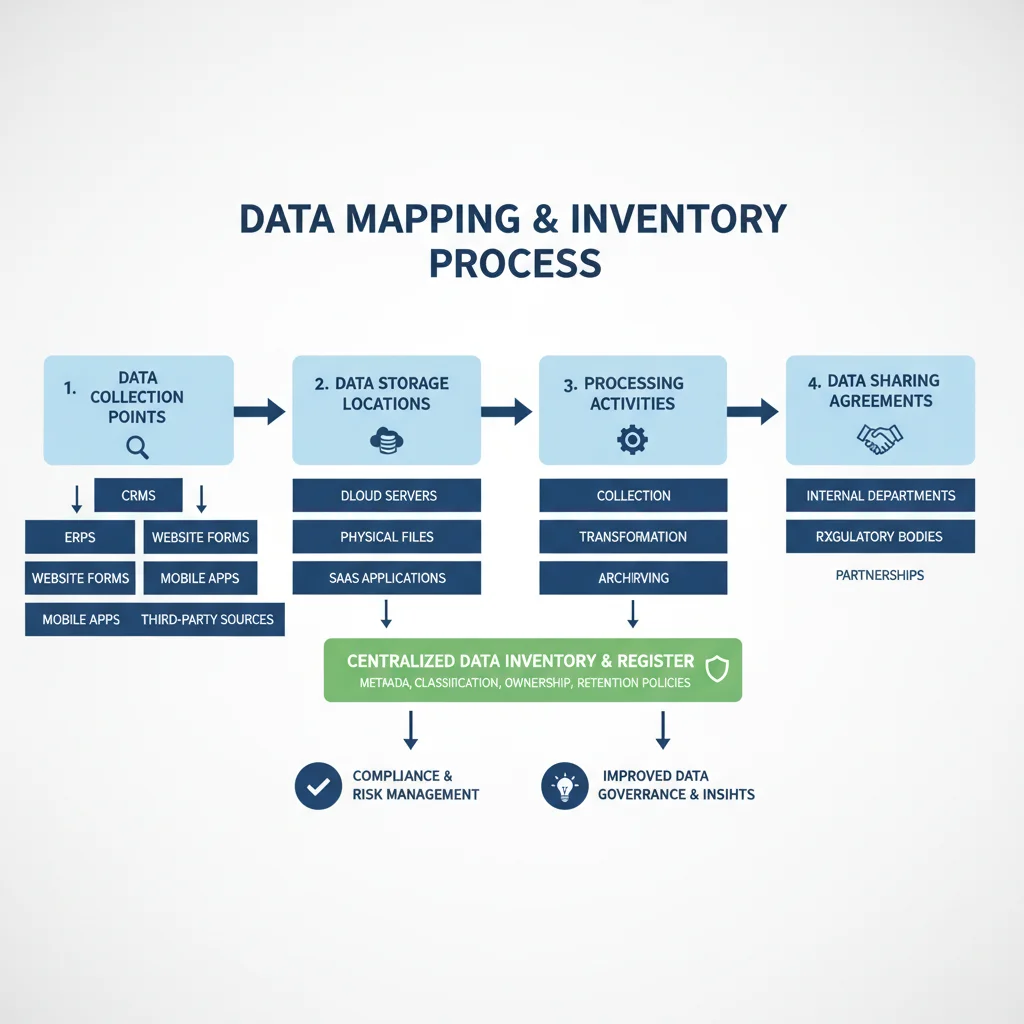
Before you can protect data, you must know what data you have, where it resides, and how it flows through your organization. This foundational step is critical for any effective data privacy compliance program.
- Identify All Data Sources: Catalog every system, application, and process that collects, stores, or processes personal data. This includes websites, CRM systems, marketing automation platforms, HR databases, cloud storage, third-party vendors, and even physical documents.
- Map Data Flows: Document the entire lifecycle of personal data, from its initial collection to its storage, processing, transfer (internal and external), and eventual deletion. Understand who has access to the data and for what purpose.
- Categorize Data: Classify the types of personal data collected (e.g., identifiable, pseudonymous, sensitive, biometric). This helps in assessing risk and applying appropriate safeguards.
- Identify Legal Basis for Processing: For each data processing activity, determine the legal justification (e.g., consent, contractual necessity, legitimate interest, legal obligation).
- Assess Data Retention Policies: Review and establish clear data retention schedules based on legal requirements and business needs.
Tools such as data discovery software, questionnaires, and interviews with departmental heads can facilitate this process. A thorough data inventory provides the necessary visibility to address compliance gaps effectively.
Step 2: Understand Applicable State Regulations and Their Impact
Given the fragmented nature of U.S. data privacy laws, it’s crucial to identify which state regulations apply to your business. This often depends on factors such as:
- Revenue Thresholds: Many laws apply to businesses exceeding certain annual revenue figures.
- Number of Consumers/Households: Laws often apply to entities that process personal data of a specific number of state residents.
- Data Processing Activities: Some laws have specific provisions for businesses that derive a significant portion of their revenue from selling or sharing personal data.
Once identified, conduct a detailed impact assessment for each applicable law. This involves:
- Comparing Requirements: Highlight the similarities and differences between applicable state laws concerning consumer rights, consent mechanisms, data security, vendor management, and breach notification.
- Identifying Gaps: Pinpoint areas where your current data practices fall short of the new requirements.
- Prioritizing Risks: Assess the potential legal, reputational, and financial risks associated with non-compliance for each identified gap.
Consider developing a compliance matrix that maps your data activities against the requirements of each relevant state law. This will be invaluable for maintaining effective data privacy compliance.
Step 3: Implement or Update Privacy Policies and Notices
Transparency is a cornerstone of modern data privacy. Your privacy policies and notices must be clear, concise, and easily accessible to consumers. They should accurately reflect your data practices and comply with the disclosure requirements of all applicable state laws.
- Website Privacy Policy: Ensure your website’s privacy policy explicitly details:
- What personal data is collected.
- The purposes for which it is collected and used.
- Categories of third parties with whom data is shared.
- Consumer rights (access, deletion, opt-out, correction) and how to exercise them.
- Contact information for privacy inquiries.
- Effective date and last updated date.
- Just-in-Time Notices: For specific data collection points (e.g., website forms, app sign-ups), provide concise, context-specific notices about data collection and usage.
- Cookie Banners and Consent Management: Implement robust cookie consent mechanisms that allow users to manage their preferences, especially for non-essential cookies, in line with state-specific requirements.
- Internal Privacy Policies: Develop internal policies and procedures for employees regarding data handling, access, and security.
Regularly review and update your policies to ensure they remain current with evolving regulations and your business practices. This continuous effort is vital for ongoing data privacy compliance.
Step 4: Establish Robust Consumer Rights Request Mechanisms
State privacy laws empower consumers with significant rights over their data. Businesses must establish efficient and verifiable processes to handle these requests.
- Designated Request Channels: Provide multiple, easily accessible channels for consumers to submit requests (e.g., web forms, toll-free numbers, email addresses).
- Identity Verification: Implement reasonable and secure methods to verify the identity of the requester to prevent unauthorized access to personal data.
- Response Timelines: Adhere to strict response deadlines mandated by each state law (typically 30-45 days, with possibilities for extension).
- Data Access and Portability: Develop systems to retrieve and provide consumers with copies of their personal data in a portable, easily usable format.
- Deletion and Correction: Establish procedures to accurately delete or correct personal data upon verified request, including notifying third parties to whom the data may have been shared.
- Opt-Out of Sale/Sharing: Implement clear mechanisms for consumers to opt-out of the sale or sharing of their personal data, often via a ‘Do Not Sell or Share My Personal Information’ link on your website.
- Appeals Process: Many laws require an internal appeals process if a consumer’s request is denied.
Automating aspects of consumer rights requests can improve efficiency and reduce the risk of human error, significantly bolstering your data privacy compliance posture.
Step 5: Strengthen Data Security Measures
Data privacy and data security are inextricably linked. Most state laws implicitly or explicitly require organizations to implement reasonable security measures to protect personal data.
- Risk Assessments: Regularly conduct security risk assessments to identify vulnerabilities and threats to personal data.
- Access Controls: Implement strong access controls (e.g., multi-factor authentication, least privilege principle) to restrict data access only to authorized personnel.
- Encryption: Encrypt sensitive personal data both in transit and at rest.
- Data Anonymization/Pseudonymization: Where feasible, anonymize or pseudonymize data to reduce the risk associated with its compromise.
- Incident Response Plan: Develop and regularly test a comprehensive data breach incident response plan. This includes procedures for detection, containment, eradication, recovery, and notification to affected individuals and regulatory bodies within mandated timeframes.
- Employee Training: Conduct regular security awareness training for all employees to educate them about their role in protecting personal data and recognizing security threats.
- Vendor Security Assessments: Extend your security scrutiny to third-party vendors who process data on your behalf.
Investing in robust cybersecurity infrastructure and practices is not just about compliance; it’s about protecting your business and your customers from potentially devastating data breaches. This is a critical component of data privacy compliance.
Step 6: Manage Third-Party Vendor Relationships
In today’s interconnected business environment, it’s rare for a company to process data entirely in-house. Third-party vendors (e.g., cloud providers, marketing agencies, analytics platforms) often have access to or process personal data on your behalf. Under many state laws, you are accountable for their compliance.
- Due Diligence: Conduct thorough due diligence on all third-party vendors to assess their data privacy and security practices before engaging them.
- Data Processing Agreements (DPAs): Ensure all contracts with vendors include robust Data Processing Agreements (DPAs) or similar clauses that specify:
- The scope and purpose of data processing.
- Obligations regarding data security.
- Restrictions on sub-processing.
- Consumer rights request assistance.
- Audit rights.
- Breach notification requirements.
- Ongoing Monitoring: Regularly monitor vendor compliance through audits, security questionnaires, and certifications.
A weak link in your vendor chain can expose your organization to significant compliance risks. Proactive vendor management is key to maintaining comprehensive data privacy compliance.
Step 7: Provide Ongoing Employee Training and Awareness
Your employees are your first line of defense in data privacy. A well-informed workforce is crucial for preventing breaches and ensuring adherence to privacy policies and procedures.
- Mandatory Training: Implement mandatory, recurring privacy and security awareness training for all employees, especially those who handle personal data.
- Role-Specific Training: Tailor training content to specific job functions (e.g., HR, marketing, IT, customer service) to address relevant privacy considerations.
- Policy Reinforcement: Regularly remind employees of internal privacy policies, procedures for handling data, and reporting security incidents.
- Culture of Privacy: Foster a company culture where privacy is seen as a shared responsibility, not just an IT or legal concern.
Regular training ensures that your human element is a strength, not a vulnerability, in your data privacy compliance efforts.

Step 8: Implement Data Protection by Design and Default
Integrate privacy considerations into the design and development of all new products, services, and processes from the outset. This proactive approach, known as ‘Privacy by Design,’ ensures that privacy is built-in, not bolted on.
- Early Privacy Impact Assessments (PIAs): Conduct PIAs for new initiatives to identify and mitigate privacy risks before launch.
- Default Privacy Settings: Configure systems and applications to offer the highest level of privacy by default, giving users control to opt-in to less private settings if they choose.
- Minimization and Pseudonymization: Design systems to collect and process only the minimum amount of personal data necessary and to use pseudonymization or anonymization where possible.
By embedding privacy into your operational DNA, you can significantly reduce compliance burdens and enhance trust, making data privacy compliance a natural outcome.
Step 9: Establish a Governance Framework and Appoint a Privacy Officer
Effective data privacy compliance requires strong leadership and a clear organizational structure.
- Appoint a Privacy Officer/Team: Designate an individual or a team responsible for overseeing data privacy compliance efforts, staying updated on regulatory changes, and serving as a point of contact for privacy inquiries and regulatory bodies.
- Cross-Functional Committee: Establish a cross-functional privacy committee involving representatives from legal, IT, marketing, HR, and other relevant departments to ensure a holistic approach to privacy.
- Regular Audits and Reviews: Conduct periodic internal and external audits of your privacy practices to identify weaknesses and ensure ongoing adherence to policies and regulations.
- Documentation: Maintain detailed records of your privacy program, policies, procedures, data inventories, risk assessments, and compliance activities. This documentation is crucial for demonstrating accountability.
A well-defined governance framework ensures that privacy remains a continuous priority and is integrated into all aspects of your business operations.
The Consequences of Non-Compliance
The stakes for data privacy compliance are incredibly high. Non-compliance with state data privacy laws can result in severe consequences, including:
- Significant Fines and Penalties: State attorneys general and dedicated privacy enforcement agencies have the power to levy substantial financial penalties, often per violation or per affected individual. These can quickly escalate into millions of dollars.
- Private Right of Action: Some laws, like the CCPA/CPRA, grant consumers a private right of action, allowing them to sue businesses directly for certain privacy violations, leading to costly class-action lawsuits.
- Reputational Damage: Data breaches and privacy violations erode consumer trust, leading to negative publicity, brand damage, and loss of customer loyalty.
- Operational Disruption: Investigating and remediating privacy incidents can divert significant resources and disrupt normal business operations.
- Loss of Business Opportunities: Non-compliant businesses may be excluded from partnerships or contracts, particularly with larger enterprises that demand stringent privacy standards from their vendors.
These potential repercussions underscore the importance of investing in a robust data privacy compliance program.
Looking Ahead: Preparing for 2026 and Beyond
The trend of increasing state-level data privacy regulations shows no signs of slowing down. As 2026 approaches, businesses should anticipate:
- More States Enacting Laws: Expect more states to pass their own comprehensive privacy statutes, further complicating the compliance landscape.
- Increased Enforcement: As regulators gain experience and resources, enforcement actions are likely to become more frequent and impactful.
- Evolving Technologies: New technologies like AI, machine learning, and biometric data collection will introduce new privacy challenges and likely prompt further regulatory responses.
- Potential for Federal Legislation: While challenging, the growing patchwork of state laws may eventually spur federal lawmakers to pass a comprehensive federal privacy law, which could either simplify or add another layer of complexity to compliance.
To stay ahead, businesses should adopt a flexible and adaptable approach to data privacy compliance, continuously monitoring legislative developments and updating their practices accordingly. Proactive engagement with privacy professionals and legal counsel will be indispensable.
Conclusion: Embracing Privacy as a Business Advantage
Achieving data privacy compliance in 2026 amid a rapidly changing U.S. regulatory environment is undoubtedly a significant undertaking. However, viewing privacy solely as a burden misses a crucial opportunity. Businesses that prioritize and effectively implement strong data privacy practices stand to gain a significant competitive advantage. They build deeper trust with their customers, enhance their brand reputation, and demonstrate a commitment to ethical data stewardship. By following this step-by-step guide, U.S. companies can not only navigate the complexities of new state regulations but also transform data privacy into a cornerstone of their long-term success. Embrace privacy not as a hurdle, but as a pathway to stronger customer relationships and sustainable growth in the digital age.