
First-Party Data Strategies: How US Marketers are Reducing Ad Spend by 10% in 2026
In the rapidly evolving digital marketing landscape, the quest for efficiency and effectiveness is paramount. As third-party cookies face obsolescence and data privacy regulations tighten, US marketers are increasingly turning to first-party data strategies as their secret weapon. This isn’t just a trend; it’s a fundamental shift, with projections indicating that savvy marketers can achieve a significant 10% reduction in ad spend by 2026 through the strategic implementation of first-party data.
The promise of first-party data lies in its inherent quality and direct relationship with the customer. Unlike third-party data, which is often aggregated and less precise, first-party data is collected directly from your audience through interactions with your website, apps, CRM systems, and other proprietary channels. This direct connection offers unparalleled insights into customer behavior, preferences, and intent, enabling hyper-targeted campaigns that resonate deeply and convert more efficiently.
The Imperative for First-Party Data Strategies in a Cookieless World
The impending deprecation of third-party cookies by major browsers like Google Chrome marks a pivotal moment for digital advertising. For years, marketers relied on these cookies to track user behavior across websites, personalize ads, and measure campaign performance. Without them, the traditional methods of targeting and attribution will become significantly less effective, if not entirely obsolete. This shift isn’t just a challenge; it’s a profound opportunity for businesses to build stronger, more direct relationships with their customers.
First-party data strategies offer a robust alternative, providing a sustainable and privacy-compliant foundation for future marketing efforts. By owning their data, companies gain greater control over their advertising destiny, reducing reliance on external data providers and mitigating the risks associated with third-party data breaches or policy changes. The move towards first-party data is not merely about adapting to regulatory changes; it’s about future-proofing marketing operations and building a competitive advantage.
The benefits extend beyond mere compliance. Companies that successfully implement robust first-party data strategies can achieve a deeper understanding of their customer base. This understanding translates into more relevant content, personalized product recommendations, and tailored communication, all of which contribute to higher engagement rates and improved customer loyalty. In an era where customer experience is a key differentiator, the ability to personalize interactions based on proprietary data is invaluable.
Understanding the Core Components of Effective First-Party Data Strategies
Implementing successful first-party data strategies requires a comprehensive approach that spans collection, management, activation, and analysis. It’s not enough to simply gather data; marketers must know how to transform raw information into actionable insights that drive business outcomes.
1. Strategic Data Collection
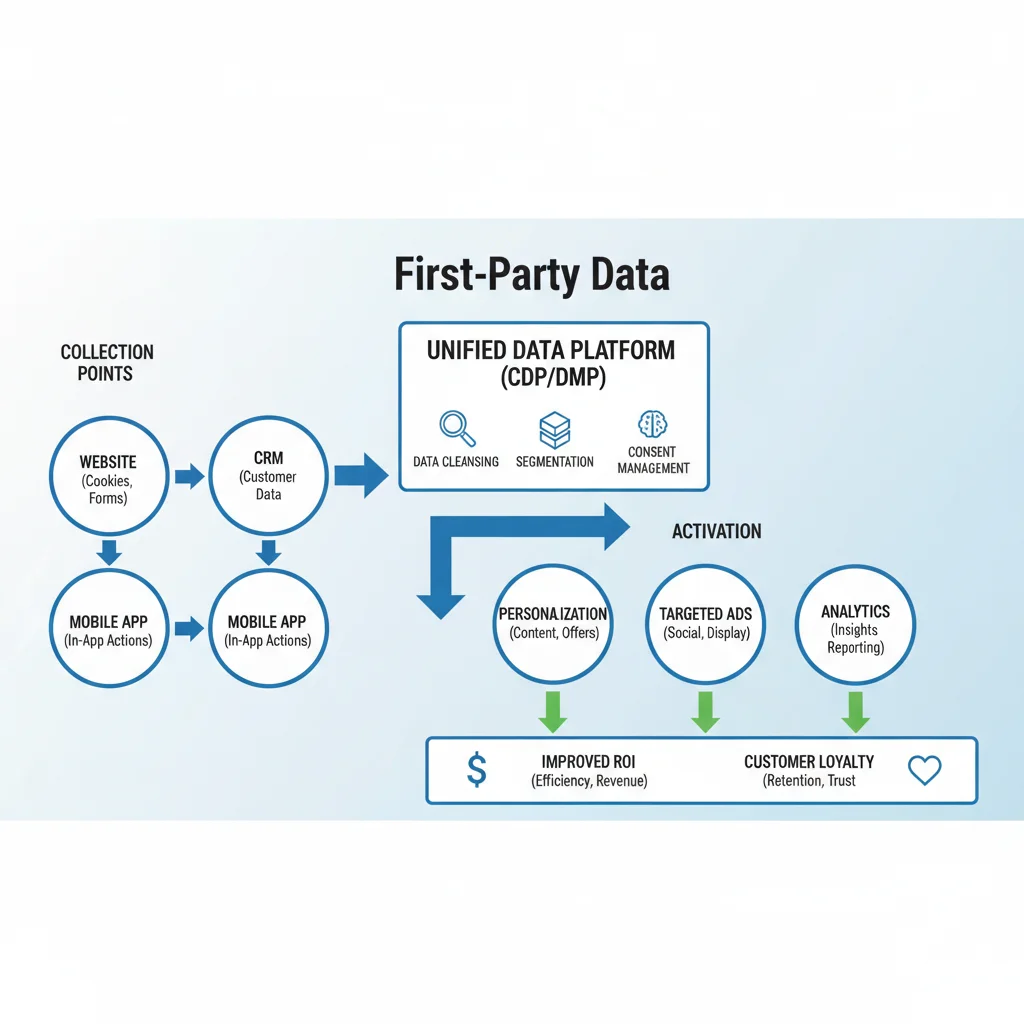
The foundation of any strong first-party data strategy is a well-defined collection plan. This involves identifying all potential touchpoints where customers interact with your brand and implementing mechanisms to capture valuable data at each stage. Common sources include:
- Website Analytics: Tracking user behavior on your site, including page views, time spent, click-through rates, and conversion paths.
- CRM Systems: Customer relationship management platforms are rich repositories of demographic information, purchase history, and interaction logs.
- Subscription and Registration Forms: Newsletter sign-ups, account creations, and content downloads provide explicit consent for data collection and valuable user information.
- Mobile Apps: In-app behavior, preferences, and location data can offer deep insights into mobile-first users.
- Customer Service Interactions: Records from chats, calls, and support tickets can reveal pain points and preferences.
- Surveys and Feedback Forms: Direct input from customers about their experiences and needs.
- Loyalty Programs: Detailed purchase history and engagement patterns for your most valuable customers.
The key is to collect data ethically and transparently, always ensuring customers understand what data is being collected and how it will be used. Building trust is paramount for sustained data collection efforts.
2. Robust Data Management and Integration
Once collected, first-party data needs to be effectively managed and integrated across various systems to create a unified customer view. This often involves:
- Customer Data Platforms (CDPs): CDPs are becoming indispensable for consolidating data from disparate sources into a single, comprehensive customer profile. This allows marketers to overcome data silos and gain a holistic understanding of each customer.
- Data Warehousing and Lakes: For larger organizations, robust data infrastructure is crucial for storing, processing, and making vast amounts of data accessible for analysis.
- Data Governance: Establishing clear policies and procedures for data quality, security, and privacy ensures the integrity and usability of your first-party data.
A well-managed data infrastructure ensures that the data is clean, accurate, and readily available for activation.
3. Intelligent Data Activation and Personalization
The true power of first-party data strategies comes from their activation. This is where insights are translated into personalized customer experiences and optimized marketing campaigns:
- Personalized Content and Recommendations: Using past browsing and purchase history to suggest relevant products, content, or services.
- Targeted Advertising: Creating highly segmented audience lists for ad campaigns on platforms that support first-party data uploads (e.g., Google Customer Match, Facebook Custom Audiences). This reduces wasted ad spend by reaching only the most relevant users.
- Dynamic Website Experiences: Tailoring website layouts, offers, and messaging based on a visitor’s known preferences or past interactions.
- Email Marketing Automation: Triggering personalized email sequences based on user behavior, such as abandoned carts, recent purchases, or engagement with specific content.
- Customer Journey Optimization: Mapping out customer journeys and using data to identify friction points and opportunities for improvement across all touchpoints.
By activating data intelligently, marketers can deliver timely, relevant messages that significantly improve engagement and conversion rates, directly contributing to ad spend reduction.
4. Continuous Measurement and Optimization
The final, but equally crucial, component is the ability to measure the impact of your first-party data strategies and continuously optimize them. This involves:
- Attribution Modeling: Understanding which marketing touches are most effective in driving conversions, allowing for more precise budget allocation.
- A/B Testing: Experimenting with different personalized experiences and campaign variations to identify what resonates best with specific audience segments.
- ROI Analysis: Quantifying the return on investment for data-driven initiatives to demonstrate their value and secure further investment.
- Feedback Loops: Using performance data to refine data collection methods, improve segmentation, and enhance personalization efforts.
This iterative process ensures that first-party data strategies remain agile and effective in a dynamic market.
How First-Party Data Leads to a 10% Reduction in Ad Spend by 2026
The promise of a 10% reduction in ad spend by 2026 isn’t hyperbole; it’s a realistic outcome for businesses that fully embrace and execute robust first-party data strategies. This reduction is achieved through several synergistic mechanisms:
1. Enhanced Targeting Precision
With first-party data, marketers can move beyond broad demographic targeting to micro-segmentation based on actual behaviors and stated preferences. This means ads are shown to individuals who are genuinely interested and more likely to convert. For example, instead of targeting ‘women aged 25-34 interested in fashion,’ you can target ‘women aged 28-32 who have previously purchased your brand’s eco-friendly activewear and browsed new arrivals in the last week.’
This precision dramatically reduces wasted impressions and clicks on uninterested audiences, leading to higher conversion rates and a lower cost per acquisition (CPA). Every dollar spent on advertising becomes more effective, directly translating into ad spend efficiencies.
2. Improved Ad Relevance and Performance
Personalized ads, fueled by first-party data, perform significantly better. When an ad speaks directly to a user’s known needs, interests, or past interactions, it’s more likely to capture attention and drive action. This leads to higher click-through rates (CTRs) and conversion rates, which in turn can lower your effective cost per click (CPC) or cost per impression (CPM) on platforms that reward relevance with better ad rankings and lower bids.
Platforms like Google and Facebook use ad relevance as a key factor in their auction systems. Highly relevant ads often win more impressions at a lower cost, allowing marketers to achieve their goals with less overall expenditure.
3. Optimized Budget Allocation
First-party data provides a clearer picture of which channels, campaigns, and creative assets are truly driving value. By tracking the entire customer journey and attributing conversions accurately, marketers can reallocate budget from underperforming areas to those with proven ROI. This data-driven approach eliminates guesswork and ensures that every advertising dollar is invested where it will yield the greatest return.
This optimization isn’t a one-time event but an ongoing process. As more first-party data is collected and analyzed, the ability to fine-tune budget allocation becomes even more sophisticated, continually chipping away at unnecessary ad spend.
4. Stronger Customer Relationships and Lifetime Value (LTV)
While not a direct reduction in ad spend, fostering stronger customer relationships through personalized experiences reduces the need for constant acquisition marketing. Loyal customers are less expensive to retain and more likely to make repeat purchases, refer new customers, and become brand advocates. By increasing customer lifetime value (LTV), businesses can afford to spend less on acquiring new customers over time, indirectly leading to overall ad spend efficiency.
The investment in building a robust first-party data strategy pays dividends not only in immediate ad spend reduction but also in long-term customer equity.
Challenges and Considerations in Implementing First-Party Data Strategies
While the benefits are clear, implementing comprehensive first-party data strategies is not without its challenges. US marketers must navigate several key considerations to ensure success.
1. Data Privacy and Compliance
With regulations like CCPA, CPRA, and emerging state-specific privacy laws, ensuring data privacy and compliance is paramount. Marketers must:
- Obtain Explicit Consent: Clearly communicate data collection practices and obtain unambiguous consent from users.
- Provide Transparency: Offer clear privacy policies and easy-to-understand explanations of how data is used.
- Enable User Control: Provide users with options to access, correct, delete, or opt-out of data collection and usage.
- Implement Robust Security Measures: Protect collected data from breaches and unauthorized access.
Failure to comply can result in significant fines, reputational damage, and loss of customer trust. Building a privacy-first approach into the core of your data strategy is essential.

2. Data Quality and Hygiene
The adage ‘garbage in, garbage out’ holds true for data. Poor data quality – inaccurate, incomplete, or outdated information – can undermine even the most sophisticated first-party data strategies. Marketers must invest in:
- Data Validation: Implementing processes to ensure the accuracy and consistency of data at the point of collection.
- Data Cleansing: Regularly identifying and correcting errors, duplicates, and inconsistencies in existing datasets.
- Data Enrichment: Augmenting first-party data with publicly available information or responsibly sourced second-party data (with consent) to build richer customer profiles.
High-quality data is the bedrock of effective personalization and targeting.
3. Technology and Integration Complexity
Bringing together data from various sources and activating it across different marketing channels often requires sophisticated technology stacks. Integrating CRM systems, CDPs, marketing automation platforms, and analytics tools can be complex and resource-intensive. Companies may need to invest in:
- Specialized Software: CDPs, DMPs (Data Management Platforms), and advanced analytics tools.
- Skilled Personnel: Data scientists, engineers, and analysts who can manage, interpret, and activate data.
- Integration Expertise: Ensuring seamless flow of data between different platforms.
Choosing the right technology partners and building internal capabilities are crucial for overcoming these complexities.
4. Organizational Silos and Change Management
One of the biggest hurdles can be internal. Different departments (marketing, sales, customer service, IT) often operate in silos, leading to fragmented data and inconsistent customer experiences. Successful first-party data strategies require a unified, data-centric culture across the organization. This involves:
- Cross-Functional Collaboration: Breaking down departmental barriers to ensure data is shared and utilized effectively across the customer journey.
- Leadership Buy-in: Securing executive support for data initiatives and investments.
- Training and Education: Equipping marketing teams with the skills and knowledge to leverage data effectively.
Change management is a critical component to ensure that the entire organization embraces and contributes to the first-party data vision.
Future-Proofing Your Marketing with First-Party Data
As we look towards 2026 and beyond, the shift to first-party data strategies is not merely a tactical adjustment but a strategic imperative. The marketers who proactively build robust first-party data ecosystems will be the ones who not only survive the cookieless future but thrive in it. They will be able to deliver hyper-personalized experiences, optimize their ad spend with unprecedented precision, and cultivate deeper, more loyal customer relationships.
The journey to becoming a first-party data-driven organization requires commitment, investment, and a willingness to adapt. However, the rewards – including a significant reduction in ad spend, improved ROI, and a sustainable competitive advantage – make it an endeavor well worth pursuing. For US marketers aiming to stay ahead of the curve, the time to double down on first-party data is now.
By focusing on ethical data collection, intelligent management, strategic activation, and continuous optimization, businesses can unlock the full potential of their own customer data. This empowers them to navigate the evolving digital landscape with confidence, delivering superior customer experiences while simultaneously achieving their financial objectives, including that ambitious 10% reduction in advertising costs.
Key Takeaways for US Marketers
- Embrace the Cookieless Future: Proactively transition away from reliance on third-party cookies by building strong first-party data capabilities.
- Invest in CDP Technology: A Customer Data Platform is crucial for unifying disparate data sources and creating a single customer view.
- Prioritize Data Privacy: Implement transparent data collection practices and ensure full compliance with evolving privacy regulations to build and maintain customer trust.
- Focus on Personalization: Leverage first-party data to deliver highly relevant content, offers, and experiences across all touchpoints.
- Measure and Optimize: Continuously analyze the performance of your data-driven campaigns to refine strategies and maximize ROI.
- Foster a Data-Centric Culture: Break down internal silos and ensure all departments understand the value and proper use of first-party data.
The path to reducing ad spend by 10% by 2026 is paved with first-party data. Marketers who embark on this journey with strategic foresight and diligent execution will not only achieve significant cost savings but also forge stronger, more enduring connections with their customers, setting a new standard for marketing effectiveness in the digital age.