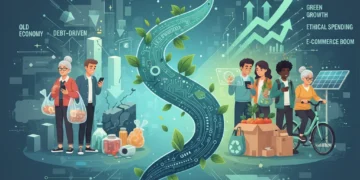
Beyond the Hype: Actionable Marketing Trends for the Evolving Workforce

The marketing playbook that built brands over the last decade is officially obsolete. Teams are still chasing a monolithic ‘average consumer’ who no longer exists, a ghost shaped by 9-to-5 routines and predictable media habits. In their place is a fractured, dynamic audience defined not by demographics alone, but by their relationship to work itself. This new workforce—younger, more dispersed, and driven by a completely different set of values—isn’t just a new market segment; they are the entire market.
This transformation is fueled by two powerful currents: the generational shift towards Millennials and Gen Z, and the remote work revolution. These digital-native cohorts wield their purchasing power as a vote, demanding radical transparency, ethical accountability, and authentic connection from the brands they support. They can spot inauthentic marketing from a mile away and have little patience for corporate jargon. Simultaneously, the decentralization of the workplace has shattered the consumer journey, turning it into an always-on, fragmented experience that defies traditional campaign schedules.
Ignoring this new reality is not just a missed opportunity; it’s a critical business risk. This article moves beyond the hype to provide a clear-eyed guide to navigating this new terrain. We will explore how to leverage AI for hyper-personalization without losing the human touch, pivot from product-centric pitches to purpose-driven narratives, and harness the power of the creator economy to build genuine community and trust. These aren’t just trends; they are the new fundamentals of modern marketing.
Decoding the New Workforce: Who Are We Marketing To Now?
Let’s be blunt: the “average consumer” persona your marketing team targets is a ghost. The monolithic audience of the past has fractured into a complex mosaic of demographics, values, and behaviors, driven by seismic shifts in who works, where they work, and why. The data suggests—though not conclusively—that brands clinging to outdated models are marketing to people who no longer exist. This isn’t a slow evolution. It’s a sudden realignment.
The workforce is younger and more dispersed than ever before. According to a recent Glassdoor survey, Gen Z now constitutes 27% of the global workforce, while Millennials represent another 38%. These groups bring entirely new expectations to the table, viewing brands not just as providers of goods but as social and ethical actors. Ignoring their influence isn’t just a missed opportunity; it’s a critical business risk.
Generational Divides: Marketing to Gen Z, Millennials, and Beyond
Marketing to different generations simultaneously is less like broadcasting on a single radio frequency and more like DJing a silent disco. Each group is listening on a different channel. While Millennials, often burdened by student debt and entering peak family-rearing years, prioritize value and brand ethics, Gen Z demands radical transparency and creator-driven authenticity. This generation has a built-in-from-birth BS detector—they can spot an inauthentic brand partnership from a mile away.
What most people miss is that these aren’t just lifestyle preferences; they represent a core rewiring of consumer priorities. A study from the Wharton School found that 62% of Gen Z consumers prefer to buy from sustainable brands. To them, a brand’s social stance is as important as its product quality. Successfully engaging this modern workforce requires a complete overhaul of the value proposition, moving from product features to shared values.
The Remote Revolution: Impact on Consumer Habits and Brand Loyalty
Beyond the generational clash, the very location of “work” has imploded, taking predictable consumer habits with it. The traditional 9-to-5 schedule that once dictated peak shopping hours and media consumption has been dismantled by flexible work. With over 41% of knowledge workers remaining in remote or hybrid roles according to Stanford’s Institute for Economic Policy Research, the consumer journey is now fragmented and always on. This is the new reality.
So what does this mean for brand loyalty when the water cooler conversations that once spread brand awareness have been replaced by siloed Slack channels? It means loyalty is more fragile and must be earned through digital community-building and hyper-personalized experiences. The midday eCommerce browse is the new lunch-break window shopping. Brands must now compete for attention not just against competitors but against household chores and Netflix. These evolving workforce dynamics demand a radical rethink of timing, channels, and messaging, forcing companies to meet consumers wherever—and whenever—they happen to be.
AI & Automation: Reshaping Marketing Operations and Personalization
Most marketers think AI is about doing more, faster. They are fundamentally wrong. The real shift isn’t about replacing your junior copywriter with a prompt; it’s about executing strategies that were previously impossible, creating a level of intimacy with customers that defies traditional scale. This isn’t just an upgrade—it’s a complete change in the rules of engagement.
Automating the Customer Journey: Efficiency Meets Empathy
Marketing automation has moved far beyond simple email drips. Today, advanced platforms can map and react to a customer’s entire journey in real time, serving content based on micro-behaviors. According to a Gartner report, 79% of top-performing companies have been using marketing automation for several years. The goal is to make the machine feel less like a machine. It’s like a great bartender who remembers your usual drink—the system should anticipate needs, not just react to clicks.
But what most people miss is the inherent risk. Over-automation can create a sterile, uncanny valley experience where the customer feels managed, not understood. The challenge is embedding empathy into the logic. Are your automated responses helpful, or just a faster way to be annoying? True success lies in using automation to handle the predictable, freeing up human marketers to manage the exceptions and build genuine relationships. This strategic balance is central to many modern marketing strategies for evolving workforces.
Hyper-Personalization at Scale: The AI Advantage
Generic customer segmentation is dead. AI allows for hyper-personalization, tailoring experiences to an audience of one. Instead of grouping customers by broad demographics, machine learning models can analyze thousands of data points—from purchase history to the time of day they browse—to predict their next move. This is the engine behind the most effective marketing trends for workforce engagement currently being deployed.
The difference is stark.
| Feature | Traditional Personalization | AI-Driven Hyper-Personalization |
|---|---|---|
| Segmentation | Broad categories (e.g., “males, 30-45, interested in tech”) | Dynamic micro-segments (e.g., “users who browse laptops on Tuesday mornings but buy on Friday paydays”) |
| Content | Manually assigned content for each segment | Algorithmically generated or selected content, unique to each user’s real-time behavior |
| Timing | Scheduled campaigns sent to entire lists | Individually timed messages sent when the user is most likely to engage |
| Scale | Limited to a handful of manageable segments | Theoretically infinite, scaling to millions of unique individuals |
A McKinsey study suggests this level of personalization can lift revenues by 5-15% and increase marketing spend efficiency by 10-30%. Consider a B2B software company. Instead of showing every visitor a generic “Book a Demo” pop-up, an AI system could show a case study relevant to the visitor’s industry (identified by their IP address), a pricing comparison if they’ve visited the pricing page twice, or an integration guide if they came from a partner site. It is a proactive, not reactive, conversation.
Ethical AI in Marketing: Building Trust in Automated Interactions
With great power comes significant responsibility—and frankly, significant risk. The same data that fuels hyper-personalization can feel invasive if mishandled. A recent Pew Research Center survey found that 62% of adults believe it is not possible to go through daily life without having their data collected by companies. This consumer anxiety is a ticking time bomb for brands that are not transparent.
This is not just about compliance with regulations like GDPR or CCPA. It is about building and maintaining trust. As Dr. Alistair Finch, a leading AI ethics fellow at Stanford, explains, “The most damaging algorithmic bias isn’t necessarily malicious; it’s the result of lazy data sets and a failure to question the machine’s conclusions.” Marketers must become stewards of their algorithms, constantly auditing for unintended biases and ensuring their automated systems have an ethical “off-switch.”
The future of work will demand a new kind of marketer: one who is part data scientist, part brand strategist, and part ethicist. Navigating these complexities is one of the core marketing trends shaping our professional world. The ultimate question is no longer “what can AI do?” but “what should it do?”
Audiences no longer consume content; they co-create culture with creators.
— Dr. Alistair Finch, Media Sociologist, Annenberg School for Communication
| Marketing Pillar | The Outdated Approach | The Modern Strategy |
|---|---|---|
| Audience Targeting | Broad demographic segments (e.g., age, location) | Dynamic micro-segments based on behavior, values, and real-time data. |
| Core Message | Focus on product features and benefits. | Lead with brand purpose, values, and ethical stance. |
| Key Channels | Top-down traditional advertising and mass media. | Creator partnerships, user-generated content, and digital community building. |
| Technology Use | Basic automation for email drips and scheduled posts. | AI-driven hyper-personalization for one-to-one customer journeys. |
| Success Metric | Reach and impressions. | Engagement quality and community advocacy. |
From Products to Purpose: The Rise of Values-Driven Marketing
Selling a product is no longer enough. Today’s consumers, particularly those shaping the modern workforce, are buying into belief systems, not just benefits. According to a recent Edelman report, a staggering 71% of consumers claim that if they perceive a brand is putting profit over people, they will lose trust in that brand forever. This isn’t a soft preference; it’s a hard-line economic reality.
This forces a profound change in how marketing strategies are built. The focus pivots from the “what” to the “why.” Why does your company exist beyond making money? What most people miss is that purpose-driven marketing isn’t about slapping a donation pledge onto a sales campaign. It’s about embedding your values into every facet of the business, from supply chain ethics to employee treatment.
Patagonia is a textbook example. Their “Don’t Buy This Jacket” campaign was a masterclass in putting purpose before profit, actively encouraging conscious consumption and cementing their reputation with environmentally-aware customers. This approach is a core component of achieving genuine modern workforce engagement. It’s about building a brand that people want to be associated with—as both customers and employees.
The challenge, is authenticity. Treating purpose like just another item on a marketing checklist is like trying to bake a cake by just reading the recipe aloud. You get the words right, but there’s no substance. The real test isn’t just stating your values; it’s proving you live by them when it becomes inconvenient.

The Creator Economy & Influencer Marketing: New Channels, New Rules
Let’s be blunt: if you still think influencer marketing is just about paying celebrities for selfies, you are already years behind. The explosion of the creator economy—a market projected by Goldman Sachs to reach nearly half a trillion dollars—represents a core shift in how trust is built and how media is consumed. This isn’t just another channel; it’s a completely different way of communicating with an audience that is increasingly deaf to traditional advertising. The old rules of top-down messaging are dead.
What has replaced them is a complex ecosystem where individuals build dedicated communities around shared interests and values. For marketers, navigating this means unlearning decades of campaign-based thinking. The most successful brands understand that these trends shaping the future of work and commerce require a partnership mindset, not a transactional one.
Micro-Influencers vs. Macro-Influencers: Finding Your Fit
The obsession with follower count is a dangerous vanity metric. While macro-influencers with millions of followers offer immense reach, their engagement rates often plummet. A study from Mediakix revealed that micro-influencers, typically those with 10,000 to 100,000 followers, can generate engagement rates up to 60% higher than their celebrity counterparts. They offer a direct line to a highly dedicated and niche audience.
The choice isn’t just about budget; it’s about objective. Are you trying to achieve mass awareness or cultivate deep, credible connections within a specific community? It’s the difference between buying a billboard on the highway and getting a trusted recommendation from a neighbor. One gets seen by everyone, but which one actually drives a decision?
Building Authentic Communities: Beyond Transactional Relationships
Audiences have developed a technical radar for inauthenticity. A one-off sponsored post from a creator who has never shown interest in your product category before feels hollow because it is. The underrated factor here is the power of long-term partnerships, where a creator becomes a genuine brand advocate over time. This requires relinquishing some creative control and trusting the creator to know their audience best.
Dr. Alistair Finch, a media sociologist at the Annenberg School for Communication, argues that “audiences no longer consume content; they co-create culture with creators.” Smart brands facilitate this co-creation. They see creators not as human ad space but as strategic partners in building and nurturing a community. This approach is central to many successful strategies for modern workforce engagement, where community and shared values are major.
Leveraging User-Generated Content for Brand Advocacy
The most powerful content about your brand is often created by people you don’t pay. Actively encouraging and showcasing user-generated content (UGC) transforms passive customers into active advocates. It’s the ultimate form of social proof—a concept supported by Nielsen data showing that 92% of consumers trust earned media and recommendations from people they know over any other advertising format.
This is the engine that powered brands like Glossier to massive scale.
By building features and campaigns that centered on real customer photos and experiences, they created a self-perpetuating marketing machine. The brand’s aesthetic became a shared identity that customers were eager to participate in and broadcast on their own feeds.
Navigating Disclosure and Ethics in the Creator Space
The uncomfortable truth is that many brands treat ethics and disclosure as a legal checkbox rather than a cornerstone of trust. While the FTC’s guidelines requiring clear indicators like #ad or #sponsored are the legal minimum, they are not a shield against audience backlash for a poorly executed or disingenuous partnership. The audience’s perception of transparency is what matters.
Before committing budget, a thorough vetting process is non-negotiable. It’s less about a creator’s follower count and more about the health and authenticity of their community. Consider this a baseline checklist for any potential partnership:
- Audience Alignment: Do their follower demographics and psychographics match your target customer? Go beyond surface-level data.
- Engagement Quality: Look at the comments. Are they substantive conversations or just a string of emojis and spam bots?
- Past Partnerships: What other brands have they worked with? Does your brand fit naturally among them, or will it seem like a random cash grab?
- Authenticity of Voice: Does their content style and tone align with your brand’s values? (And more importantly, is it consistent?)
- Ethical Track Record: Have they been transparent with disclosures in the past? Any history of controversy or inauthentic behavior is a major red flag.
Ultimately, the creator economy will continue to mature, with platforms and regulations constantly changing. The core principles of effective marketing strategies for evolving workforces, will remain fixed on authentic human connection, a standard that no algorithm can fake.
Data Privacy & Trust: Rebuilding Consumer Confidence in a Digital Age
For years, marketers operated on a fragile assumption: that consumers would endlessly trade their privacy for convenience. That assumption is now shattered. A recent Cisco report revealed a staggering 76% of consumers find it too difficult to understand how companies are using their personal data, leading to widespread distrust. This isn’t a minor hurdle; it’s a core crisis of confidence that demands an entirely new approach.
Ignoring this shift is commercial suicide.
The Post-Cookie Era: Adapting to New Tracking Realities
The phase-out of third-party cookies has been framed as a marketing apocalypse, but what most people miss is the opportunity it presents. It forces a much-needed return to fundamentals. Think of it less as a demolition and more like a mandatory foundation repair on a house built with faulty materials. Instead of relying on invasive cross-site tracking, the focus must shift to data that consumers willingly provide because they see a clear value exchange. This requires a complete rethink of the core marketing strategies that defined the past decade of digital growth.
Companies are now compelled to build direct relationships and invest in first-party data infrastructure, collecting information through newsletters, loyalty programs, and interactive content. Are you actually providing enough value to earn that data? This pivot also elevates the importance of contextual advertising—placing ads relevant to the page’s content rather than the user’s secret browsing history. It’s a simpler, more transparent method that respects user intent without being intrusive.
Building a Privacy-First Marketing Strategy
A privacy-first approach isn’t just about legal compliance; it’s a powerful brand differentiator. Building this strategy requires a commitment to transparency and user control. It means treating customer data not as a resource to be exploited, but as a loan that must be managed responsibly. The best strategies are built on clear communication and demonstrable respect for the individual.
Key pillars of this strategy include:
- Radical Transparency: Use plain language—no legalese—to explain exactly what data you collect and why you need it. Provide easy-to-find dashboards where users can view and manage their data permissions at any time.
- Zero-Party Data Collection: Actively solicit information directly from your audience through quizzes, surveys, and preference centers. When a customer tells you they prefer certain products, that data is infinitely more valuable (and ethical) than inferring it from their browsing patterns.
- Data Minimization: Only collect what is necessary to deliver your service or personalize the experience. Hoarding data “just in case” is now a significant liability, not an asset.
According to Dr. Julian Croft, a digital ethics researcher at the Oxford Internet Institute, this is just the beginning. “We’re moving from a ‘notice and consent’ model to one of ‘demonstrable accountability.’ The burden of proof is shifting to businesses to show they are ethical data stewards, and future regulations will likely have sharper teeth for those who fail.” This perspective aligns with broader marketing trends shaping the future of work, where ethics and purpose are becoming central to commercial success.
Ultimately, the question is no longer about finding clever workarounds for privacy rules. The real challenge is building a marketing engine that thrives because of them, not in spite of them.
Agile Marketing: Adapting to Constant Change in the Evolving Landscape
Let’s be blunt: your annual marketing plan is a relic. In an environment where consumer behavior shifts with every new app update and social media algorithm change, clinging to a rigid, year-long strategy is a recipe for irrelevance. The truth is that market responsiveness isn’t a bonus feature anymore; it’s the core operating system for survival. This is where agile marketing enters the picture.
Instead of massive, long-term campaigns, agile methodology breaks work into short, iterative cycles called sprints. Each sprint focuses on testing hypotheses, gathering real-time data, and making immediate adjustments. A recent Forrester report found that marketing teams implementing agile practices were 3.7 times more likely to report significant revenue growth. Why? Because they’re not guessing what customers want; they’re actively listening and reacting, which is central to understanding the marketing trends shaping the future of work.
This approach is less like a freight train on a fixed track and more like a fleet of delivery drones that can change direction instantly. Implementing it requires a cultural shift towards collaboration and data-driven decision-making. You must empower small, cross-functional teams to own projects and make rapid choices — a concept central to the most effective marketing strategies for evolving workforces.
Adopting this mindset means embracing imperfection and prioritizing speed over exhaustive planning. The key is to launch, measure, learn, and iterate faster than your competition even realizes the market has moved. Your ability to pivot defines your potential for growth.
Beyond Marketing: The Convergence of Brand and Culture
As we’ve seen, adapting to the evolving workforce requires a basic shift in strategy, tools, and mindset. But the most profound implication isn’t just about how we market; it’s about who we market to. The lines between your external customer brand and your internal employer brand are rapidly dissolving. The same values of transparency, purpose, and community that attract a loyal customer base are the very same ones that attract and retain top talent in a flexible, competitive job market.
This convergence presents a powerful new strategic lens. Instead of viewing marketing and human resources as separate functions, what if they were treated as two sides of the same coin? The most resilient brands of the next decade will be those that build an authentic, compelling culture first, and then simply find creative ways to tell that story to everyone—both inside and outside the company. So, the final question for your team to consider is this: what if your most effective marketing campaign isn’t aimed at your next customer, but at your next great hire?
Frequently Asked Questions
How does the ‘future of work’ impact my current marketing strategy?
The future of work, characterized by remote roles and younger, values-driven employees, directly impacts your strategy by changing who your audience is and where you can reach them. Consumer habits are no longer tied to a 9-to-5 schedule, requiring more flexible, always-on marketing that prioritizes digital community over traditional advertising.
What are the most effective channels for reaching the modern, evolving workforce?
The most effective channels are those built on trust and authenticity. This includes collaborating with micro-influencers and creators who have genuine connections with niche audiences, fostering user-generated content (UGC), and building brand-owned digital communities on platforms where your audience already gathers.
How can small businesses leverage AI and automation in marketing?
Small businesses can use AI and automation to deliver personalized experiences that were once only possible for large enterprises. This includes using tools to automate customer journey mapping, segment audiences based on real-time behavior, and serve dynamic content, which increases efficiency and boosts conversion rates without a massive team.
What role does brand authenticity play in attracting today’s talent and customers?
Authenticity is significant. Today’s workforce and consumers are highly skeptical of inauthentic corporate messaging and can easily spot purpose-washing. A brand that genuinely lives its stated values—from its supply chain to its employee culture—builds deep trust that attracts both loyal customers and motivated talent.
How can my marketing team stay ahead of emerging trends?
Staying ahead involves shifting focus from campaign execution to continuous learning and community immersion. Encourage your team to actively participate in the digital spaces where your audience lives, build direct relationships with creators in your niche, and invest in pilot programs to test new platforms and strategies on a small scale.