
The landscape of human resources is undergoing a profound transformation, driven by the rapid integration of artificial intelligence (AI). By 2026, AI is not just a tool for efficiency; it’s an integral component of recruitment strategies across the United States. However, with great power comes great responsibility, and the ethical implications of AI in recruitment are paramount. This comprehensive guide is designed for U.S. HR professionals navigating the complex, evolving world of ethical AI recruitment, ensuring fairness, transparency, and compliance in their hiring practices.
The promise of AI in recruitment is undeniable: streamlined processes, reduced time-to-hire, enhanced candidate matching, and the potential to mitigate human biases. Yet, without a robust ethical framework, these benefits can quickly turn into liabilities, leading to discriminatory practices, legal challenges, and significant reputational damage. Understanding and implementing ethical AI principles is no longer optional; it is a critical competency for every forward-thinking HR professional.
The Rise of Ethical AI Recruitment: A 2026 Perspective
As we move deeper into the decade, AI’s role in recruitment continues to expand. From initial candidate sourcing and resume screening to interview scheduling and even predictive analytics for retention, AI algorithms are making decisions that profoundly impact individuals’ careers and lives. The ethical imperative arises from the need to ensure these decisions are fair, unbiased, and transparent. The U.S. regulatory environment, while still developing, is increasingly scrutinizing AI’s impact on employment, making ethical AI recruitment a top priority.
The core challenge lies in the nature of AI itself. Algorithms learn from data, and if that data reflects historical biases, the AI will perpetuate and even amplify those biases. This can lead to unfair treatment of certain demographic groups, undermining diversity and inclusion efforts. Therefore, a proactive approach to ethical AI, focusing on design, implementation, and continuous monitoring, is essential.
Key Pillars of Ethical AI in Recruitment
- Bias Mitigation: Identifying and eliminating algorithmic bias.
- Transparency and Explainability: Understanding how AI makes decisions.
- Data Privacy and Security: Protecting sensitive candidate information.
- Fairness and Equity: Ensuring equitable opportunities for all candidates.
- Human Oversight: Maintaining human accountability in AI-driven processes.
Understanding Algorithmic Bias in Recruitment
Algorithmic bias is perhaps the most significant ethical hurdle in AI recruitment. It occurs when an AI system produces results that are systematically prejudiced against certain groups. This bias isn’t malicious; it’s often an unintended consequence of the data the AI is trained on or the way the algorithm is designed.
Sources of Bias:
- Historical Data Bias: If past hiring data shows a preference for certain demographics (e.g., predominantly male hires for a technical role), AI trained on this data will learn to favor male candidates, even if gender is not explicitly a feature.
- Proxy Bias: AI might identify seemingly neutral data points (e.g., zip codes, extracurricular activities, names) that are statistically correlated with protected characteristics, using them as proxies for discrimination.
- Selection Bias: The way data is collected or labeled can introduce bias. If only successful hires are analyzed, and ‘success’ is defined narrowly or biasedly, the AI will reflect that.
- Algorithm Design Bias: The specific metrics optimized by the algorithm can inadvertently favor certain groups. For instance, optimizing for ‘cultural fit’ without clear, objective definitions can lead to homogeneous hiring.
Recognizing these sources is the first step toward effective bias mitigation. HR professionals must collaborate closely with data scientists and AI developers to audit datasets, test algorithms, and implement strategies to counteract potential biases. This is a continuous process, not a one-time fix.
Strategies for Mitigating Bias in Ethical AI Recruitment
Mitigating bias requires a multi-faceted approach, integrating technical solutions with robust HR policies and practices. This is where the true challenge and opportunity for ethical AI recruitment lie.
1. Data Auditing and Pre-processing
- Diverse Data Sets: Ensure training data reflects the diversity of the applicant pool and workforce. Actively seek out and include data from underrepresented groups.
- Bias Detection Tools: Utilize specialized software to scan datasets for statistical biases related to protected characteristics before training AI models.
- Data Anonymization: Where possible, remove or anonymize sensitive demographic information from training data to prevent direct discrimination.
- Feature Engineering: Carefully select and scrutinize features used by the AI. Remove features that could serve as proxies for protected attributes.
2. Algorithm Design and Testing
- Fairness Metrics: Implement and monitor various fairness metrics (e.g., demographic parity, equal opportunity) during algorithm development and deployment.
- Adversarial Debiasing: Employ advanced AI techniques that specifically aim to reduce bias by making the model’s predictions independent of sensitive attributes.
- Regular Auditing: Conduct frequent, independent audits of AI systems to detect emerging biases and ensure ongoing fairness.
- Explainable AI (XAI): Design AI systems that can explain their reasoning, allowing HR professionals to understand why a candidate was recommended or rejected, and identify potential biases.
3. Human Oversight and Intervention
- Human-in-the-Loop: Ensure that human recruiters retain ultimate decision-making authority. AI should augment, not replace, human judgment.
- Diverse Review Panels: Implement diverse hiring committees to review AI-generated shortlists, providing multiple perspectives and challenging potential algorithmic biases.
- Feedback Loops: Establish mechanisms for candidates and employees to provide feedback on the AI-powered recruitment process, helping to identify and rectify issues.
- Training and Education: Educate HR teams on AI capabilities, limitations, and ethical considerations, empowering them to critically evaluate AI outputs.
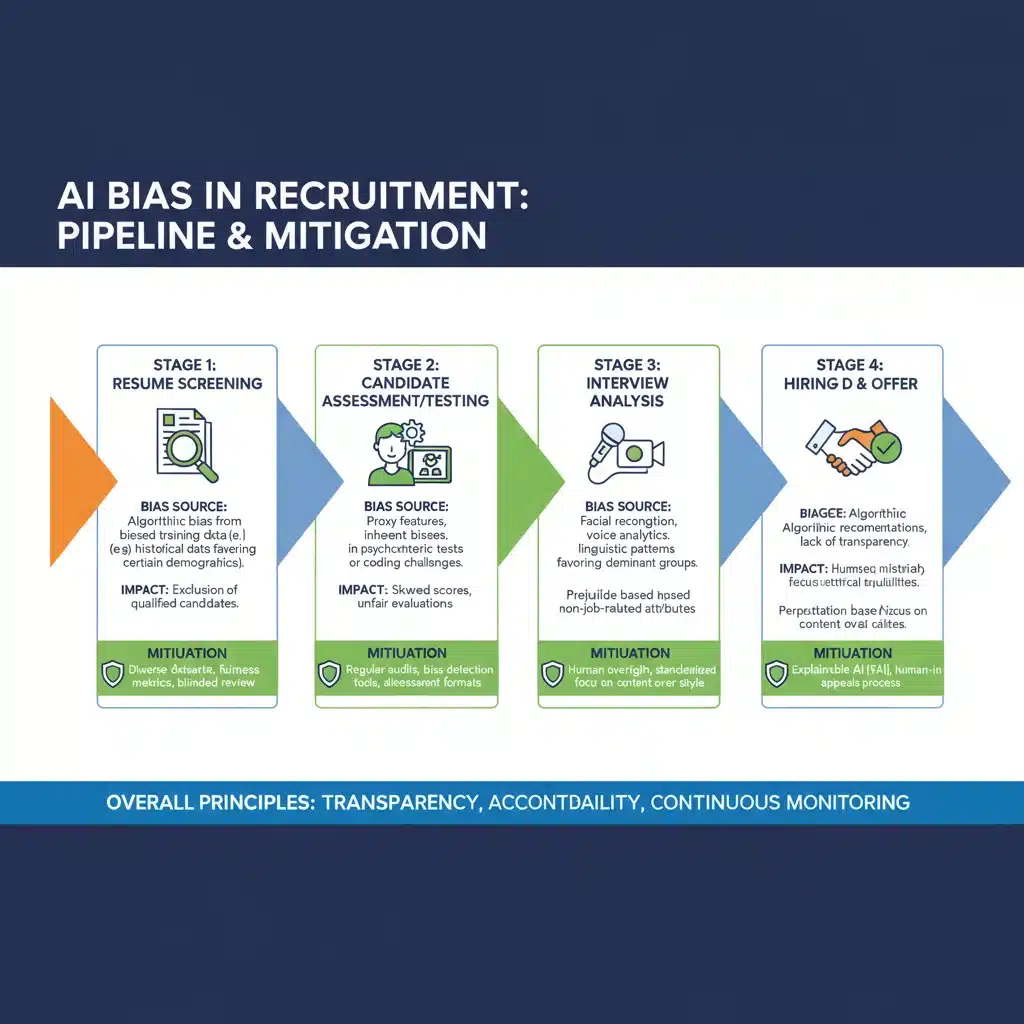
By proactively addressing bias, organizations can harness the power of AI to create more equitable and efficient hiring processes, truly embodying the principles of ethical AI recruitment.
Transparency and Explainability: Demystifying AI Decisions
One of the biggest challenges in AI adoption is the perception of a ‘black box’ where decisions are made without clear reasoning. For ethical AI in recruitment, transparency and explainability are crucial. Candidates deserve to understand how decisions are made about their applications, and HR professionals need to be able to justify those decisions.
Why Transparency Matters:
- Trust Building: Openness about AI’s role fosters trust with candidates and employees.
- Accountability: If an AI system makes a flawed or biased decision, transparency helps pinpoint the cause and assign accountability.
- Legal Compliance: Emerging regulations increasingly require explanations for AI-driven decisions, especially in high-stakes areas like employment.
- Improved Outcomes: Understanding AI’s logic allows HR to refine processes and improve hiring outcomes.
Achieving Explainable AI (XAI):
- Clear Communication: Inform candidates early in the process when and how AI will be used.
- Simplified Explanations: Provide understandable reasons for AI-driven decisions, avoiding overly technical jargon.
- Interactive Interfaces: Develop dashboards or tools that allow HR professionals to explore the factors influencing an AI’s recommendation.
- Post-Decision Review: Offer human review for candidates who feel unfairly assessed by AI, providing an opportunity for appeal and clarification.
The goal is not to reveal every line of code but to provide meaningful insights into the decision-making process, ensuring that AI operates as a helpful assistant rather than an opaque judge.
Data Privacy and Security in AI-Powered Recruitment
AI systems are voracious consumers of data. In recruitment, this data often includes highly sensitive personal information about candidates. Protecting this data is not only an ethical obligation but also a legal necessity, especially with regulations like GDPR and various U.S. state privacy laws (e.g., CCPA/CPRA) becoming more stringent.
Key Considerations for Data Privacy:
- Consent: Obtain explicit and informed consent from candidates regarding the collection, storage, and processing of their data by AI systems. Clearly state how their data will be used.
- Data Minimization: Collect only the data that is strictly necessary for the recruitment process. Avoid collecting extraneous or irrelevant personal information.
- Secure Storage: Implement robust cybersecurity measures to protect candidate data from breaches, unauthorized access, and misuse. This includes encryption, access controls, and regular security audits.
- Data Retention Policies: Establish clear policies for how long candidate data will be retained and ensure compliance with legal requirements for data deletion.
- Third-Party Vendor Vetting: If using third-party AI recruitment tools, conduct thorough due diligence to ensure their data privacy and security practices align with your organization’s standards and legal obligations.
- Anonymization and Pseudonymization: Where possible, anonymize or pseudonymize data, especially for training AI models, to reduce the risk of individual identification.
A data breach involving sensitive candidate information can have devastating consequences, including hefty fines, legal action, and irreparable damage to an employer’s brand. Prioritizing data privacy and security is non-negotiable for ethical AI recruitment.
Fairness and Equity: Beyond Bias Mitigation
While bias mitigation focuses on preventing discrimination, fairness and equity encompass a broader commitment to ensuring that AI systems actively promote equal opportunities and just outcomes for all candidates. This proactive stance is crucial for truly ethical AI recruitment.
Promoting Fairness and Equity:
- Inclusive Design: Design AI systems with inclusivity in mind from the outset. Consider how the AI might impact different demographic groups and actively seek diverse perspectives during development.
- Accessibility: Ensure AI-powered recruitment tools are accessible to individuals with disabilities, complying with standards like WCAG.
- Diverse Outcomes: Beyond simply removing bias, strive for AI systems that actively contribute to a diverse and representative workforce. This might involve setting diversity targets for AI-generated shortlists, provided these targets are legally compliant and ethically sound.
- Continuous Monitoring for Disparate Impact: Regularly analyze the impact of AI on various demographic groups. If a particular group is consistently disadvantaged, even without explicit bias, investigate and adjust the system.
- Ethical Guidelines and Policies: Develop clear internal ethical guidelines for AI use in HR, ensuring all stakeholders understand their responsibilities.
The goal is to move beyond simply ‘not discriminating’ to actively ‘creating equitable opportunities,’ leveraging AI as a force for positive change in the recruitment process.
Human Oversight and Accountability
Despite the sophistication of AI, human oversight remains indispensable in ethical AI recruitment. AI systems are tools, and like any tool, their effectiveness and ethical implications depend on how humans design, deploy, and manage them. Accountability for AI’s decisions ultimately rests with the humans who implement and oversee these systems.
Maintaining Human Accountability:
- Clear Roles and Responsibilities: Define who is responsible for monitoring AI performance, addressing issues, and making final hiring decisions.
- Human-in-the-Loop Decision Making: Ensure that AI provides recommendations, but human recruiters make the ultimate hiring decisions. This allows for contextual understanding, empathy, and the ability to override potentially flawed AI suggestions.
- Training and Upskilling HR: Equip HR professionals with the knowledge and skills to effectively interact with AI systems, understand their outputs, and identify potential problems.
- Ethical Review Boards: Consider establishing internal ethical review boards or committees to oversee the development and deployment of AI in sensitive HR areas.
- Auditing and Logging: Implement robust logging mechanisms to track AI’s decisions and the human interventions made, creating an audit trail for accountability.

The integration of human intelligence with artificial intelligence creates a powerful synergy, where the strengths of each compensate for the weaknesses of the other, leading to more robust and ethical recruitment outcomes.
The Evolving U.S. Regulatory Landscape for AI in HR (2026 Outlook)
The U.S. regulatory environment for AI in employment is dynamic and still taking shape. By 2026, we anticipate a more defined framework, driven by federal and state-level initiatives. HR professionals must stay abreast of these developments to ensure compliance and avoid legal pitfalls.
Key Regulatory Trends and Considerations:
- EEOC and DOJ Guidance: The Equal Employment Opportunity Commission (EEOC) and the Department of Justice (DOJ) are increasingly issuing guidance and enforcement actions related to AI’s impact on civil rights in employment. Their focus is on disparate impact and disparate treatment.
- State-Level Legislation: States like New York City have led the way with laws regulating automated employment decision tools (AEDTs), requiring bias audits and transparency. More states are expected to follow suit, creating a patchwork of regulations.
- Algorithmic Accountability Acts: Federal legislative proposals, such as the Algorithmic Accountability Act, aim to mandate impact assessments for high-risk AI systems, including those used in employment. While not yet law, these indicate the direction of federal oversight.
- Consumer Data Privacy Laws: Existing and emerging state privacy laws (e.g., California’s CCPA/CPRA, Virginia’s CDPA, Colorado’s CPA) can impact how candidate data is collected, stored, and used by AI systems.
- Sector-Specific Regulations: Certain industries might face additional regulations regarding AI use due to the sensitive nature of their work or data.
HR professionals must adopt a proactive compliance strategy, regularly consulting legal counsel, conducting internal audits, and designing AI systems with ‘privacy by design’ and ‘ethics by design’ principles. Ignorance of the law is no defense, and the legal repercussions of non-compliant AI can be severe.
Practical Steps for U.S. HR Professionals by 2026
To effectively navigate the ethical landscape of AI in recruitment, U.S. HR professionals should implement the following practical steps:
1. Develop an AI Ethics Policy:
Create a clear, comprehensive policy outlining your organization’s commitment to ethical AI in recruitment. This policy should cover principles of fairness, transparency, accountability, and data privacy. Ensure it’s communicated to all relevant stakeholders, including candidates.
2. Partner with IT and Legal:
Foster strong collaboration with your IT/data science teams and legal counsel. Ethical AI is not solely an HR responsibility; it requires interdisciplinary expertise. Legal professionals can advise on compliance, while technical teams can implement ethical AI solutions.
3. Conduct Regular Bias Audits:
Before deploying any AI recruitment tool, and periodically thereafter, conduct thorough bias audits. Utilize independent third-party auditors if internal expertise is lacking. Document the findings and implement corrective actions promptly.
4. Prioritize Vendor Due Diligence:
When selecting AI recruitment vendors, scrutinize their ethical AI commitments. Ask about their bias mitigation strategies, data privacy protocols, transparency features, and compliance with U.S. regulations. Don’t just buy a tool; buy into an ethical partnership.
5. Invest in Training and Education:
Educate your HR team on the principles of ethical AI, potential biases, and how to effectively use and oversee AI tools. Empower them to critically evaluate AI outputs and intervene when necessary.
6. Establish Feedback Mechanisms:
Create channels for candidates and employees to provide feedback or raise concerns about the AI-powered recruitment process. Use this feedback to continuously improve your ethical AI practices.
7. Implement Human Oversight:
Ensure that human recruiters are always in the loop. AI should serve as an assistant, not a replacement for human judgment and empathy. Final hiring decisions must remain with human professionals.
8. Stay Informed on Regulations:
Continuously monitor changes in U.S. federal and state regulations regarding AI in employment. Subscribe to legal updates and participate in industry forums to stay ahead of compliance requirements.
The Future of Ethical AI Recruitment: Opportunities and Challenges
The journey towards fully ethical AI recruitment is ongoing. By 2026, we will see further advancements in AI capabilities, but also increased scrutiny and sophistication in ethical frameworks.
Opportunities:
- Enhanced Diversity: Properly implemented ethical AI can significantly reduce human biases, leading to more diverse and inclusive workforces.
- Personalized Candidate Experience: AI can offer more tailored and engaging experiences for candidates, improving employer branding.
- Strategic HR Focus: By automating mundane tasks, AI frees up HR professionals to focus on strategic initiatives, employee development, and culture building.
- Predictive Analytics for Retention: Ethical AI can be used to predict retention risks, allowing proactive interventions to support employees, rather than just identifying flight risks.
Challenges:
- Rapid Technological Change: Keeping pace with fast-evolving AI capabilities and their ethical implications.
- Regulatory Complexity: Navigating a fragmented and evolving regulatory landscape across U.S. states and potentially federally.
- Public Perception and Trust: Overcoming skepticism and building public trust in AI-driven hiring processes.
- Defining ‘Fairness’: The philosophical challenge of defining and operationalizing ‘fairness’ in algorithmic decision-making.
HR professionals who embrace these challenges and opportunities will be at the forefront of shaping a more equitable and efficient future for recruitment.
Conclusion: Embracing Ethical AI for a Better Future of Work
The integration of AI into recruitment is not merely a technological shift; it’s an ethical imperative that demands careful consideration, proactive strategies, and a commitment to continuous improvement. By 2026, U.S. HR professionals must be well-versed in the principles of ethical AI recruitment, ensuring their systems are fair, transparent, secure, and ultimately, enhance human potential rather than diminish it.
Building trust, mitigating bias, protecting privacy, and maintaining human accountability are the cornerstones of responsible AI adoption. By embedding these ethical considerations into every stage of the recruitment lifecycle, organizations can not only comply with evolving regulations but also build stronger, more diverse, and more innovative workforces. The future of recruitment is intelligent, and with a strong ethical compass, it can also be profoundly human.
Embrace the challenge, empower your teams, and lead the way in creating a future where AI serves as a powerful ally in the pursuit of equitable talent acquisition.