Non-Dilutive Funding for US Startups: Growth Capital Strategies

Unlocking Growth Capital: 5 Non-Dilutive Funding Avenues for US Startups This Year
In the dynamic and often challenging landscape of startup entrepreneurship, securing adequate funding is paramount for growth and survival. While venture capital and angel investments often dominate the headlines, these traditional routes come with a significant cost: equity dilution. For many founders, maintaining ownership and control over their vision is a top priority. This is where non-dilutive startup funding becomes an invaluable alternative, offering capital infusions without requiring you to give up a piece of your company.
The US startup ecosystem is vibrant, yet highly competitive. Accessing capital without diluting equity allows founders to retain a larger share of future profits and decision-making power, which can be crucial in the early stages of a company’s life. This comprehensive guide will delve into five powerful non-dilutive funding avenues available to US startups in 2024, providing you with the knowledge and strategies to pursue growth capital on your own terms.
Understanding the nuances of each funding type is key to making informed decisions that align with your business model and long-term objectives. From government grants to innovative revenue-based financing, there’s a spectrum of options designed to support innovation and expansion across various industries. Let’s explore how you can leverage these opportunities to fuel your startup’s journey without sacrificing equity.
What is Non-Dilutive Startup Funding and Why Does It Matter?
Before diving into specific avenues, it’s essential to grasp the core concept of non-dilutive startup funding. Simply put, non-dilutive funding refers to capital that does not require you to sell equity or ownership in your company. Unlike venture capital (VC) or angel investments, where investors receive a percentage of your company in exchange for their money, non-dilutive options allow you to retain 100% ownership.
The Benefits of Keeping Your Equity
- Retained Ownership: The most obvious benefit is maintaining full control over your company’s direction and future. This means you make all the strategic decisions without external investor influence.
- Higher Future Returns: As your company grows and becomes more valuable, your personal stake in it remains undiluted, leading to significantly higher personal returns if you eventually sell or go public.
- Flexibility: Non-dilutive funding often comes with fewer strings attached regarding operational control or exit strategies, providing greater flexibility in how you run your business.
- Credibility: Successfully securing non-dilutive funding, especially competitive grants, can enhance your startup’s credibility and attractiveness to future investors, should you choose to pursue equity financing later.
While non-dilutive funding might not always provide the massive capital injections that some VC rounds offer, it’s a strategic choice for founders who prioritize control and long-term value creation. It’s particularly appealing for startups with strong intellectual property, clear revenue models, or those operating in sectors with robust government support.
1. Government Grants and Small Business Administration (SBA) Programs
One of the most attractive forms of non-dilutive startup funding comes from government sources, both federal and state. These grants are essentially free money, provided you meet specific criteria and use the funds for approved purposes. They are particularly prevalent in sectors like technology, healthcare, environmental science, and advanced manufacturing.
Federal Grant Programs: SBIR/STTR
The Small Business Innovation Research (SBIR) and Small Business Technology Transfer (STTR) programs are cornerstone federal initiatives designed to stimulate technological innovation. These programs provide significant funding to small businesses to engage in federal research and development (R&D) with commercialization potential.
- SBIR (Small Business Innovation Research): Known as ‘America’s Seed Fund,’ SBIR awards non-dilutive funds to small businesses to conduct R&D that has the potential for commercialization. It’s a three-phase program: Phase I for feasibility, Phase II for principal R&D, and Phase III for commercialization.
- STTR (Small Business Technology Transfer): Similar to SBIR, STTR requires the small business to formally collaborate with a non-profit research institution (e.g., a university or federal lab). This encourages technology transfer between institutions and small businesses.
Agencies participating in SBIR/STTR include the Department of Defense (DoD), National Institutes of Health (NIH), National Science Foundation (NSF), NASA, and many others. Each agency focuses on specific areas of interest, so it’s crucial to research which agency’s mission aligns with your startup’s technology.
State and Local Government Grants
Beyond federal programs, many states and local municipalities offer grants to foster economic development, support specific industries, or address local challenges. These can range from grants for job creation, sustainable energy initiatives, or support for minority-owned businesses. Websites of state economic development agencies are excellent starting points for discovering these opportunities.
SBA Programs (Loans with Favorable Terms)
While technically debt, some Small Business Administration (SBA) programs offer highly favorable terms that make them akin to non-dilutive capital, especially when compared to traditional bank loans or equity financing. The SBA doesn’t lend money directly but guarantees a portion of loans made by approved lenders, reducing risk for banks and making it easier for startups to qualify.
- SBA 7(a) Loan Program: This is the SBA’s primary program, offering flexible financing for a wide range of business purposes, including working capital, equipment purchases, and real estate. Loan amounts can go up to $5 million.
- SBA Microloan Program: Provides smaller loans (up to $50,000) to startups and small businesses, often with a focus on underserved communities.
The key advantage of SBA loans is lower down payments, flexible overhead requirements, and longer repayment terms, making them a more accessible and less burdensome form of debt for many startups. They don’t dilute equity, and their favorable terms can significantly reduce the cost of capital.

2. Revenue-Based Financing (RBF)
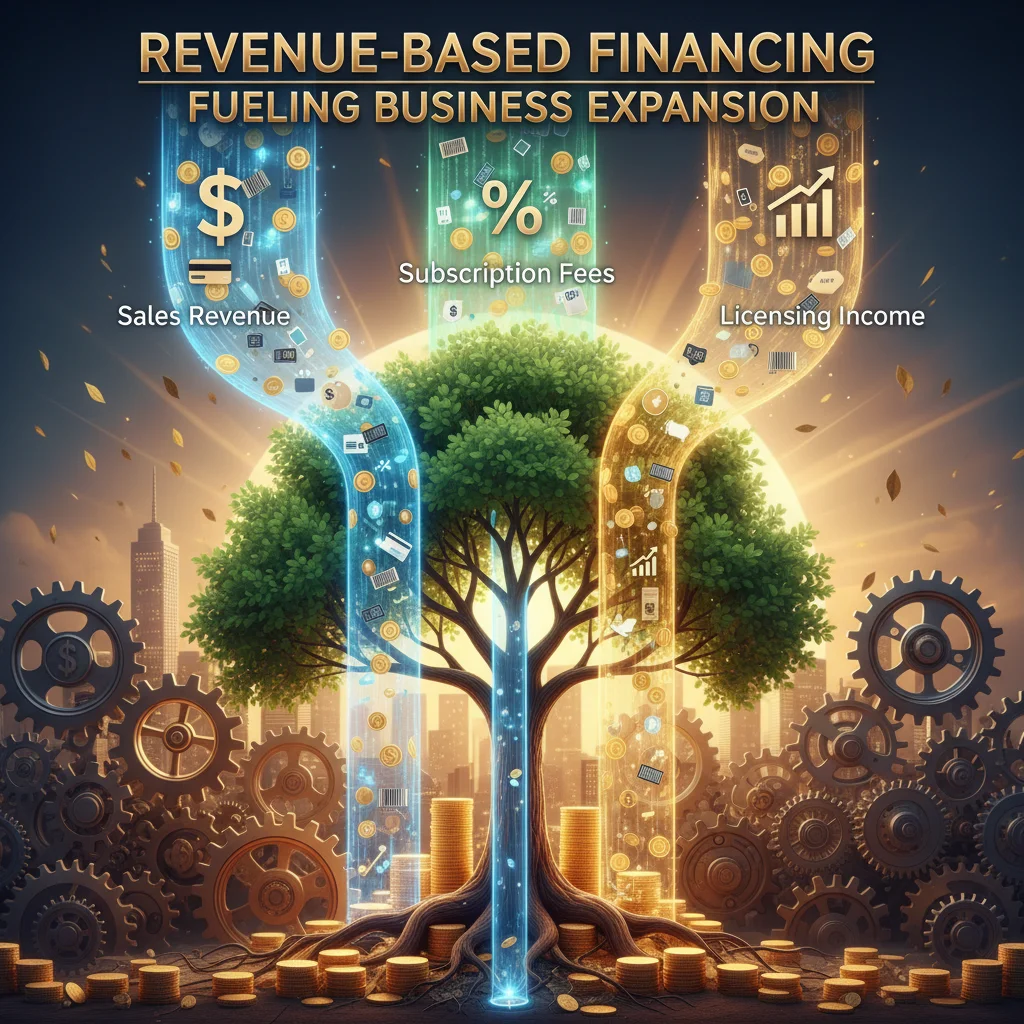
Revenue-Based Financing (RBF) has emerged as a popular and flexible form of non-dilutive startup funding, particularly for SaaS companies, e-commerce businesses, and other ventures with predictable recurring revenue. Instead of taking equity, RBF providers offer capital in exchange for a percentage of your future revenue until a predetermined multiple of the original investment is repaid.
How RBF Works
- A startup receives a lump sum of capital.
- In return, the startup agrees to pay back a fixed percentage of its monthly or quarterly revenue to the RBF provider.
- Payments fluctuate with revenue: higher revenue means higher payments, and lower revenue means lower payments, providing flexibility during leaner months.
- The repayment continues until the agreed-upon multiple (e.g., 1.2x to 1.5x the original investment) is reached.
Advantages of RBF
- No Equity Dilution: This is the primary draw. Founders retain full ownership.
- Flexible Repayment: Payments are tied to revenue, meaning they scale up or down with your business performance, reducing pressure during slower periods.
- Faster Access to Capital: RBF providers often have quicker approval processes compared to traditional banks or even some equity investors.
- Less Restrictive Covenants: Generally, RBF agreements come with fewer restrictive covenants than venture debt or traditional loans, offering more operational freedom.
- Ideal for Predictable Revenue: Works exceptionally well for businesses with recurring revenue streams, as it provides a clear basis for repayment forecasting.
RBF is an excellent option for startups that are revenue-generating and looking for capital to accelerate growth, expand marketing efforts, hire new talent, or develop new products without giving up a stake in their company. It bridges the gap between traditional debt and equity, offering a hybrid solution for growth-stage businesses.
3. Venture Debt
Venture debt is another powerful form of non-dilutive startup funding, typically offered to venture-backed companies or those with a clear path to equity funding. It’s a type of loan specifically designed for high-growth startups that may not yet have significant assets or positive cash flow to qualify for traditional bank loans.
Key Characteristics of Venture Debt
- Complements Equity Funding: Venture debt is often used in conjunction with equity rounds, acting as a bridge to extend runway between funding rounds or to fund specific growth initiatives without further diluting existing shareholders.
- Lower Dilution: While it’s debt, venture debt typically comes with warrants (the right to purchase equity at a future date at a predetermined price). However, the equity stake taken through warrants is significantly smaller than what would be given up in an equity round.
- Term Loans: Usually structured as term loans with fixed repayment schedules and interest rates.
- Collateral: Often secured by the company’s intellectual property or accounts receivable, rather than traditional assets.
When is Venture Debt Suitable?
Venture debt is particularly useful for:
- Extending Runway: Giving a startup more time to hit key milestones before raising another, potentially higher-valuation, equity round.
- Capitalizing on Growth Opportunities: Funding specific initiatives like a new product launch, market expansion, or strategic acquisition without immediate equity dilution.
- Working Capital: Providing additional working capital to manage growth.
While venture debt does involve warrants, the dilution is minimal compared to a full equity round, making it a highly attractive option for founders who want to preserve their ownership. It requires careful consideration of repayment terms and the potential impact of warrants, but for many high-growth startups, it represents a strategic and efficient way to secure additional capital.
4. Crowdfunding (Non-Equity Models)
While equity crowdfunding has gained popularity, several non-equity crowdfunding models offer attractive non-dilutive startup funding opportunities. These platforms allow startups to raise capital from a large number of individuals without giving up any ownership in the company.
Reward-Based Crowdfunding
This is perhaps the most well-known form of non-equity crowdfunding, popularized by platforms like Kickstarter and Indiegogo. Startups solicit small investments from a large number of backers in exchange for a product, service, or unique experience once the project is funded and completed.
- Pre-Sales and Market Validation: It acts as a powerful tool for pre-selling products, validating market demand, and building a community of early adopters.
- Marketing and Buzz: A successful campaign can generate significant media attention and organic marketing for your product or service.
- No Equity Given: Backers receive a reward, not ownership, making it entirely non-dilutive.
Reward-based crowdfunding is ideal for consumer products, creative projects, hardware innovations, and anything that can be offered as a tangible reward. It requires a compelling story, a well-produced campaign, and a clear plan for delivery.
Donation-Based Crowdfunding
Less common for traditional for-profit startups, donation-based crowdfunding (e.g., GoFundMe) involves individuals donating money without expecting any financial return or reward. This model is primarily used by non-profits, social enterprises, or individuals raising money for personal causes. However, for startups with a strong social mission or community benefit, it can sometimes be a viable, albeit niche, option.
Pre-Order Campaigns (Direct-to-Consumer)
Similar to reward-based crowdfunding but often managed directly by the startup, pre-order campaigns allow customers to pay for a product before it’s manufactured or fully released. This provides crucial working capital for production, helps gauge demand, and reduces inventory risk. It’s a direct form of non-dilutive startup funding from your future customers.
5. Strategic Partnerships and Corporate Accelerators/Incubators (without equity)
Beyond direct financial injections, strategic partnerships and certain corporate accelerator/incubator programs can provide invaluable non-dilutive startup funding in the form of resources, expertise, and market access without demanding equity.
- Joint Development Agreements: A larger company might fund a startup’s R&D efforts to develop a specific technology or product that aligns with their strategic interests.
- Co-Marketing Agreements: Access to a larger company’s marketing channels and customer base, which is a form of non-dilutive value.
- Supply Chain Access: Gaining access to preferred pricing on raw materials or manufacturing capabilities.
- Licensing Agreements: Licensing your technology to a larger company can provide upfront payments and ongoing royalties, acting as a significant non-dilutive revenue stream.
The key here is to seek partners whose strategic goals align with yours and who see value in your innovation, often resulting in mutually beneficial, equity-free arrangements.
Corporate Accelerators and Incubators (Non-Equity Tracks)
While many accelerators and incubators do take equity, an increasing number of corporate-backed programs offer non-dilutive support. These programs are typically sponsored by large companies looking to foster innovation in specific areas relevant to their business.
- Pilot Programs: Startups might receive funding to run a pilot project with the corporate sponsor, gaining valuable validation and potential future business.
- Mentorship and Resources: Access to corporate mentors, R&D facilities, market insights, and sometimes even direct grants without an equity stake.
- Potential for Future Business: A successful engagement can lead to a long-term commercial relationship, becoming a significant customer or partner.
These programs are less about direct cash injection and more about providing strategic resources and opportunities that accelerate growth without diluting ownership. Research programs offered by corporations in your industry to find these unique opportunities.
Preparing for Non-Dilutive Funding Success
Regardless of which non-dilutive startup funding avenue you pursue, preparation is crucial. Here are some general tips to maximize your chances of success:
- Clear Business Plan: A well-articulated business plan demonstrating market opportunity, a clear revenue model (even if nascent), and a strong team is fundamental.
- Financial Projections: Even for grants, robust financial projections showing how the funding will be utilized and its expected impact are essential. For RBF and venture debt, these are critical for assessing repayment capacity.
- Strong Team: Funders invest in people. Highlight your team’s expertise, experience, and ability to execute.
- Proof of Concept/Traction: Demonstrating early traction, even if small, significantly strengthens your application for any funding type. This could be pilot program results, early customer testimonials, or prototype validation.
- Tailor Your Pitch: Each funding source has different priorities. Customize your application or pitch to highlight how your startup aligns with their specific objectives. For grants, emphasize societal impact or technological innovation. For RBF, focus on recurring revenue and growth potential.
- Network: Attend industry events, join startup communities, and connect with other founders and advisors who have successfully secured non-dilutive funding.
- Legal Counsel: For venture debt, RBF, and strategic partnerships, always engage legal counsel to review terms and ensure they are favorable and protect your interests.
Conclusion: Charting Your Path to Equity-Free Growth
The quest for growth capital doesn’t have to mean relinquishing control of your startup. The landscape of non-dilutive startup funding is rich with diverse opportunities, each offering unique advantages for different stages and types of businesses. From the robust support of federal grants and favorable SBA loans to the flexible nature of revenue-based financing, the strategic leverage of venture debt, the community power of non-equity crowdfunding, and the resource-rich avenues of strategic partnerships, founders have more options than ever to fuel their ambitions without dilution.
By carefully evaluating your startup’s needs, understanding the requirements of each funding type, and meticulously preparing your applications and pitches, you can strategically secure the capital necessary to scale your operations, innovate, and achieve your vision. Embracing non-dilutive funding is not just about securing money; it’s about making a conscious decision to build a stronger, more independent, and ultimately more rewarding business for yourself and your team. Explore these avenues in 2024 and chart your course to equity-free growth.