
Beyond the Hype: Data-Driven Strategies for Sustainable Startup Growth in the US by 2026
The startup landscape in the United States is perpetually dynamic, characterized by rapid innovation, intense competition, and a relentless pursuit of expansion. However, the allure of explosive growth often overshadows the critical need for sustainability. As we look towards 2026, the emphasis is shifting from mere growth to sustainable startup growth – a trajectory that ensures longevity, profitability, and resilience in the face of evolving market conditions. This article delves into the indispensable role of data-driven strategies in achieving and maintaining this crucial balance, offering actionable insights for US startups aiming for enduring success.
The journey of a startup is fraught with challenges, from securing initial funding to scaling operations and navigating market fluctuations. In this complex environment, relying on intuition alone is a gamble. Data, however, provides a compass, guiding decisions with objective evidence and illuminating pathways to efficient resource allocation, optimized customer acquisition, and robust product development. For US startups, embracing a data-first mindset is no longer an option but a prerequisite for not just surviving, but thriving sustainably.
The Imperative of Sustainable Startup Growth in 2026
The post-pandemic economic recovery, coupled with technological advancements and shifting consumer behaviors, has created a unique set of opportunities and challenges for US startups. While venture capital continues to flow, investors are increasingly scrutinizing business models for signs of long-term viability rather than just rapid user acquisition or revenue spikes. This paradigm shift underscores the importance of sustainable startup growth.
Sustainable growth, in this context, refers to the ability of a startup to expand its operations, revenue, and market share without compromising its financial stability, operational efficiency, or core values. It’s about building a robust foundation that can withstand economic downturns, competitive pressures, and unforeseen disruptions. For 2026, this means understanding that growth at all costs is often unsustainable, leading to burnout, financial instability, and ultimately, failure.
Factors driving this imperative include:
- Increased Investor Scrutiny: Investors are seeking clear pathways to profitability and efficient capital utilization.
- Market Saturation: Many sectors are becoming crowded, demanding differentiated and cost-effective growth strategies.
- Evolving Consumer Expectations: Customers demand transparency, ethical practices, and personalized experiences, which require deeper data insights.
- Talent Retention: Sustainable growth fosters a healthier work environment, crucial for attracting and retaining top talent.
- Regulatory Landscape: Data privacy and ethical AI use are becoming more stringent, necessitating responsible data practices.
Pillars of Data-Driven Sustainable Growth
Achieving sustainable startup growth is a multi-faceted endeavor that relies heavily on a strategic approach to data. This involves not just collecting data, but effectively analyzing it, deriving actionable insights, and integrating these insights into every aspect of the business. Here are the key pillars:
1. Customer-Centricity Through Advanced Analytics
At the heart of any sustainable business is a deep understanding of its customers. Data analytics allows startups to move beyond demographic segmentation to truly comprehend customer behavior, preferences, pain points, and lifetime value (LTV).
- Customer Journey Mapping: Utilize data from touchpoints across marketing, sales, and support to map the entire customer journey. Identify drop-off points, conversion drivers, and opportunities for improvement. Tools like CRM systems, website analytics, and customer feedback platforms are invaluable here.
- Personalization at Scale: Leverage AI and machine learning to deliver personalized experiences. This includes tailored product recommendations, customized marketing messages, and proactive customer support. Data on past purchases, browsing history, and engagement metrics are crucial inputs.
- Predictive Analytics for Churn: Implement predictive models to identify customers at risk of churning. This allows for targeted retention efforts, which are significantly more cost-effective than acquiring new customers. Analyze usage patterns, support ticket history, and engagement levels.
- Customer Lifetime Value (CLTV) Optimization: Focus on strategies that increase the long-term value of each customer. Data helps in identifying high-value customer segments and tailoring strategies to maximize their engagement and spending over time.
By prioritizing customer insights derived from data, startups can build stronger relationships, reduce acquisition costs, and foster loyalty – all critical components of sustainable startup growth.
2. Operational Efficiency and Resource Optimization
Growth is only sustainable if it is efficient. Data plays a pivotal role in streamlining operations, minimizing waste, and optimizing resource allocation.
- Process Automation and Optimization: Identify repetitive or inefficient processes using operational data. Implement automation where possible, and continuously optimize workflows based on performance metrics. This can range from automated marketing campaigns to robotic process automation (RPA) in back-office functions.
- Supply Chain and Inventory Management: For product-based startups, data analytics can revolutionize supply chain efficiency. Predictive analytics can forecast demand, optimize inventory levels, and identify potential disruptions, reducing costs and improving delivery times.
- Financial Health Monitoring: Real-time financial data dashboards are essential. Track key performance indicators (KPIs) like burn rate, gross margin, customer acquisition cost (CAC), and return on investment (ROI) for various initiatives. This provides an immediate pulse on the company’s financial health, enabling quick adjustments.
- Workforce Productivity Analytics: Analyze data related to team performance, project completion rates, and resource utilization. This helps in optimizing team structures, identifying training needs, and ensuring that human capital is deployed effectively.
Every dollar saved through efficiency is a dollar that can be reinvested into further sustainable startup growth, product innovation, or market expansion.

3. Product Development Driven by User Insights
A product that truly resonates with its target market is the bedrock of sustainable success. Data provides the feedback loop necessary for continuous product improvement and innovation.
- A/B Testing and Experimentation: Systematically test different product features, UI/UX designs, and messaging to understand what resonates best with users. Data from these experiments provides empirical evidence for product decisions.
- Feature Usage Analytics: Track how users interact with different features within the product. Identify popular features, underutilized ones, and areas where users encounter friction. This data directly informs the product roadmap.
- Feedback Loop Integration: Combine quantitative usage data with qualitative feedback from surveys, interviews, and support tickets. This holistic view ensures that product development addresses real user needs and pain points.
- Market Trend Analysis: Leverage external data sources and market research to identify emerging trends and anticipate future customer needs. This proactive approach allows startups to innovate ahead of the curve, maintaining a competitive edge.
By making data-informed product decisions, startups can build products that not only attract but also retain users, driving organic and sustainable startup growth.
4. Strategic Marketing and Sales Optimization
Effective marketing and sales are crucial for growth, but without data, they can become significant cost centers. Data-driven approaches ensure that marketing spend is optimized and sales efforts are targeted.
- Attribution Modeling: Understand which marketing channels and touchpoints are most effective in driving conversions. Multi-touch attribution models provide a clearer picture than last-click attribution, allowing for more strategic budget allocation.
- Target Audience Refinement: Use demographic, psychographic, and behavioral data to precisely define and refine target audiences. This ensures that marketing messages reach the most receptive individuals, improving campaign effectiveness and reducing wasted ad spend.
- Sales Funnel Optimization: Analyze data at each stage of the sales funnel to identify bottlenecks and areas for improvement. This includes lead scoring, conversion rates at each stage, and sales cycle duration.
- Content Performance Analysis: Track the performance of marketing content (blog posts, videos, social media) to understand what resonates with the audience and drives engagement. This informs future content strategy, ensuring it aligns with user interests and business goals.
Optimized marketing and sales efforts, guided by data, lead to lower customer acquisition costs and higher conversion rates, directly contributing to sustainable startup growth.
Building a Data-Driven Culture
Implementing data-driven strategies is not merely about acquiring tools; it’s about fostering a culture where data is valued, accessible, and integral to decision-making at all levels. For US startups, this cultural shift is paramount for long-term success.
1. Democratizing Data Access
Data should not be siloed. Implement data platforms and tools that allow various teams – from marketing to product to operations – to access relevant data easily. This empowers employees to make informed decisions without relying solely on a central data science team.
2. Data Literacy and Training
Invest in training employees on how to interpret data, understand basic statistical concepts, and use data visualization tools. A data-literate workforce is better equipped to ask the right questions and derive meaningful insights.
3. Establishing Clear KPIs and Metrics
Define clear, measurable, achievable, relevant, and time-bound (SMART) KPIs for every department and initiative. Ensure these KPIs align with the overarching goals of sustainable startup growth. Regularly review and report on these metrics.
4. Leading by Example
Founders and leadership must champion the data-driven approach. Their commitment to using data in strategic discussions and daily operations sets the tone for the entire organization.
5. Embracing Experimentation
Encourage a culture of experimentation where hypotheses are tested with data, and failures are viewed as learning opportunities. This agile approach allows for continuous improvement and adaptation.
Challenges and Considerations for 2026
While the benefits of data-driven strategies are clear, US startups must also be mindful of potential challenges:
- Data Privacy and Security: With increasing regulations like CCPA and evolving consumer expectations, protecting customer data is paramount. Startups must invest in robust security measures and ensure compliance.
- Data Overload and Analysis Paralysis: The sheer volume of data can be overwhelming. The challenge lies in identifying the most relevant data points and focusing on actionable insights rather than getting lost in the noise.
- Talent Gap: Finding and retaining skilled data scientists, analysts, and engineers can be difficult and expensive. Startups may need to explore outsourcing or upskilling existing employees.
- Integration Complexity: Integrating data from various sources (CRM, ERP, marketing platforms, analytics tools) can be complex and require significant technical expertise.
- Ethical AI Use: As AI becomes more prevalent in data analysis, startups must ensure its ethical deployment, avoiding biases and ensuring transparency.
Addressing these challenges proactively will be crucial for any US startup aiming for sustainable startup growth in 2026.
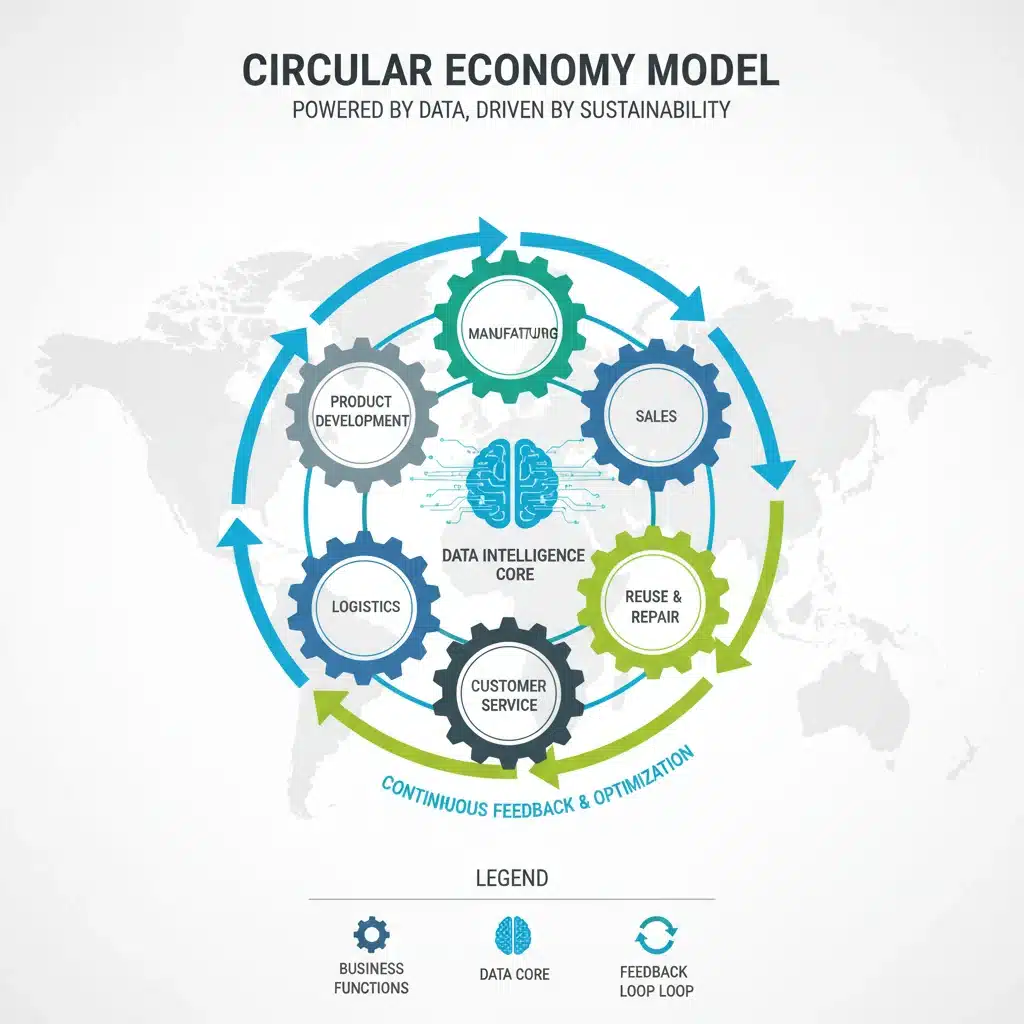
Future Trends Shaping Data-Driven Growth
Looking ahead to 2026, several key trends will further influence how US startups leverage data for sustainable growth:
- Artificial Intelligence and Machine Learning Everywhere: AI and ML will move beyond niche applications to become embedded in almost every data analysis and decision-making process, enabling more sophisticated predictions and automation.
- Real-time Analytics: The demand for real-time insights will intensify, pushing startups to adopt technologies that can process and analyze data instantaneously, allowing for immediate responses to market changes or customer behavior.
- Edge Computing for Data Processing: With the proliferation of IoT devices, processing data closer to its source (edge computing) will become more important for speed and efficiency, especially for industries like smart manufacturing or logistics.
- Data Mesh and Data Fabric Architectures: To combat data silos and improve accessibility, more startups will explore decentralized data architectures like data mesh or data fabric, making data more discoverable and usable across the organization.
- Emphasis on Data Storytelling: Beyond raw numbers, the ability to translate complex data into compelling narratives that resonate with stakeholders will be a critical skill. Data visualization and storytelling tools will become even more sophisticated.
- Privacy-Enhancing Technologies (PETs): As privacy concerns grow, technologies like federated learning, differential privacy, and homomorphic encryption will gain traction, allowing data analysis while preserving individual privacy.
- ESG Data Integration: Environmental, Social, and Governance (ESG) data will become increasingly important, not just for compliance but also for attracting socially conscious investors and customers. Startups will integrate ESG metrics into their overall data strategy for sustainable growth.
Staying abreast of these trends and proactively integrating them into their data strategy will give US startups a significant competitive advantage in their pursuit of sustainable startup growth.
Case Studies in Data-Driven Sustainable Growth
While specific startup names often remain confidential, we can observe patterns from successful ventures that have epitomized data-driven sustainable growth:
- Subscription Box Service: A US-based subscription box service utilized extensive customer data to personalize product offerings, optimize inventory based on predictive analytics, and reduce churn through targeted outreach. Their data-driven approach to understanding individual preferences allowed them to scale rapidly while maintaining high customer satisfaction and efficient operations, leading to sustained profitability.
- SaaS Platform for Small Businesses: A Software-as-a-Service (SaaS) company focused on small business management leveraged product usage data to identify key features driving user engagement and retention. They continuously A/B tested new functionalities and pricing models, ensuring that their product roadmap was directly informed by user behavior, resulting in a low churn rate and consistent revenue growth.
- E-commerce Fashion Retailer: This online retailer used real-time sales data, website analytics, and social media sentiment analysis to quickly identify emerging fashion trends, optimize their supply chain for fast fulfillment, and personalize marketing campaigns. This agility, powered by data, allowed them to stay ahead in a highly competitive market and achieve impressive year-over-year sustainable growth.
These examples underscore that regardless of the industry, a commitment to collecting, analyzing, and acting upon data is a common thread among startups that achieve lasting success.
Conclusion
The path to sustainable startup growth in the US by 2026 is undeniably paved with data. Beyond the initial burst of innovation and funding, it is the disciplined, data-driven approach that distinguishes enduring companies from fleeting successes. By embedding advanced analytics into customer-centric strategies, optimizing operational efficiency, developing products based on genuine user insights, and refining marketing and sales efforts, startups can build resilient and profitable business models.
Cultivating a data-driven culture, addressing the inherent challenges, and staying ahead of emerging trends will be critical for US startups navigating the complexities of the modern market. The future belongs to those who not only understand the power of data but also harness it responsibly and strategically to fuel their journey towards a truly sustainable and impactful presence in the global economy.
Embrace data, innovate wisely, and build for the long term. Your startup’s sustainable future depends on it.