Reskilling US Workforce: Government Initiatives & Private Partnerships 2026

The landscape of work is undergoing a profound transformation, driven by rapid technological advancements, evolving global markets, and shifting societal demands. In the United States, this paradigm shift necessitates a robust and proactive approach to workforce development. The concept of US workforce reskilling has moved from a niche concern to a national imperative, as both government bodies and private enterprises recognize the critical need to equip the American workforce with the skills required for the jobs of today and, more importantly, tomorrow. As we look towards 2026, the strategies being implemented now will determine the nation’s economic competitiveness and the prosperity of its citizens.
The pace of change is relentless. Automation, artificial intelligence, and digitalization are not just altering job descriptions; they are creating entirely new industries and rendering some traditional roles obsolete. This dynamic environment presents both significant challenges and unparalleled opportunities. For individuals, it means the traditional career path of a single profession for life is increasingly a relic of the past. Continuous learning, adaptability, and the willingness to acquire new competencies are now essential for career longevity and growth. For businesses, access to a skilled workforce is paramount for innovation, productivity, and maintaining a competitive edge. And for the nation as a whole, a highly skilled US workforce reskilling initiative is fundamental to economic resilience, social equity, and global leadership.
Understanding the multifaceted nature of this challenge requires a deep dive into the various stakeholders involved, the specific skills in demand, and the innovative approaches being deployed. This comprehensive article will explore the pivotal role of government initiatives, the indispensable contributions of private sector partnerships, and the synergistic efforts that are collectively shaping the future of work in the US. We will examine key programs, highlight successful collaborations, and project the trajectory of US workforce reskilling efforts as we approach the mid-decade mark in 2026.
The Imperative of US Workforce Reskilling: Why Now?
The urgency surrounding US workforce reskilling cannot be overstated. Several converging factors make this an immediate and critical priority.
Technological Disruption and the Skills Gap
The most prominent driver is undoubtedly technological disruption. Technologies like AI, machine learning, cloud computing, cybersecurity, and advanced robotics are not just tools; they are foundational elements of the modern economy. While these innovations promise increased efficiency and new opportunities, they also create a significant skills gap. Many existing workers lack the proficiencies needed to operate within these new technological paradigms, leading to a mismatch between available talent and employer demand. This gap is particularly pronounced in high-growth sectors such as IT, advanced manufacturing, healthcare technology, and green energy. Addressing this requires not just training new entrants but actively reskilling and upskilling the current US workforce reskilling pool.
Global Competition and Economic Competitiveness
In an increasingly interconnected global economy, the skill level of a nation’s workforce directly impacts its economic competitiveness. Countries around the world are investing heavily in workforce development. For the US to maintain its leadership in innovation and economic output, it must ensure its workforce remains at the forefront of global capabilities. A skilled workforce attracts foreign investment, fosters domestic innovation, and drives productivity growth, all of which are essential for sustained economic prosperity. Neglecting US workforce reskilling would risk ceding economic ground to other nations.
Demographic Shifts and Labor Shortages
Demographic trends also play a crucial role. An aging workforce means that a significant portion of experienced workers will be retiring in the coming years, creating a vacuum of institutional knowledge and specialized skills. Simultaneously, birth rates are declining, meaning fewer young people are entering the workforce to fill these roles. This exacerbates labor shortages in critical sectors. Reskilling older workers, who possess invaluable experience but may need updated technical skills, and efficiently integrating new populations into the workforce are vital strategies to mitigate these demographic pressures and ensure a steady supply of skilled labor for US workforce reskilling.
Social Equity and Inclusivity
Beyond economic metrics, US workforce reskilling is a powerful tool for promoting social equity. Automation disproportionately affects lower-skilled jobs, often held by individuals from marginalized communities. Without access to reskilling opportunities, these individuals risk being left behind, widening income inequality and creating social instability. Inclusive reskilling programs can provide pathways to higher-paying, more stable jobs, offering economic mobility and reducing disparities. This focus on equitable access to training is a cornerstone of many modern workforce development strategies.
Government Initiatives Driving US Workforce Reskilling Towards 2026
Recognizing the urgency, the US government, at both federal and state levels, has launched and expanded numerous initiatives aimed at fostering US workforce reskilling and upskilling. These programs often focus on specific industries, underserved populations, or critical skills shortages.
Federal Programs and Policy Frameworks
The Workforce Innovation and Opportunity Act (WIOA)
The Workforce Innovation and Opportunity Act (WIOA) remains the cornerstone of federal workforce development efforts. WIOA provides funding for state and local workforce development boards to deliver a wide range of services, including job search assistance, career counseling, and training programs. It emphasizes individualized career pathways, focusing on in-demand industries, and promotes partnerships between businesses, educational institutions, and workforce agencies. WIOA’s flexibility allows states to tailor programs to their specific economic needs, making it a critical mechanism for US workforce reskilling.
CHIPS and Science Act
A more recent and highly impactful federal initiative is the CHIPS and Science Act, passed in 2022. While primarily focused on boosting domestic semiconductor manufacturing and scientific research, a significant portion of its funding is dedicated to workforce development. This includes investments in STEM education, apprenticeships, and training programs aimed at building a skilled workforce for the semiconductor industry and related advanced manufacturing sectors. The Act directly addresses the need for a highly specialized US workforce reskilling effort to secure the nation’s technological future.
Infrastructure Investment and Jobs Act (IIJA)
The Infrastructure Investment and Jobs Act (IIJA), also known as the Bipartisan Infrastructure Law, allocates billions of dollars to rebuild America’s infrastructure. Beyond the physical construction, this act includes substantial provisions for workforce development, creating jobs and demanding new skills in areas like clean energy, broadband deployment, and transportation. Training programs funded by IIJA are crucial for preparing workers for these new roles, offering pathways to well-paying jobs and supporting the broader US workforce reskilling agenda.
Department of Labor Grants and Initiatives
The Department of Labor (DOL) continuously issues grants and launches initiatives to support US workforce reskilling. These often target specific populations, such as dislocated workers, veterans, or youth, and focus on high-growth sectors. Examples include grants for apprenticeship programs, which combine on-the-job training with related technical instruction, and initiatives promoting sector-based training models that align curriculum directly with industry needs. The DOL also plays a key role in identifying in-demand skills and disseminating best practices.
State and Local Government Efforts
States and local municipalities are also active players, often leveraging federal funds while also developing their unique programs. Many states have established their own workforce development boards, community college systems with strong industry ties, and grant programs to support local businesses in training their employees. These localized efforts are essential for addressing regional economic needs and ensuring that US workforce reskilling programs are responsive to the specific demands of local labor markets.
Private Sector Partnerships: The Engine of US Workforce Reskilling
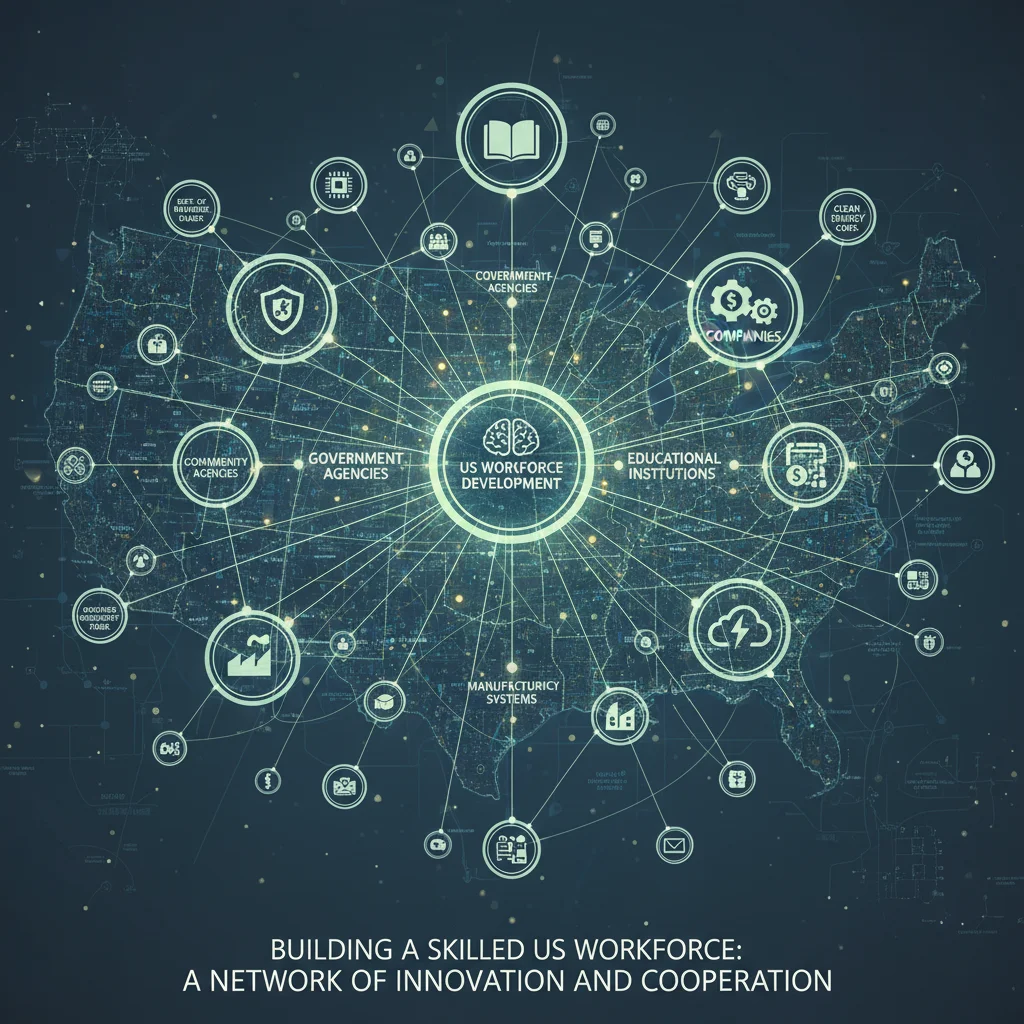
While government initiatives provide the framework and funding, the private sector is the indispensable engine driving US workforce reskilling. Businesses are not just recipients of skilled labor; they are active participants in shaping training programs, defining skill requirements, and often directly investing in their employees’ development.
The Rationale for Private Sector Engagement
Addressing Immediate Skill Gaps
Private companies are on the front lines of technological change and are often the first to identify emerging skill gaps. Rather than waiting for external solutions, many proactive businesses are investing in reskilling their existing employees to meet immediate operational needs. This internal investment in US workforce reskilling reduces hiring costs, improves employee retention, and ensures a workforce that is already familiar with company culture and processes.
Talent Pipeline Development
For long-term growth, companies recognize the need to build sustainable talent pipelines. This involves partnering with educational institutions, workforce development agencies, and even competitors to create industry-wide training standards and programs. By actively participating in curriculum development and offering internships or apprenticeships, businesses can ensure that graduates are equipped with relevant, job-ready skills, contributing significantly to US workforce reskilling efforts.
Corporate Social Responsibility (CSR)
Many companies view workforce development as a key component of their corporate social responsibility. Investing in the community’s workforce not only enhances the local talent pool but also builds goodwill, strengthens brand reputation, and contributes to broader economic stability. This commitment extends beyond mere profit motives, reflecting a deeper understanding of a company’s role within society and its contribution to US workforce reskilling.
Key Types of Private Sector Partnerships
1. Industry Consortia and Sector Partnerships
One of the most effective forms of private sector engagement is the formation of industry consortia or sector partnerships. These collaborations bring together multiple companies within a specific industry (e.g., cybersecurity, advanced manufacturing, healthcare) to collectively identify skill needs, develop standardized training curricula, and advocate for supportive policies. Examples include the National Cybersecurity Alliance or regional manufacturing associations that pool resources to create specialized training programs. These partnerships are crucial for scaling US workforce reskilling efforts across an entire industry.
2. Employer-Led Apprenticeships and Internships
Apprenticeships, once primarily associated with skilled trades, are experiencing a resurgence in tech and other white-collar fields. Companies are increasingly offering registered apprenticeships that combine paid on-the-job training with related technical instruction, leading to nationally recognized credentials. Similarly, internships provide valuable practical experience and often serve as direct pipelines to full-time employment. These employer-led models are highly effective for US workforce reskilling because they are demand-driven and provide immediate application of learned skills.
3. Partnerships with Educational Institutions (Community Colleges, Universities, Bootcamps)
Private companies frequently partner with community colleges, universities, and specialized coding bootcamps to design and deliver targeted training programs. These collaborations can take many forms: companies may advise on curriculum development, provide equipment, offer guest lectures, or even co-create entire degree or certification programs. The goal is to ensure that educational offerings are directly aligned with industry needs, producing graduates who are immediately employable. Google’s IT Support Professional Certificate, offered through Coursera, is a prime example of a private company partnering with an online education platform to address a critical skill shortage, significantly contributing to US workforce reskilling.
4. Internal Reskilling Programs and Learning Platforms
Many large corporations are investing heavily in their own internal reskilling and upskilling programs. Companies like Amazon, with its Upskilling 2025 initiative, commit significant resources to train employees in areas like AI, machine learning, and cloud computing. These programs often leverage internal experts, online learning platforms, and rotational assignments to develop new capabilities within their existing workforce, showcasing a commitment to US workforce reskilling from within.
The Synergy: How Government and Private Sector Collaborate for 2026
The most impactful US workforce reskilling initiatives are those where government and private sectors collaborate seamlessly. This synergy amplifies resources, broadens reach, and ensures that training efforts are both relevant and sustainable.
Funding and Incentives
Government agencies often provide funding, tax incentives, or grants to businesses that invest in employee training or participate in apprenticeship programs. This financial support reduces the burden on companies and encourages them to undertake US workforce reskilling efforts they might not otherwise pursue. For instance, federal grants can subsidize the cost of developing new training curricula or cover a portion of apprentice wages.
Policy Advocacy and Regulatory Support
Private sector groups frequently engage with government bodies to advocate for policies that support workforce development, such as streamlined certification processes, flexible educational funding, or immigration policies that attract skilled talent. Conversely, governments can create regulatory environments that encourage innovation in training and ease the adoption of new skills. This collaborative policy-making is vital for effective US workforce reskilling.
Data Sharing and Labor Market Intelligence
Effective US workforce reskilling relies on accurate and timely labor market data. Government agencies, through their labor statistics departments, can provide valuable insights into current and projected skill demands. Private companies, in turn, can offer real-time feedback on the skills they need most, helping to refine government programs and educational curricula. This continuous exchange of information ensures that training investments are directed where they are most needed.
Shared Infrastructure and Resources
Collaboration can also involve sharing physical and intellectual infrastructure. Community colleges might provide classroom space and instructors, while companies offer state-of-the-art equipment or specialized software for training. This shared resource model maximizes efficiency and provides trainees with access to high-quality learning environments, accelerating US workforce reskilling efforts.
Looking Ahead to 2026: Key Trends and Focus Areas
As we move towards 2026, several key trends and focus areas will shape the trajectory of US workforce reskilling.
Emphasis on Digital and AI Literacy
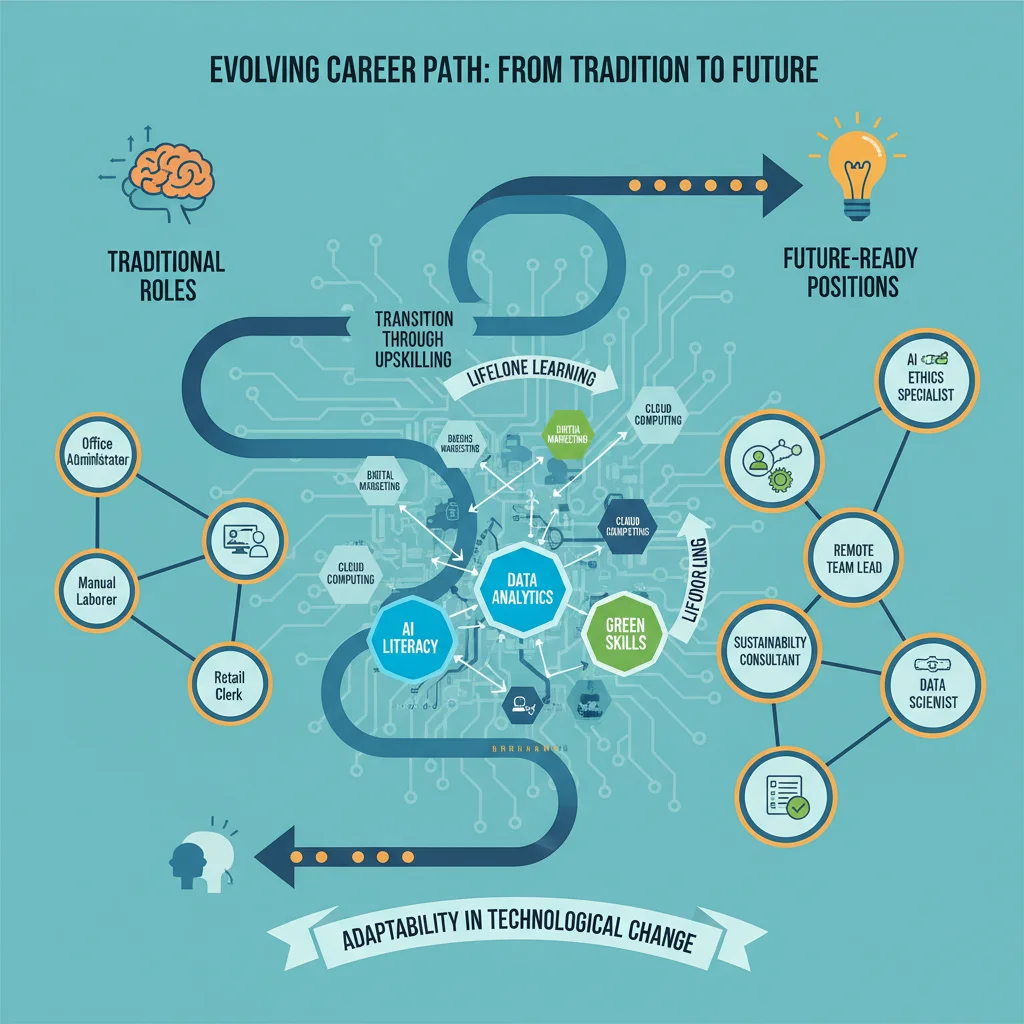
Beyond specialized tech skills, a foundational understanding of digital tools and AI will become essential for almost all jobs. Reskilling efforts will increasingly focus on building broad digital literacy and an understanding of how AI impacts various industries, moving beyond rote technical training to foster critical thinking and problem-solving in a digital context. This will be a core component of US workforce reskilling.
Growth of Green Skills
With increasing investment in renewable energy, sustainable infrastructure, and climate-resilient technologies, the demand for ‘green skills’ will surge. This includes everything from solar panel installation and wind turbine maintenance to environmental engineering and sustainable supply chain management. Government incentives and private sector demand will drive significant US workforce reskilling in this burgeoning sector.
Personalized Learning Pathways
One-size-fits-all training programs are becoming obsolete. The future of US workforce reskilling will involve highly personalized learning pathways, leveraging AI and adaptive learning technologies to tailor education to individual needs, prior experience, and career goals. Micro-credentials and stackable certifications will allow workers to acquire specific skills efficiently, building towards larger qualifications.
Focus on Human-Centric Skills
As automation handles more routine tasks, uniquely human skills will become even more valuable. Critical thinking, creativity, emotional intelligence, collaboration, communication, and complex problem-solving will be paramount. Reskilling programs will integrate the development of these ‘soft skills’ alongside technical competencies, recognizing their importance in a technology-driven world. This holistic approach to US workforce reskilling is vital.
Expanding Access and Equity
Ensuring equitable access to reskilling opportunities for all segments of the population will remain a critical challenge and a key focus. This includes addressing barriers such as cost, childcare, transportation, and digital literacy gaps. Innovative solutions, such as online learning platforms, flexible scheduling, and targeted support services, will be crucial for broadening participation in US workforce reskilling initiatives.
Challenges and Opportunities in US Workforce Reskilling
Despite significant progress, the path to a fully reskilled US workforce is not without its challenges. However, these challenges also present opportunities for innovation and growth.
Challenges:
- Funding Sustainability: While government funding is crucial, ensuring long-term, sustainable financing for comprehensive reskilling programs remains a challenge, especially given fluctuating economic conditions.
- Rapid Technological Change: The speed at which new technologies emerge can make it difficult for training programs to keep pace, risking obsolescence before programs are fully implemented.
- Learner Engagement and Motivation: Convincing adult workers, especially those with family and financial responsibilities, to invest time and effort in reskilling can be difficult. Programs must be flexible, accessible, and demonstrate clear career benefits.
- Measuring ROI: Quantifying the return on investment for reskilling programs, both for individuals and businesses, can be complex, making it harder to justify continued investment.
- Infrastructure Gaps: Access to reliable broadband, suitable learning environments, and supportive services (like childcare) remains uneven across the country, creating barriers to participation.
Opportunities:
- Leveraging Technology for Training: Online learning, virtual reality (VR), augmented reality (AR), and AI-powered adaptive learning platforms offer unprecedented opportunities to deliver scalable, engaging, and personalized training.
- Strengthening Public-Private Partnerships: Continued and deeper collaboration between government, industry, and academia can create more robust, demand-driven training ecosystems.
- Focus on Transferable Skills: Emphasizing the development of core, transferable skills (like critical thinking, problem-solving, and adaptability) can prepare workers for a wider range of future jobs, reducing the need for constant, specific reskilling.
- Promoting a Culture of Lifelong Learning: Shifting the societal mindset towards continuous learning as a norm, rather than an exception, will be crucial. This involves fostering curiosity and providing accessible pathways for ongoing skill development.
- Global Leadership in Workforce Development: By effectively addressing its own reskilling needs, the US can become a global leader in innovative workforce development models, setting standards and sharing best practices internationally.
Conclusion: A Resilient US Workforce for 2026 and Beyond
The journey to a future-ready US workforce reskilling is a continuous one, requiring sustained effort, adaptability, and unwavering commitment from all stakeholders. As we approach 2026, the combined force of robust government initiatives and dynamic private sector partnerships is creating a powerful ecosystem for workforce development. These efforts are not merely about filling immediate job vacancies; they are about building a resilient, adaptable, and innovative workforce capable of navigating the complexities of the 21st century economy.
By investing in digital literacy, green skills, personalized learning, and essential human-centric competencies, the United States is positioning itself for continued economic leadership and ensuring that its citizens have the opportunities to thrive in an ever-evolving world. The collaborative spirit demonstrated in these US workforce reskilling endeavors is a testament to the nation’s ability to adapt and innovate, promising a brighter and more prosperous future for all.
The success of US workforce reskilling by 2026 will not be measured solely by economic indicators, but by the extent to which it creates equitable pathways to opportunity, fosters a culture of lifelong learning, and empowers every American to achieve their full potential in the new world of work. This collective vision and ongoing commitment are the bedrock upon which a strong and competitive future workforce is being built.