US Energy Outlook 2026: 4 Investment Opportunities & Policy Impact

The United States energy sector stands on the precipice of a transformative era, with the US Energy Outlook 2026 promising significant shifts driven by evolving policy, technological innovation, and a growing global imperative for sustainable practices. As we look towards 2026, the confluence of federal incentives, state-level mandates, and private sector investments is creating a dynamic landscape ripe with opportunities and challenges. This comprehensive analysis will delve into the critical factors shaping the US energy sector, identifying four key investment opportunities that are poised for substantial growth in the coming years, all underpinned by the impact of new and existing policy frameworks.
Understanding the trajectory of the US energy market requires a deep dive into the underlying forces at play. The Biden administration’s ambitious climate goals, coupled with legislative actions such as the Inflation Reduction Act (IRA), have dramatically reshaped the investment landscape. These policies are not merely aspirational; they are providing concrete financial incentives, tax credits, and regulatory support that are accelerating the transition towards a cleaner, more resilient energy system. For investors, this means a strategic re-evaluation of traditional energy portfolios and a keen eye on emerging sectors that are benefiting from this policy-driven tailwind.
The US Energy Outlook 2026 is characterized by several overarching themes: the accelerated deployment of renewable energy technologies, the modernization and decarbonization of the grid, the increasing focus on energy storage solutions, and the critical role of energy efficiency and demand-side management. Each of these themes presents unique avenues for investment, requiring different levels of capital, risk profiles, and technological expertise. Navigating this complex environment successfully demands foresight, adaptability, and a thorough understanding of both market fundamentals and policy nuances.
This article aims to provide a robust framework for understanding these opportunities. We will explore how policy decisions are directly influencing market dynamics, creating favorable conditions for certain technologies and business models. From the burgeoning solar and wind industries to the sophisticated world of grid infrastructure and advanced energy storage, the potential for growth is immense. By dissecting these areas, we can equip investors with the knowledge needed to make informed decisions and capitalize on the promising future of the US energy sector.
The Policy Landscape: Shaping the US Energy Outlook 2026
The foundation of the US Energy Outlook 2026 is inextricably linked to the prevailing policy environment. Federal and state governments are actively steering the energy transition through a combination of incentives, regulations, and strategic investments. The Inflation Reduction Act (IRA), signed into law in August 2022, stands as a monumental piece of legislation, committing hundreds of billions of dollars to clean energy and climate initiatives. Its impact on the energy sector cannot be overstated, providing long-term certainty and significant financial backing for renewable energy projects, electric vehicles, and energy efficiency upgrades.
Key provisions of the IRA include extended and expanded tax credits for solar and wind power, incentives for domestic manufacturing of clean energy components, and rebates for energy-efficient home improvements. These credits are designed to reduce the cost of clean energy technologies, making them more competitive with traditional fossil fuels and accelerating their deployment across the nation. Furthermore, the IRA introduces provisions for hydrogen production, carbon capture, and advanced nuclear technologies, signaling a broad-based approach to decarbonization that extends beyond just solar and wind.
Beyond federal policy, state-level initiatives play a crucial role. Many states have adopted aggressive Renewable Portfolio Standards (RPS) or clean energy mandates, requiring utilities to source a significant percentage of their electricity from renewable sources. These mandates create a stable demand market for renewable energy developers and attract investment into specific regions. States are also leading the charge in developing electric vehicle charging infrastructure, promoting building electrification, and implementing smart grid technologies. Understanding this patchwork of state and federal policies is paramount for identifying localized investment hotspots.
The regulatory environment also shapes the US Energy Outlook 2026. The Environmental Protection Agency (EPA) continues to set emissions standards for power plants and vehicles, pushing industries towards cleaner alternatives. The Federal Energy Regulatory Commission (FERC) oversees interstate electricity transmission and wholesale electricity markets, with recent actions aimed at facilitating the integration of more renewable energy onto the grid. These regulatory bodies, while sometimes perceived as obstacles, are ultimately driving the systemic changes necessary for a sustainable energy future.
The combined effect of these policies is a clear signal to the market: the US is committed to a clean energy future. This commitment provides a strong foundation for investors, reducing policy risk and offering predictable returns in sectors aligned with these national priorities. The long-term nature of many of these incentives means that investment decisions made today will benefit from sustained policy support well into the future, making the US Energy Outlook 2026 particularly attractive for patient capital.
Investment Opportunity 1: Accelerated Growth in Renewable Energy Generation
The first and perhaps most evident investment opportunity within the US Energy Outlook 2026 lies in the continued, accelerated growth of renewable energy generation, primarily solar and wind power. The IRA’s extended tax credits, such as the Investment Tax Credit (ITC) for solar and the Production Tax Credit (PTC) for wind, provide unprecedented certainty for project developers and investors. These credits significantly reduce the upfront capital costs and improve the economic viability of renewable projects, even in the face of fluctuating commodity prices.
Solar energy, both utility-scale and distributed (rooftop), is projected to be a dominant force. Advancements in photovoltaic technology, coupled with declining manufacturing costs, have made solar power increasingly competitive. The IRA’s domestic content bonuses further incentivize US-based manufacturing, creating a robust supply chain and additional job growth. Investment opportunities exist not only in developing and operating solar farms but also in the manufacturing of solar panels, inverters, and mounting hardware, as well as in the installation and maintenance services for residential and commercial solar systems.
Wind power, particularly offshore wind, is another area poised for substantial expansion. The US has vast offshore wind resources, and federal policies are actively supporting the development of these projects through leasing auctions and streamlined permitting processes. While offshore wind projects typically have higher upfront costs and longer development timelines, their larger scale and higher capacity factors make them attractive for long-term, stable returns. Onshore wind continues to be a significant contributor, especially in resource-rich regions, benefiting from similar policy support.
Beyond solar and wind, other renewable technologies are gaining traction. Geothermal energy, while niche, offers baseload power and is receiving renewed interest and policy support. Hydropower, a mature technology, is seeing investments in upgrades and modernization to improve efficiency and flexibility. Biomass and waste-to-energy projects also contribute to the renewable mix, often benefiting from state-level incentives and local waste management strategies.
For investors, this means looking beyond just the large utility-scale projects. Opportunities abound in smaller-scale community solar projects, distributed generation paired with storage, and the companies providing the critical components and services that enable this renewable energy build-out. The demand for renewable energy is not just policy-driven; it’s also consumer-driven, with corporations and individuals increasingly seeking cleaner energy options. This dual demand-pull ensures a robust market for renewable energy investments through 2026 and beyond.
Investment Opportunity 2: Modernizing and Decarbonizing the Grid
A resilient and intelligent electricity grid is fundamental to integrating a high penetration of renewable energy. The second major investment opportunity in the US Energy Outlook 2026 centers on modernizing and decarbonizing the grid infrastructure. The existing grid, largely built in the 20th century, was designed for a centralized power generation model. The transition to a decentralized, renewable-heavy system requires significant upgrades in transmission, distribution, and control technologies.
Investment in transmission infrastructure is critical. New high-voltage transmission lines are needed to transport renewable electricity from remote generation sites (e.g., wind farms in the Midwest, solar farms in the Southwest) to distant load centers. Permitting and siting these projects can be challenging, but federal initiatives like the IRA and FERC policies are working to streamline these processes. Companies involved in transmission line construction, manufacturing of high-voltage components, and grid planning and engineering will see increased demand.
The concept of the ‘smart grid’ is also central to this opportunity. Smart grid technologies involve the deployment of advanced sensors, digital controls, and communication networks to monitor and manage electricity flow more efficiently. This includes smart meters, distributed energy resource management systems (DERMS), and advanced distribution automation. These technologies enable better grid reliability, reduce losses, and facilitate the integration of intermittent renewables and distributed energy resources like rooftop solar and electric vehicle charging.
Decarbonizing the grid also involves exploring alternatives to traditional fossil fuel power plants. This includes investments in natural gas plants equipped with carbon capture, utilization, and storage (CCUS) technology, as well as the development of advanced nuclear reactors (small modular reactors or SMRs). While these technologies face their own sets of challenges, policy support, particularly for CCUS in the IRA, is creating incentives for their deployment. Companies specializing in these advanced energy systems present unique investment prospects.
Cybersecurity for critical infrastructure is another burgeoning area within grid modernization. As the grid becomes more digitized and interconnected, it also becomes more vulnerable to cyber threats. Investments in robust cybersecurity solutions for energy systems are essential to ensure the reliability and security of the nation’s power supply. Companies offering specialized cybersecurity services and products for industrial control systems (ICS) and operational technology (OT) in the energy sector are likely to experience significant growth.
Investment Opportunity 3: Expanding Energy Storage Solutions
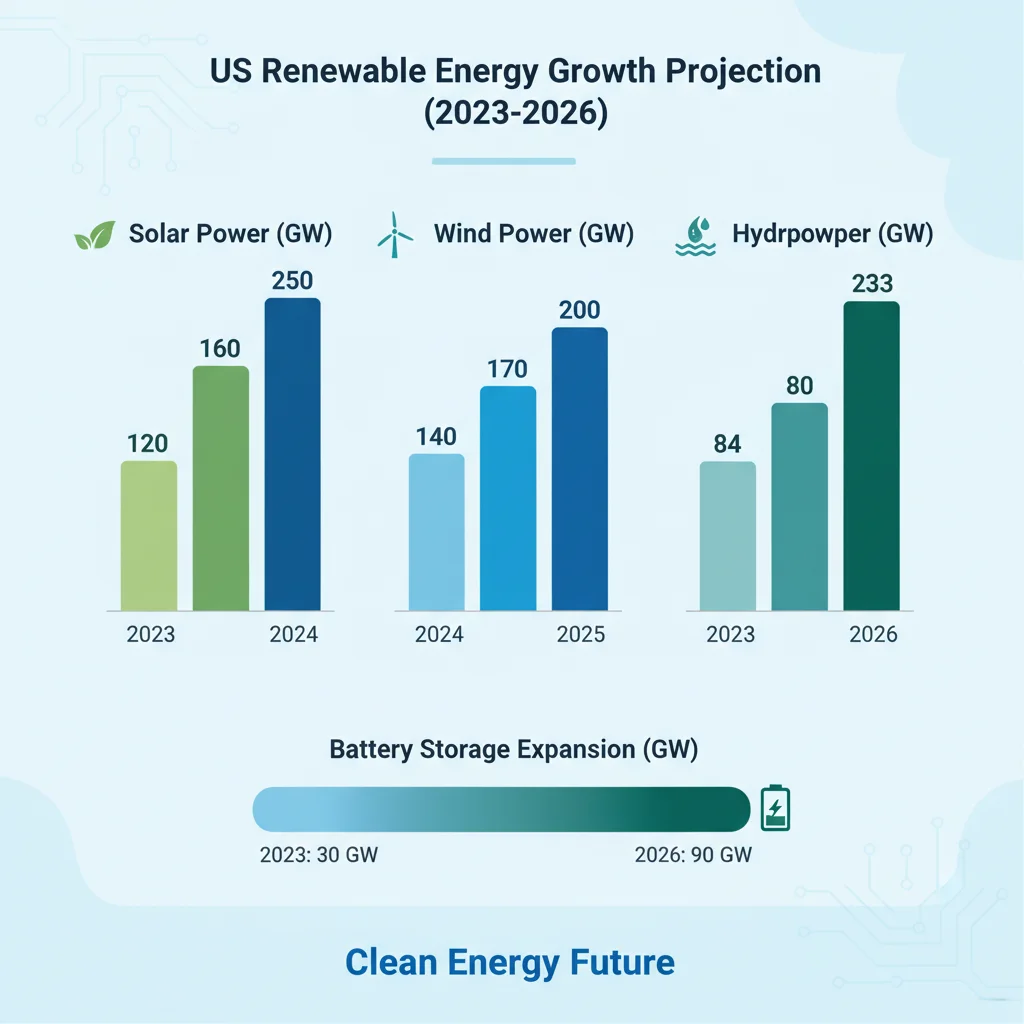
The intermittent nature of renewable energy sources like solar and wind necessitates robust energy storage solutions to ensure grid stability and reliability. This makes energy storage the third compelling investment opportunity within the US Energy Outlook 2026. As renewable penetration increases, the ability to store excess energy during periods of high generation and release it during periods of high demand or low generation becomes critical.
Lithium-ion battery storage currently dominates the market, with significant cost reductions and technological advancements. Investment opportunities span the entire value chain: from raw material extraction and processing, battery cell manufacturing, and battery pack assembly, to the deployment of utility-scale battery storage projects and behind-the-meter (residential and commercial) storage systems. The IRA provides direct tax credits for standalone energy storage, further enhancing its economic attractiveness.
Beyond lithium-ion, other advanced battery technologies are emerging and receiving research and development funding. These include flow batteries, solid-state batteries, and various long-duration storage solutions that could address grid needs for hours or even days. Companies innovating in these alternative storage chemistries could represent significant long-term growth potential, though they may carry higher technological risk.
Pumped-hydro storage, a mature technology, is also seeing renewed interest, particularly for large-scale, long-duration storage applications. While new pumped-hydro projects are capital-intensive and geographically constrained, upgrades to existing facilities and strategic new developments are part of the broader storage solution. Additionally, thermal energy storage, utilizing materials to store heat or cold for later use, is gaining traction in industrial and building applications.
Hydrogen, particularly green hydrogen produced from renewable electricity, is emerging as a critical long-duration energy storage and decarbonization pathway. The IRA’s production tax credits for clean hydrogen are a game-changer, making green hydrogen more economically viable. Investment opportunities in this sector include electrolyzer manufacturing, hydrogen production facilities, storage infrastructure (e.g., salt caverns), and distribution networks. Hydrogen can be used for power generation, industrial processes, and heavy-duty transportation, presenting a multi-faceted investment thesis.
The demand for energy storage is driven by multiple factors: grid modernization, increased renewable integration, peak shaving, ancillary services for grid stability, and resilience against outages. As the US Energy Outlook 2026 becomes increasingly reliant on renewables, the market for diverse, cost-effective energy storage solutions will continue to expand dramatically, offering a wide array of investment entry points.
Investment Opportunity 4: Energy Efficiency and Demand-Side Management
Often overlooked but critically important, energy efficiency and demand-side management (DSM) represent the fourth significant investment opportunity in the US Energy Outlook 2026. The cleanest and cheapest energy is the energy that is not used. Policies and incentives are increasingly focusing on reducing overall energy consumption and optimizing energy use patterns.
The IRA includes substantial rebates and tax credits for energy-efficient home improvements, such as heat pumps, upgraded insulation, and efficient windows. This is driving a boom in the residential energy efficiency market. Companies providing energy audits, installation services, and manufacturing of energy-efficient appliances and building materials are well-positioned for growth. The commercial and industrial sectors also offer vast potential for efficiency upgrades, driven by rising energy costs and corporate sustainability goals.
Demand-side management technologies and services enable consumers and businesses to reduce or shift their energy consumption during peak demand periods. This includes smart thermostats, building management systems (BMS), and industrial process optimization software. Utilities are increasingly offering incentives for customers to participate in demand response programs, which help balance the grid and reduce the need for expensive peaker plants. Companies developing and deploying these technologies and managing these programs are at the forefront of this opportunity.

The electrification of transportation and buildings also falls under this umbrella. As electric vehicles (EVs) become more prevalent, investments in EV charging infrastructure, smart charging solutions, and vehicle-to-grid (V2G) technologies will be crucial. Similarly, the transition from fossil fuel-based heating and cooling to electric heat pumps in buildings is a major driver for energy efficiency, creating demand for new equipment and installation expertise.
Software and data analytics play a pivotal role in this sector. Companies offering platforms for energy monitoring, optimization, and carbon accounting are becoming indispensable for businesses aiming to reduce their environmental footprint and comply with new regulations. These digital solutions help identify inefficiencies, predict energy consumption, and manage distributed energy resources effectively.
Investing in energy efficiency and DSM is often seen as a lower-risk, high-return strategy, as it directly reduces operational costs and enhances sustainability without necessarily requiring large-scale infrastructure projects. The long-term policy support for these initiatives ensures a stable market, making them an attractive component of a diversified energy investment portfolio within the US Energy Outlook 2026.
Challenges and Considerations for the US Energy Outlook 2026
While the investment opportunities within the US Energy Outlook 2026 are substantial, it is crucial for investors to also be aware of the inherent challenges and considerations. Navigating this evolving landscape requires a nuanced understanding of potential headwinds and strategic planning to mitigate risks.
One significant challenge is the intermittency of renewable energy sources. While energy storage is a key solution, its widespread deployment at scale still faces cost and technological hurdles. Integrating large amounts of variable renewable energy onto the grid requires sophisticated forecasting, grid management, and ancillary services, which are continuously being developed and refined. Investment in these enabling technologies and services will be critical.
Supply chain constraints and raw material availability pose another challenge. The rapid expansion of renewable energy and battery storage technologies has increased demand for critical minerals like lithium, cobalt, and rare earth elements. Geopolitical factors, environmental concerns related to mining, and the concentration of processing capabilities in certain regions can create supply chain vulnerabilities and price volatility. Diversifying supply chains and investing in domestic manufacturing and recycling capabilities are crucial for long-term resilience.
Permitting and siting issues remain a persistent bottleneck for large-scale energy projects, whether they are new transmission lines, utility-scale solar farms, or offshore wind developments. Overcoming local opposition, navigating complex environmental regulations, and coordinating across multiple jurisdictions can significantly delay project timelines and increase costs. Policy efforts to streamline these processes are underway but progress can be slow.
The workforce transition is another critical consideration. The shift away from fossil fuels to clean energy requires retraining and upskilling the existing workforce, as well as developing new talent pools. Ensuring a just transition for communities historically reliant on fossil fuel industries is not only an ethical imperative but also essential for social and political acceptance of the energy transition. Investments in workforce development and educational programs will be vital.
Finally, evolving policy risks, while generally supportive, cannot be entirely discounted. Future administrations or legislative bodies could alter or repeal existing incentives, impacting the economic viability of projects. Therefore, investors must conduct thorough due diligence, stress-test their assumptions, and build diversified portfolios that can withstand potential policy shifts, ensuring that their investment strategies align with the long-term vision of a sustainable US Energy Outlook 2026.
Conclusion: Seizing the Opportunities in the US Energy Outlook 2026
The US Energy Outlook 2026 paints a compelling picture of an energy sector undergoing profound transformation. Driven by robust policy support, technological advancements, and a growing commitment to sustainability, the landscape is rich with investment opportunities across multiple segments. From the explosive growth of renewable energy generation to the critical modernization of the grid, the expansion of energy storage, and the pervasive impact of energy efficiency, each area presents unique pathways for capital deployment and significant returns.
Investors looking to capitalize on this dynamic period must adopt a forward-thinking approach, recognizing that the energy paradigm has fundamentally shifted. The era of fossil fuel dominance is giving way to a more diversified, decarbonized, and decentralized energy system. The strategic alignment of investment capital with national policy objectives, particularly those embedded in the Inflation Reduction Act, offers a powerful advantage.
While challenges such as supply chain vulnerabilities, permitting complexities, and workforce transitions exist, they are not insurmountable. These challenges also create their own set of investment opportunities for companies that can provide innovative solutions, whether in advanced manufacturing, digital grid management, or specialized consulting services.
Ultimately, the US Energy Outlook 2026 is one of immense potential. For those prepared to understand the intricate interplay of policy, technology, and market forces, the coming years offer an unparalleled chance to contribute to a sustainable future while generating substantial economic value. By focusing on the identified investment opportunities – renewable energy generation, grid modernization, energy storage, and energy efficiency – investors can strategically position themselves to thrive in the evolving US energy landscape.