Streaming Wars 2026: The Future of US Media & Entertainment

The landscape of media and entertainment in the United States has been irrevocably transformed by the advent and rapid escalation of the streaming wars. What began as a nascent alternative to traditional broadcast and cable television has exploded into a multi-billion dollar industry characterized by fierce competition, groundbreaking innovation, and a seemingly insatiable demand for content. As we cast our gaze towards 2026, the question isn’t whether the streaming wars will continue, but rather, how profoundly they will evolve and reshape the very fabric of how Americans consume their entertainment. Understanding the trajectory of these streaming wars 2026 is crucial for consumers, content creators, and industry stakeholders alike.
The journey to 2026 is paved with several key trends that are already taking shape: market consolidation, the blurring lines between content types, the relentless pursuit of subscriber growth, innovative monetization strategies, and the ever-increasing influence of technology, particularly artificial intelligence. Each of these elements will play a pivotal role in defining the winners and losers in the ongoing battle for audience attention and subscription dollars. The stakes are higher than ever, and the strategies employed by major players will dictate the future of digital entertainment.
The Current State of the Streaming Ecosystem: A Precursor to Streaming Wars 2026
Before delving into the future, it’s essential to grasp the current dynamics. The US streaming market is saturated with a plethora of services, each vying for a piece of the consumer’s wallet and screen time. Giants like Netflix, Disney+, Max (formerly HBO Max), Paramount+, Peacock, Hulu, and Amazon Prime Video dominate the premium subscription video-on-demand (SVOD) space. Alongside these, numerous niche services cater to specific interests, and ad-supported video-on-demand (AVOD) platforms like Pluto TV, Tubi, and the free tiers of many SVOD services are gaining significant traction. This fragmentation, while offering consumers an unprecedented array of choices, also presents challenges related to cost, content discovery, and subscription fatigue.
Subscriber growth, once the primary metric of success, is showing signs of plateauing for some established players, particularly in mature markets like the US. This shift is forcing companies to pivot their strategies, focusing more on retention, profitability, and exploring new avenues for revenue generation. Content spending remains astronomical, with major studios and tech companies pouring billions into original programming to attract and retain subscribers. This arms race for exclusive content is a defining characteristic of the current streaming landscape and will continue to be a significant driver in the streaming wars 2026.
Technology has also been a silent but powerful force. The ubiquity of high-speed internet, smart TVs, and mobile devices has made streaming accessible to virtually everyone. Advanced recommendation algorithms, while still imperfect, have begun to personalize the viewing experience, making content discovery more efficient. However, the true potential of AI and other emerging technologies is yet to be fully realized, and 2026 promises to be a watershed moment for their integration into the streaming experience.
Consolidation and Strategic Alliances: Reshaping the Market by 2026
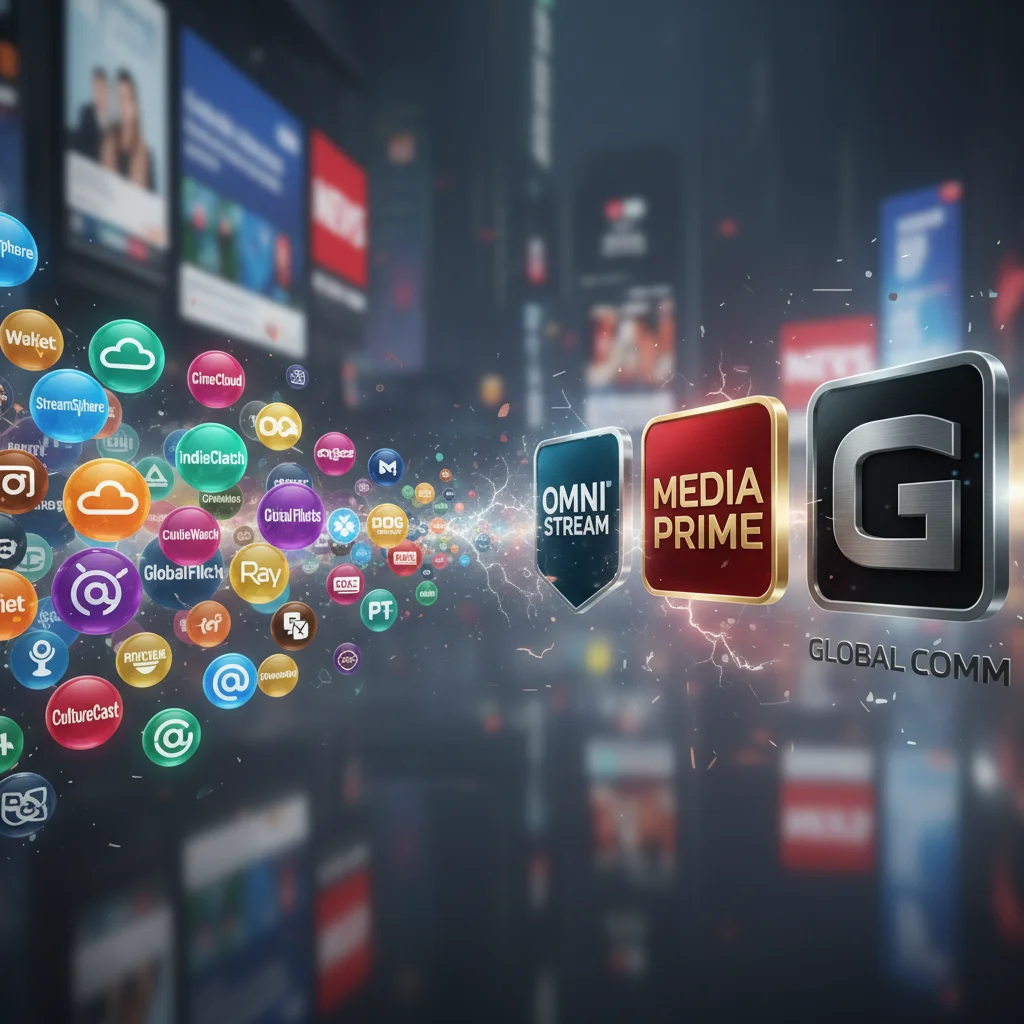
One of the most anticipated developments in the streaming wars 2026 is the acceleration of market consolidation and the formation of strategic alliances. The current number of major players is likely unsustainable in the long run, and economic pressures, coupled with the desire for scale and market dominance, will drive mergers and acquisitions. Companies with vast content libraries, robust technology infrastructure, and strong financial backing will be in a prime position to acquire smaller, struggling services or merge with competitors to create more formidable entities.
We’ve already seen hints of this with the Warner Bros. Discovery merger and the ongoing discussions around various partnerships. By 2026, it’s plausible that the US streaming landscape will be dominated by a smaller number of super-platforms, each offering a vast array of content across different genres and appealing to a broader demographic. These super-platforms will aim to be the ‘one-stop shop’ for entertainment, reducing subscriber churn and increasing lifetime value.
Strategic alliances will also become more prevalent. This could involve content sharing agreements, joint ventures for technology development, or bundled subscription offers that combine services from different companies. For instance, we might see telecommunication companies partnering with streaming providers to offer exclusive deals, or even rival streaming services collaborating on a specific content slate to share production costs and expand audience reach. These alliances will be critical for maintaining competitiveness and expanding market share in the intense streaming wars 2026.
The rationale behind consolidation and alliances is clear: reduce competition, achieve economies of scale, and offer more compelling value propositions to consumers. As advertising revenues become increasingly important, larger platforms will also be more attractive to advertisers due to their vast audience reach and data capabilities. This strategic maneuvering will fundamentally alter the competitive landscape and redefine what it means to be a major player in the streaming world.
The Evolution of Monetization: Beyond Pure Subscriptions
The initial model of the streaming wars was largely predicated on subscription fees. However, as subscriber growth slows and consumers become more price-sensitive, the industry is rapidly diversifying its monetization strategies. By 2026, a hybrid model combining subscriptions, advertising, and transactional video-on-demand (TVOD) will be the norm, not the exception.
Ad-Supported Tiers and AVOD’s Rise
Ad-supported tiers, already introduced by major players like Netflix and Disney+, will become standard across most SVOD platforms. These cheaper, ad-supported options will serve as a crucial entry point for price-conscious consumers and provide a significant new revenue stream for platforms. The sophistication of ad targeting will also improve dramatically, leveraging viewer data to deliver more relevant and less intrusive advertisements, thus enhancing the user experience while maximizing ad revenue.
Furthermore, purely AVOD platforms will continue their explosive growth. Their free nature makes them highly attractive, and as content libraries expand and ad experiences become more refined, they will capture an even larger share of total viewing time. Expect more original content developed specifically for AVOD platforms, further blurring the lines between free and paid streaming.
Bundling and Tiered Offerings
Bundling will be another key strategy in the streaming wars 2026. Instead of individual subscriptions, consumers will increasingly opt for bundled packages that combine several streaming services, often at a discounted rate. These bundles could be curated by the streaming providers themselves, by telecommunication companies, or even by third-party aggregators. This approach not only offers better value to consumers but also helps platforms reduce churn and acquire new subscribers more efficiently.
Tiered offerings will also become more complex. Beyond basic and ad-supported tiers, platforms might introduce premium tiers with early access to content, higher resolution streaming, exclusive bonus features, or even interactive elements. This allows platforms to cater to a wider range of consumer preferences and price points, maximizing revenue potential from each subscriber.
Transactional and Experiential Content
TVOD, where users pay per movie or episode, will see a resurgence, particularly for premium content like new theatrical releases or live events. The window between theatrical release and streaming availability will continue to shrink, making TVOD an attractive option for early access. Beyond traditional content, platforms will explore experiential monetization, such as virtual reality concerts, interactive shows, or even direct-to-consumer merchandise sales linked to popular franchises. These innovative approaches will be crucial for platforms looking to differentiate themselves and capture new revenue streams in the highly competitive streaming wars 2026.
The Power of Personalization and AI in Streaming Wars 2026
Artificial intelligence (AI) is already a foundational technology in streaming, powering recommendation engines and optimizing content delivery. By 2026, AI’s role will expand dramatically, becoming the cornerstone of hyper-personalization, content creation, and operational efficiency.
Hyper-Personalized User Experiences
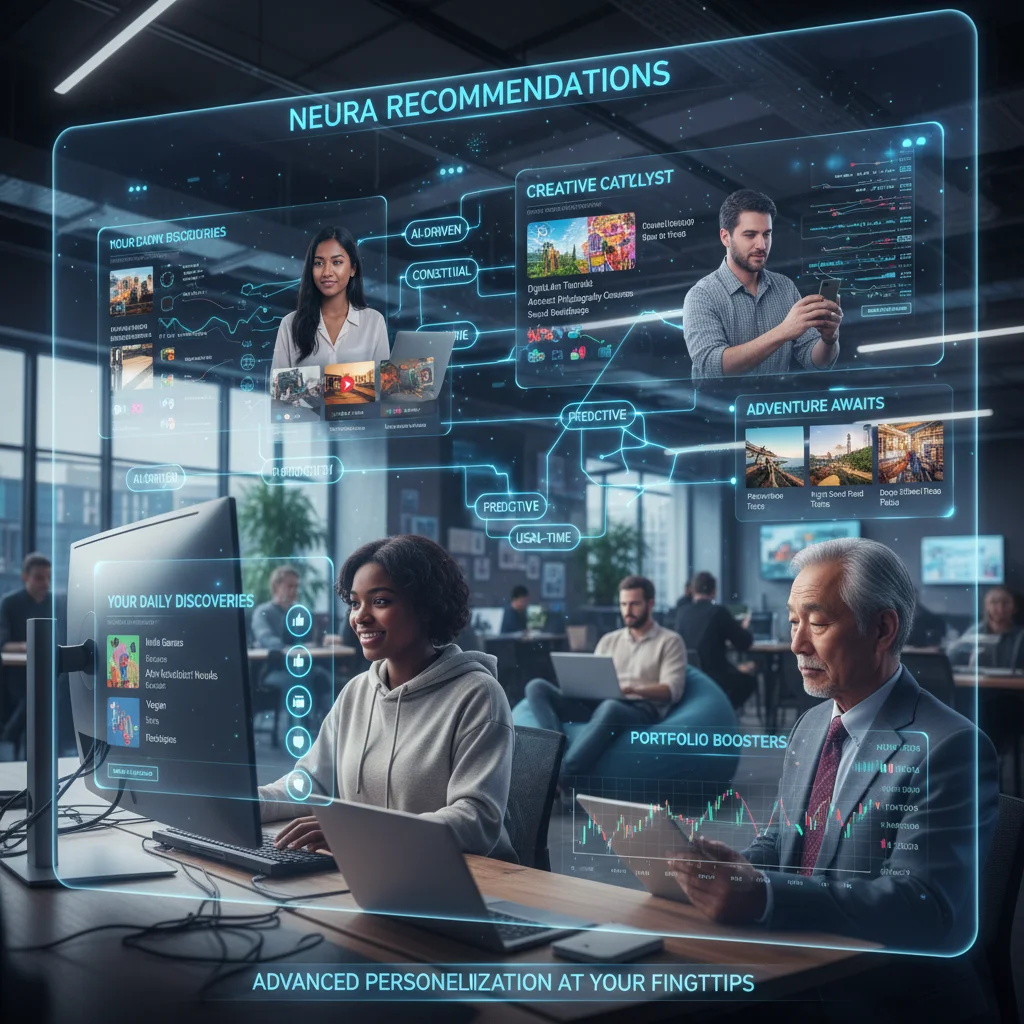
AI will move beyond simple recommendations to create truly hyper-personalized user experiences. This means not just suggesting what to watch next, but dynamically altering the user interface, curating personalized content feeds, and even adapting promotional materials based on individual viewing habits, mood, and demographic data. Imagine an AI that understands your preferences so well it can suggest a specific scene from a show you might enjoy, or compile a customized ‘best of’ reel from a vast library of content.
Content discovery will be revolutionized. Voice assistants and natural language processing will allow users to find content with unprecedented ease, simply by describing what they feel like watching. AI will also play a crucial role in reducing subscription fatigue by intelligently surfacing relevant content from across multiple bundled services, making the overall experience feel more cohesive and valuable.
AI in Content Creation and Optimization
Beyond the viewer interface, AI will increasingly influence the content itself. AI-powered tools will assist writers in generating scripts, analyze audience data to identify successful narrative tropes, and even help filmmakers with post-production tasks like editing and special effects. While human creativity will remain paramount, AI will serve as a powerful co-pilot, streamlining production and potentially reducing costs. This efficiency will be vital in sustaining the high volume of original content required to win the streaming wars 2026.
Furthermore, AI will optimize content distribution and delivery, ensuring seamless streaming experiences regardless of network conditions or device. It will also be instrumental in combating piracy, protecting intellectual property, and ensuring content security across platforms. The operational advantages gained through AI will be a significant differentiator for leading streaming services.
The Global Dimension and Localized Content Strategies
While the focus here is primarily on the US market, it’s impossible to discuss the streaming wars 2026 without acknowledging the global context. International expansion is a critical growth driver for all major streaming platforms. By 2026, localized content strategies will be more sophisticated than ever, moving beyond simple dubbing and subtitles to truly embrace local cultures and storytelling.
Platforms will invest heavily in producing original content in various languages, tailored to the tastes and preferences of specific regions. This not only attracts new international subscribers but also creates opportunities for global hits that transcend linguistic and cultural barriers. The success of shows like ‘Squid Game’ and ‘Money Heist’ has demonstrated the immense global appeal of non-English content, a trend that will only intensify by 2026.
This global approach also means increased competition from regional streaming services. Local players with deep cultural understanding and strong relationships with local talent will pose a significant challenge to the global giants. Strategic partnerships between global and local platforms will likely become more common, allowing each to leverage the other’s strengths to penetrate new markets.
Interactive and Immersive Experiences: The Next Frontier
The evolution of content consumption doesn’t stop at traditional linear viewing. By 2026, interactive and immersive experiences will begin to play a more significant role in the streaming landscape. While still in nascent stages, technologies like virtual reality (VR), augmented reality (AR), and interactive storytelling formats will move from experimental features to more integrated offerings.
Imagine choosing your own adventure within a movie, attending a live concert in the metaverse through your streaming platform, or having AR overlays enhance your viewing of a sporting event. These experiences offer new ways for audiences to engage with content, fostering deeper connections and creating unique value propositions that traditional linear media cannot replicate. The metaverse, while still largely conceptual, could become a significant distribution channel for certain types of streaming content by 2026, offering truly immersive and social viewing experiences.
Gaming, already a massive industry, will also converge further with streaming. Platforms may integrate casual games related to their popular franchises, or even offer cloud gaming services as part of a premium subscription. This convergence reflects a broader trend of entertainment becoming more participatory and less passive, a key differentiator in the crowded streaming wars 2026.
The Challenge of Content Discovery and Fatigue
Despite the promise of AI-driven personalization, content discovery and subscription fatigue remain significant challenges. As the volume of available content explodes, finding something genuinely engaging can feel overwhelming. Consumers are increasingly frustrated by the need to navigate multiple apps, remember different passwords, and manage various billing cycles.
By 2026, platforms that successfully solve the content discovery problem will gain a considerable competitive advantage. This goes beyond better recommendation algorithms; it involves intuitive user interfaces, universal search functionalities across bundled services, and potentially even AI-powered personal assistants that proactively suggest content based on learned preferences and contextual cues.
Subscription fatigue will also drive innovation in bundling and pricing models. Consumers will demand greater flexibility and value for their money. Platforms that offer seamless experiences, transparent pricing, and genuinely compelling content libraries will be the ones that thrive. The ability to easily pause or cancel subscriptions without penalty will also be a key factor in consumer satisfaction and retention.
Conclusion: Navigating the Evolving Streaming Wars 2026
The streaming wars 2026 will be a period of intense transformation for US media and entertainment. We can anticipate significant market consolidation, with a few dominant super-platforms emerging from the current fragmented landscape. Monetization strategies will continue to diversify, moving beyond pure subscriptions to embrace hybrid models that skillfully blend advertising, subscriptions, and transactional offerings. Artificial intelligence will be the invisible hand guiding much of this evolution, enabling hyper-personalization, optimizing content creation, and streamlining operational efficiencies.
The global dimension will become even more critical, with localized content strategies and international partnerships driving growth. Furthermore, the early seeds of interactive and immersive experiences, leveraging technologies like VR and AR, will begin to blossom, offering new frontiers for audience engagement. However, challenges such as content discovery and subscription fatigue will persist, demanding continuous innovation from all players.
For consumers, 2026 promises a richer, more personalized, and potentially more cost-effective entertainment experience, provided they can navigate the evolving landscape of options. For industry players, the battle for attention and loyalty will be fiercer than ever, demanding agility, strategic foresight, and a relentless focus on delivering exceptional value. The future of media and entertainment is dynamic, complex, and undeniably exciting, with the streaming wars 2026 serving as a pivotal chapter in its ongoing story.