AI Regulations US Tech: 5 Critical Compliance Shifts for 2026

The Impact of AI Regulations on US Tech: 5 Critical Compliance Shifts for 2026
The rapid evolution of Artificial Intelligence (AI) has ushered in an era of unprecedented innovation and transformative potential. From powering autonomous vehicles to revolutionizing healthcare diagnostics, AI is reshaping industries and daily life at an astonishing pace. However, this technological leap is not without its complexities, particularly concerning ethical considerations, data privacy, and societal impact. As AI systems become more sophisticated and integrated into critical applications, the need for robust regulatory frameworks has become increasingly apparent. Governments worldwide are grappling with how to govern AI effectively, striking a delicate balance between fostering innovation and safeguarding individual rights and public welfare.
In the United States, the regulatory landscape for AI is still in its nascent stages, characterized by a patchwork of existing laws, emerging guidelines, and ongoing legislative efforts. Unlike the European Union’s comprehensive AI Act, the US approach has been more sectoral and principles-based, often leveraging existing regulations in areas like consumer protection, data privacy, and civil rights. This decentralized approach presents both opportunities and challenges for US tech companies. While it allows for greater flexibility and innovation, it also creates uncertainty and a complex compliance environment, as firms must navigate a myriad of state and federal mandates, some of which may conflict or overlap.
The urgency for clear and coherent AI Regulations US Tech is growing, driven by several factors. High-profile incidents involving algorithmic bias, data breaches, and the misuse of AI have heightened public awareness and fueled calls for greater accountability. The increasing sophistication of generative AI models, capable of producing human-like text, images, and audio, introduces new challenges related to intellectual property, misinformation, and deepfakes. Moreover, the competitive global landscape, with other nations advancing their own AI regulatory agendas, underscores the strategic importance of a robust yet adaptable US framework. By 2026, the current fragmented approach is expected to consolidate into more defined and enforceable regulations, necessitating significant shifts in how US tech companies develop, deploy, and govern their AI systems.
This article delves into five critical compliance shifts that US tech companies must anticipate and prepare for by 2026, as the regulatory environment for AI solidifies. These shifts will impact everything from product design and data management to corporate governance and risk assessment. Understanding these impending changes is not merely about avoiding penalties; it’s about building trust, fostering responsible innovation, and securing a competitive edge in the global AI economy. Companies that proactively adapt to these new realities will be better positioned to harness the full potential of AI while mitigating its inherent risks, ensuring sustainable growth and ethical leadership in the age of artificial intelligence.
1. Enhanced Data Governance and AI Auditing Requirements
The foundation of any AI system is data. The quality, provenance, and ethical handling of data are paramount to building fair, reliable, and compliant AI. As AI Regulations US Tech evolve, a significant shift will be towards more stringent data governance requirements specifically tailored for AI applications. This goes beyond existing privacy laws like the California Consumer Privacy Act (CCPA) or the General Data Protection Regulation (GDPR) in its scope and focus. By 2026, companies can expect a heightened emphasis on data quality, bias detection, and comprehensive data lineage tracking for AI training datasets.
New regulations will likely mandate that companies implement robust data governance frameworks that ensure the data used for AI development is accurate, representative, and collected with appropriate consent. This includes rigorous processes for data anonymization, pseudonymization, and secure storage, especially for sensitive personal information. The concept of ‘data hygiene’ will become critical, requiring continuous monitoring and cleansing of datasets to prevent the propagation of errors or biases into AI models. Companies will need to invest in advanced data management tools and expertise to meet these evolving standards.
Furthermore, the notion of AI auditing will move from a best practice to a regulatory imperative. These audits will not only scrutinize the data inputs but also the algorithmic processes, model outputs, and their real-world impacts. Regulatory bodies will likely require evidence of regular, independent audits to assess AI systems for fairness, accuracy, transparency, and robustness. This includes bias audits to identify and mitigate discriminatory outcomes, performance audits to ensure models are operating as intended, and security audits to protect against adversarial attacks. Companies will need to develop internal capabilities or engage third-party specialists to conduct these complex audits, documenting every step of the AI lifecycle from data acquisition to model deployment and monitoring.
The implications for US tech companies are profound. They will need to re-evaluate their entire data pipeline, from collection to processing and utilization for AI. This involves updating data policies, investing in new technologies for data quality and bias detection, and establishing clear roles and responsibilities for data governance within their organizations. The ability to demonstrate comprehensive data lineage and the results of regular AI audits will be crucial for proving compliance and building trust with regulators and consumers alike. Failure to meet these enhanced data governance and auditing requirements could lead to significant fines, reputational damage, and a loss of market access.
2. Increased Transparency and Explainability Obligations
One of the most persistent challenges in AI governance is the ‘black box’ problem, where complex algorithms make decisions in ways that are opaque to human understanding. As AI systems are increasingly deployed in high-stakes domains such as finance, healthcare, and employment, the demand for transparency and explainability (XAI) is escalating. By 2026, US tech companies will face significantly increased obligations to make their AI systems more understandable and their decision-making processes more transparent.
This shift will manifest in several ways. Firstly, regulators will likely require companies to provide clear and concise explanations for how their AI models arrive at specific decisions, especially when those decisions have a material impact on individuals. This might include explanations of the key factors influencing an AI’s recommendation, the data points it considered most relevant, and the confidence level of its predictions. Simply stating that an AI made a decision will no longer suffice; companies will need to articulate the ‘why’ behind the ‘what.’
Secondly, transparency requirements will extend to the design and development phases of AI. Companies may be mandated to disclose the objectives of their AI systems, the methodologies used for training, the potential risks identified, and the measures taken to mitigate those risks. This could involve publishing technical documentation, impact assessments, and ethical design principles. The goal is to provide stakeholders—from end-users to regulators—with a better understanding of how AI systems are built and intended to function.
Technologically, this will necessitate advancements in XAI tools and techniques. Companies will need to adopt or develop methods for interpreting model outputs, visualizing decision paths, and generating human-readable explanations. This is a complex undertaking, especially for deep learning models, but the regulatory pressure will drive innovation in this area. From a compliance perspective, companies will need to establish robust internal processes for documenting AI design choices, conducting explainability assessments, and preparing for potential requests for explanations from regulatory bodies or affected individuals.
The benefits of increased transparency extend beyond mere compliance. Explanations can help build user trust, facilitate dispute resolution, and enable developers to debug and improve their models more effectively. However, it also poses challenges, particularly in balancing proprietary information with disclosure requirements. US tech companies will need to carefully navigate these new waters, developing strategies to meet transparency obligations without compromising intellectual property or revealing sensitive trade secrets. The ability to articulate AI functionality clearly and responsibly will become a key differentiator.
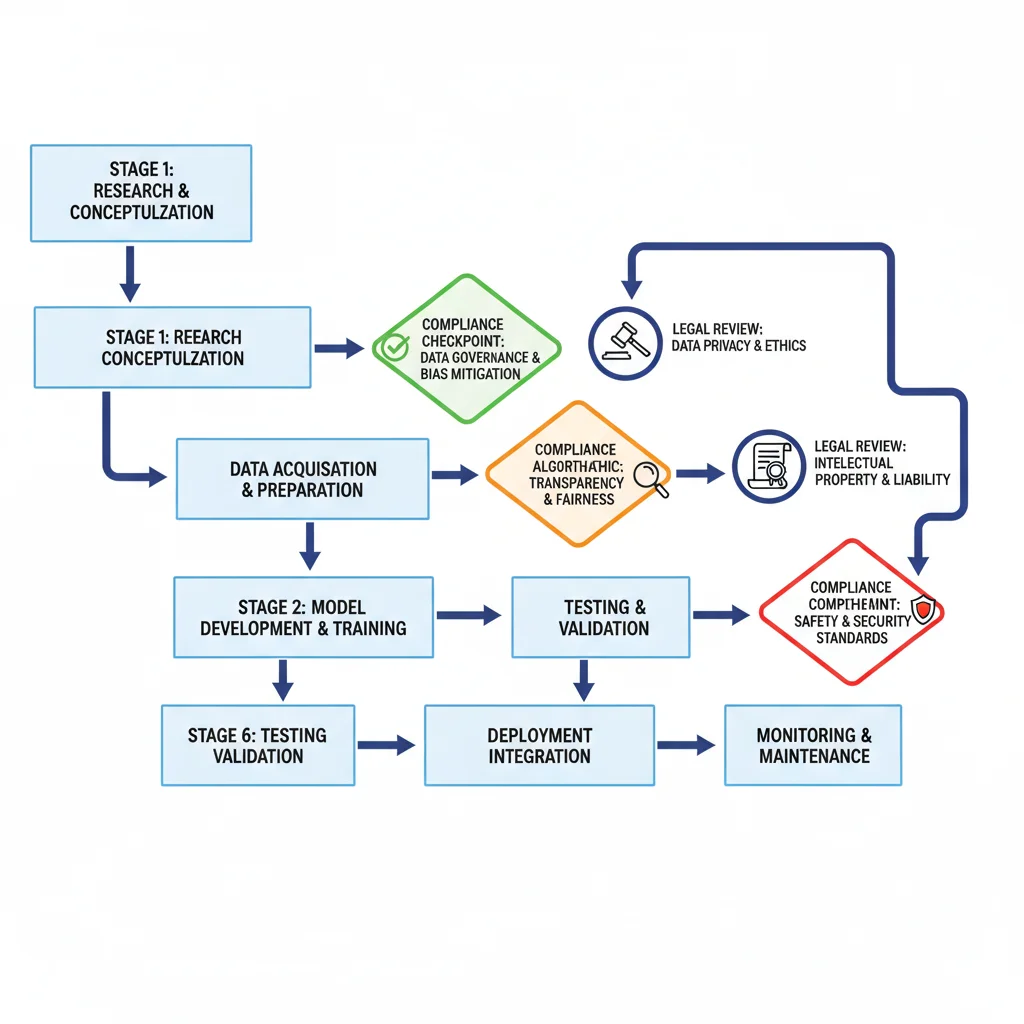
3. Mandates for Algorithmic Accountability and Risk Management Frameworks
As AI systems take on more critical roles, the question of who is responsible when things go wrong becomes paramount. The current legal landscape often struggles to attribute liability in cases of AI-induced harm. By 2026, US tech companies can expect explicit mandates for algorithmic accountability and the establishment of comprehensive AI risk management frameworks. This shift aims to clearly define responsibilities, anticipate potential harms, and put in place mechanisms for redress.
Algorithmic accountability will require companies to demonstrate that they have taken due diligence in designing, developing, and deploying AI systems. This encompasses everything from conducting thorough risk assessments to implementing robust monitoring and oversight mechanisms. Regulators may demand evidence of human oversight in critical AI decisions, particularly in areas like lending, hiring, or healthcare. The concept of ‘human-in-the-loop’ or ‘human-on-the-loop’ will likely be emphasized, ensuring that ultimate control and decision-making authority remain with human operators, especially for high-risk AI applications.
Central to this shift will be the requirement for companies to implement formal AI risk management frameworks. These frameworks will need to identify, assess, mitigate, and monitor risks associated with AI systems throughout their entire lifecycle. This includes risks related to bias, privacy, security, safety, and societal impact. Companies will be expected to categorize their AI systems based on their risk level (e.g., low, medium, high-risk) and apply proportionate governance measures accordingly. High-risk AI systems, in particular, will face more stringent requirements, potentially including pre-market conformity assessments and ongoing post-market surveillance.
The development of these frameworks will necessitate a multidisciplinary approach, involving legal, technical, ethical, and business stakeholders. Companies will need to establish internal AI ethics committees or review boards, develop clear incident response plans for AI failures, and implement mechanisms for receiving and addressing public feedback or complaints related to their AI systems. The ability to demonstrate a proactive and systematic approach to managing AI risks will be crucial for compliance and for building public trust in AI Regulations US Tech.
For US tech firms, this means a significant investment in risk assessment tools, specialized personnel (e.g., AI ethicists, risk managers), and the integration of risk management into their core product development processes. It will also require a cultural shift towards prioritizing responsible AI development alongside innovation. Companies that embed accountability and risk management deeply into their AI strategies will not only comply with future regulations but also enhance the reliability and trustworthiness of their AI offerings, gaining a competitive advantage.
4. Focus on Non-Discrimination and Bias Mitigation in AI
The potential for AI systems to perpetuate or even amplify existing societal biases is a major concern for regulators and the public. Algorithms trained on biased data can lead to discriminatory outcomes in areas such as credit scoring, employment decisions, criminal justice, and access to services. As AI Regulations US Tech mature, a central pillar will be a strong focus on non-discrimination and mandatory bias mitigation strategies.
By 2026, companies deploying AI systems that impact individuals’ rights or opportunities will likely be required to actively identify, assess, and mitigate algorithmic bias. This isn’t just about avoiding intentional discrimination; it’s about addressing unintentional biases that can arise from data imbalances, skewed training sets, or flawed algorithmic design. Regulations may mandate specific technical and procedural measures to ensure fairness and prevent discriminatory impacts across protected characteristics such as race, gender, age, disability, and religion.
Compliance in this area will involve several key aspects. Firstly, companies will need to conduct thorough bias assessments at every stage of the AI lifecycle, from data collection and model training to deployment and ongoing monitoring. This includes using diverse and representative datasets, employing fairness metrics to evaluate model performance across different demographic groups, and actively testing for disparate impact.
Secondly, companies will be expected to implement concrete bias mitigation techniques. These could range from re-weighting training data and adjusting algorithmic parameters to post-processing model outputs to ensure equitable outcomes. The choice of mitigation strategy will depend on the specific AI application and the type of bias identified, but the expectation will be that companies demonstrate a proactive and effective approach to reducing bias.
Thirdly, transparency around bias will also become important. Companies may be required to disclose known limitations of their AI systems regarding fairness and to communicate how they are addressing these issues. This could involve publishing AI impact assessments that detail potential biases and the strategies employed to mitigate them. The goal is to ensure that AI systems are developed and used in a manner that upholds principles of equality and non-discrimination.
The challenge for US tech companies will be to integrate bias detection and mitigation as core components of their AI development process, rather than as an afterthought. This requires investment in specialized tools, training for developers and data scientists, and a commitment to ethical AI principles at an organizational level. Companies that can demonstrate a robust and ongoing commitment to fair and unbiased AI will not only meet regulatory requirements but also enhance their reputation and build trust with a diverse user base, critical for long-term success in the evolving AI landscape.

5. Harmonization with International Standards and Cross-Border Data Flows
While the US develops its own approach to AI regulation, the global nature of technology means that US tech companies cannot operate in isolation. Many US firms have international operations, serve global customers, and rely on cross-border data flows. By 2026, a critical compliance shift will be the increasing pressure for harmonization with international AI standards and the need to navigate complex regulations governing cross-border AI data flows.
The European Union’s AI Act, for instance, sets a precedent for comprehensive, risk-based regulation that will likely influence frameworks in other jurisdictions. US tech companies operating in the EU will, of course, need to comply with the AI Act directly. However, even for those primarily focused on the US market, understanding and aligning with international best practices and emerging standards from organizations like the OECD, UNESCO, and NIST will be crucial. This is not just about avoiding regulatory conflicts but also about ensuring interoperability and maintaining a competitive edge in global markets.
The regulation of cross-border data flows for AI will become particularly complex. Different countries have varying data residency requirements, privacy laws, and rules regarding the transfer of data, especially sensitive or personal data, for AI training and deployment. US tech companies will need to develop sophisticated data governance strategies that account for these diverse international mandates. This could involve establishing regional data centers, implementing advanced anonymization techniques, and securing robust legal mechanisms for data transfer, such as standard contractual clauses or binding corporate rules.
Furthermore, the concept of ‘AI sovereignty’ is gaining traction, with some nations seeking to control the AI systems and data within their borders. This could lead to further fragmentation of the regulatory landscape and necessitate highly localized AI solutions for global companies. US tech firms will need to invest in legal counsel with international expertise and develop flexible AI architectures that can adapt to varying regulatory environments.
The implications are clear: US tech companies can no longer afford to view AI Regulations US Tech in isolation. A global perspective is essential. Proactive engagement with international standard-setting bodies, participation in multi-stakeholder dialogues, and a willingness to adopt globally recognized best practices for ethical and responsible AI will be vital. Companies that can demonstrate a commitment to international AI governance principles will be better positioned to expand their global reach, attract international talent, and build trust with a worldwide customer base, ensuring sustained growth in an increasingly interconnected AI ecosystem.
Conclusion: Navigating the Future of AI Regulations in US Tech
The landscape of AI is dynamic, and the regulatory environment is rapidly catching up. The five critical compliance shifts outlined—enhanced data governance and AI auditing, increased transparency and explainability, mandates for algorithmic accountability and risk management, a strong focus on non-discrimination and bias mitigation, and harmonization with international standards—represent a significant evolution for US tech companies. By 2026, these changes will not just be theoretical discussions but concrete requirements that demand strategic foresight and substantial investment.
For US tech companies, the imperative is clear: waiting for regulations to fully crystalize before acting is a perilous strategy. Instead, a proactive and adaptive approach is essential. This involves integrating ethical considerations and compliance requirements into the very fabric of AI development, from initial design to deployment and ongoing maintenance. It means fostering a culture of responsible AI within organizations, where legal, engineering, product, and ethical teams collaborate closely to build AI systems that are not only innovative but also trustworthy, fair, and transparent.
The benefits of embracing these compliance shifts extend far beyond avoiding penalties. Companies that lead in responsible AI development will build stronger reputations, foster deeper customer trust, and attract top talent. They will be better positioned to navigate future regulatory challenges, adapt to evolving societal expectations, and unlock new market opportunities. Conversely, those that lag behind risk reputational damage, legal liabilities, and a loss of competitive edge in an increasingly regulated global AI market.
The journey towards robust AI Regulations US Tech is complex and ongoing. It requires continuous monitoring of legislative developments, active participation in industry dialogues, and a commitment to continuous learning and adaptation. As AI continues to redefine possibilities, the companies that master the art of responsible innovation—balancing technological advancement with ethical governance and regulatory compliance—will be the ones that thrive and shape the future of artificial intelligence for the betterment of society.
Preparing for 2026 means more than just ticking boxes; it means fundamentally rethinking how AI is conceived, built, and deployed. It’s an opportunity to set new benchmarks for ethical technology, ensuring that AI serves humanity responsibly and sustainably. The future of AI in US tech depends on how effectively companies respond to these critical compliance shifts, transforming regulatory challenges into catalysts for innovation and trust.