Cross-Channel Marketing Synergy: Boost US Customer LTV 2026

Cross-Channel Marketing Synergy: Unlocking a 10% Increase in US Customer Lifetime Value in 2026
In the fiercely competitive landscape of the United States market, businesses are constantly seeking innovative strategies to not only attract new customers but, more importantly, to retain and maximize the value of their existing ones. The holy grail for sustainable growth is often found in Customer Lifetime Value (CLTV), a metric that quantifies the total revenue a business can reasonably expect from a single customer account over their entire relationship. As we look towards 2026, the imperative to elevate CLTV has never been stronger, and the most potent tool in a marketer’s arsenal for achieving this is a robust cross-channel marketing strategy.
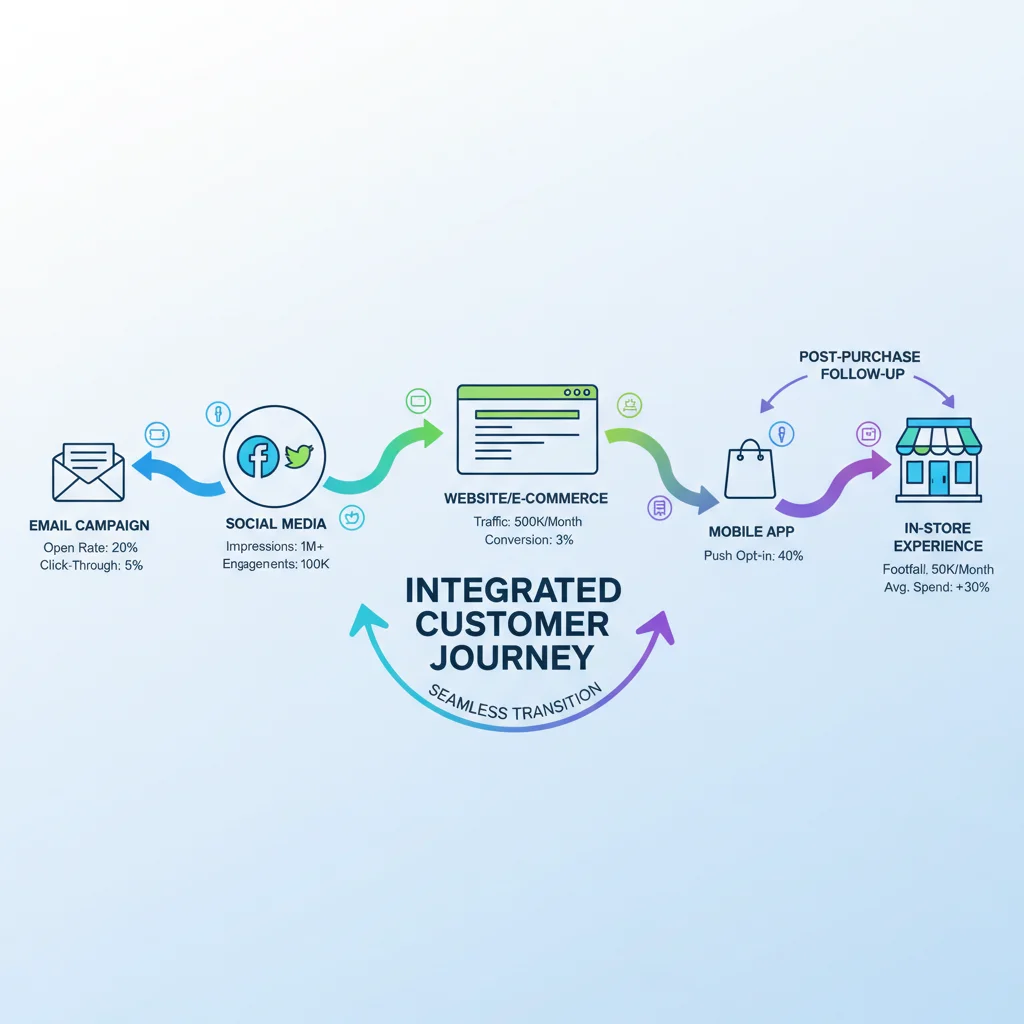
Imagine a world where every interaction a customer has with your brand, regardless of the platform – be it email, social media, your website, a mobile app, or even an in-store visit – feels like a seamless, personalized continuation of a single conversation. This isn’t a futuristic fantasy; it’s the promise of cross-channel marketing synergy. By integrating and orchestrating your marketing efforts across diverse touchpoints, you create a cohesive and consistent brand experience that resonates deeply with your audience, fostering loyalty and driving significant increases in CLTV. Our goal today is to delve into how US businesses can leverage this synergy to achieve an ambitious, yet entirely attainable, 10% increase in customer lifetime value by 2026.
The Shifting Sands of the US Customer Journey: Why Cross-Channel Marketing Strategy is Crucial
The modern US consumer journey is anything but linear. It’s a complex, often fragmented path involving multiple devices, platforms, and interactions. A customer might discover a product on Instagram, research it on their laptop, add it to a cart on their phone, receive an email reminder, and finally make a purchase in-store or online. Each of these touchpoints, if not strategically aligned, can lead to a disjointed and frustrating experience, ultimately eroding trust and reducing the likelihood of repeat business. This is precisely where a well-executed cross-channel marketing strategy becomes indispensable.
For US businesses, understanding this multi-touchpoint reality is paramount. The expectation for personalized, relevant, and timely communication is higher than ever. Generic, one-size-fits-all campaigns simply don’t cut it anymore. Customers expect brands to remember their preferences, past purchases, and interactions, regardless of the channel they’re using at any given moment. Failing to deliver on this expectation can lead to customers feeling undervalued, ignored, or worse, annoyed by irrelevant messaging. The consequence? A lower CLTV and a higher churn rate.
Furthermore, the proliferation of digital channels means that customer attention is a scarce commodity. Brands are constantly vying for eyeballs and engagement. A unified cross-channel approach ensures that your message is consistent and reinforced across various platforms, increasing its impact and memorability. It’s about being present where your customers are, with messages that matter to them, at the right time. This strategic presence, cultivated through a cohesive cross-channel marketing strategy, is the foundation for building enduring customer relationships.
Defining Cross-Channel Marketing Strategy: Beyond Multichannel
While the terms ‘multichannel’ and ‘cross-channel’ are often used interchangeably, there’s a critical distinction that underpins the power of the latter. Multichannel marketing simply means using multiple channels to communicate with customers. Think of it as having several independent departments, each sending out their own messages without much coordination. There’s no inherent connection between the email marketing team’s efforts and the social media team’s efforts. The customer might receive an email about a product they just bought through a social media ad, leading to confusion and frustration.
A true cross-channel marketing strategy, however, is about integration and synergy. It’s about designing a holistic customer experience where each channel works in concert with the others, building upon previous interactions and guiding the customer seamlessly through their journey. Data is shared across channels, enabling a complete view of the customer and allowing for highly personalized and contextually relevant communications. The goal is to create a unified narrative, a single brand voice, and a consistent experience, no matter how or where the customer chooses to engage.
Consider the example of an abandoned shopping cart. In a multichannel approach, the customer might receive an automated email reminder. In a cross-channel approach, that email might be followed by a targeted ad on social media featuring the abandoned items, and perhaps even a personalized offer delivered via push notification if they have your mobile app. All these interactions are coordinated, informed by the same customer data, and designed to gently nudge the customer towards completing their purchase, thereby contributing to a higher CLTV.
The Tangible Benefits: How Cross-Channel Marketing Boosts CLTV by 10%
Achieving a 10% increase in US customer lifetime value by 2026 through a diligent cross-channel marketing strategy is not just an aspiration; it’s a quantifiable outcome driven by several key benefits:
1. Enhanced Customer Experience and Satisfaction
When customers experience a consistent and personalized journey, their satisfaction levels soar. They feel understood, valued, and respected. This positive sentiment directly translates into increased loyalty, repeat purchases, and a willingness to advocate for your brand. A seamless experience reduces friction and builds trust, making customers more likely to stay with your brand longer, thus increasing their CLTV.
2. Improved Customer Engagement and Retention
A well-orchestrated cross-channel marketing strategy keeps customers engaged by delivering relevant content and offers across their preferred channels. This continuous, valuable interaction prevents disengagement and reduces churn. When customers feel connected and consistently receive value, they are less likely to look for alternatives, directly impacting their longevity as a customer and their overall CLTV.
3. Higher Conversion Rates
By understanding the customer journey and delivering timely, targeted messages, cross-channel campaigns are inherently more effective at driving conversions. Whether it’s completing a purchase, signing up for a newsletter, or downloading an app, the coordinated effort across channels removes barriers and streamlines the path to conversion. Higher conversion rates mean more transactions per customer, which directly contributes to increased CLTV.
4. Deeper Customer Insights through Unified Data
A core component of any effective cross-channel marketing strategy is the aggregation and analysis of customer data from all touchpoints. This unified view provides invaluable insights into customer behavior, preferences, and pain points. With a clearer understanding of your audience, you can continually refine your strategies, personalize communications even further, and anticipate future needs, all of which contribute to a more effective marketing spend and higher CLTV.
5. Optimized Marketing Spend and ROI
While implementing a cross-channel strategy requires initial investment, it ultimately leads to a more efficient use of marketing resources. By avoiding redundant messaging, targeting more effectively, and understanding which channels perform best for specific customer segments, businesses can optimize their spend and achieve a higher return on investment. This efficiency indirectly boosts CLTV by making every marketing dollar work harder.
Key Elements of an Effective Cross-Channel Marketing Strategy for US Markets
To truly unlock the potential of a cross-channel marketing strategy and achieve that 10% CLTV increase by 2026, US businesses must focus on several critical elements:
1. Centralized Customer Data Platform (CDP)
The foundation of any successful cross-channel effort is a unified view of your customer. A CDP collects and unifies customer data from all sources – website, CRM, email, social media, mobile app, offline interactions – creating a single, comprehensive customer profile. This allows for accurate segmentation and highly personalized messaging across all channels. Without a robust CDP, true cross-channel synergy is almost impossible.
2. Data-Driven Personalization and Segmentation
Leveraging the data from your CDP, segment your audience based on demographics, purchase history, browsing behavior, engagement levels, and preferences. Personalize every interaction, from the subject line of an email to the product recommendations on your website or the content of a social media ad. Personalization at scale is a hallmark of an effective cross-channel marketing strategy and a significant driver of CLTV.
3. Seamless Customer Journey Mapping
Understand every potential touchpoint a customer might have with your brand. Map out their journey from initial awareness to post-purchase support. Identify potential friction points and opportunities for engagement. Design your cross-channel strategy to guide customers smoothly through this journey, ensuring consistency in messaging and brand experience at every step.
4. Integrated Technology Stack
Your marketing technology (martech) stack needs to be integrated. Your email marketing platform, CRM, social media management tools, analytics platforms, and e-commerce platform should all communicate with each other. This integration enables the seamless flow of data and the orchestration of campaigns across channels, which is fundamental to a unified cross-channel marketing strategy.
5. Consistent Brand Voice and Messaging
While the content might be tailored for each channel, the core brand voice, values, and key messages must remain consistent. This reinforces brand identity and builds recognition. Inconsistent messaging across channels can confuse customers and dilute your brand’s impact.
6. A/B Testing and Optimization
Continuous testing and optimization are vital. A/B test different messages, calls to action, timing, and channel combinations to understand what resonates best with your audience. Use analytics to identify areas for improvement and iteratively refine your cross-channel marketing strategy to maximize its effectiveness and impact on CLTV.
Implementing Your Cross-Channel Marketing Strategy: A Step-by-Step Guide
Embarking on a journey to implement a sophisticated cross-channel marketing strategy can seem daunting, but by breaking it down into manageable steps, US businesses can systematically build a powerful system for CLTV growth.
Step 1: Audit Your Current Marketing Channels and Data
Begin by taking stock of all your existing marketing channels (email, social media, website, SMS, print, in-store, etc.) and the data you collect from each. Identify gaps in data collection and areas where channels operate in silos. This audit will provide a baseline understanding of your current state and highlight immediate opportunities for integration.
Step 2: Define Your Customer Segments and Personas
Beyond basic demographics, delve deeper into psychographics, behaviors, pain points, and motivations. Create detailed customer personas that represent your ideal customer segments. This will inform your personalization efforts and ensure your cross-channel marketing strategy speaks directly to their needs.
Step 3: Map the Customer Journey for Each Segment
For each persona, visualize their typical journey with your brand. What are their motivations at each stage (awareness, consideration, purchase, retention, advocacy)? What channels do they use? What content are they looking for? This mapping exercise is crucial for designing coherent cross-channel flows.
Step 4: Select and Integrate Your Technology Stack
Invest in a robust CDP and ensure your existing marketing tools (CRM, email platform, analytics, advertising platforms) are integrated. This may involve using APIs, middleware, or choosing platforms that are designed for seamless integration. A unified tech stack is the backbone of an effective cross-channel marketing strategy.
Step 5: Develop Cross-Channel Campaigns and Workflows
Based on your customer journey maps, design specific campaigns that span multiple channels. For example, an onboarding series might start with an email, followed by a personalized ad on Facebook, a push notification for app users, and a tailored website experience. Define the triggers, timing, and content for each channel.
Step 6: Train Your Teams and Foster Collaboration
Cross-channel marketing requires a shift in mindset. Marketing teams, sales teams, and customer service teams must collaborate closely. Provide training on the new tools and processes, and emphasize the importance of a unified customer experience. Break down departmental silos to ensure your cross-channel marketing strategy is executed flawlessly.
Step 7: Launch, Monitor, Analyze, and Optimize
Start with a pilot program or a specific segment. Continuously monitor key performance indicators (KPIs) related to engagement, conversions, and most importantly, CLTV. Use analytics to identify what’s working and what’s not. Be prepared to iterate and optimize your campaigns based on real-world data. This iterative process is key to maximizing the impact of your cross-channel marketing strategy.
Data-Driven Personalization: The Heart of a Winning Cross-Channel Marketing Strategy
At the core of achieving a 10% CLTV increase lies the ability to deliver truly personalized experiences. This isn’t just about addressing a customer by their first name; it’s about understanding their unique preferences, behaviors, and needs, and then tailoring every interaction accordingly. A sophisticated cross-channel marketing strategy leverages data to achieve this at scale.
Leveraging AI and Machine Learning
For US businesses, the adoption of AI and machine learning tools is becoming non-negotiable for advanced personalization. These technologies can analyze vast amounts of customer data to identify patterns, predict future behavior, and automatically deliver the most relevant content and offers across channels. From dynamic product recommendations on your website to AI-powered chatbots providing instant support, these tools enhance the customer experience and drive CLTV.
Behavioral Triggers and Automation
Set up automated workflows triggered by specific customer behaviors. For instance, if a customer browses a particular product category multiple times but doesn’t purchase, a triggered email with related content or a special offer can be sent. If they abandon a cart, a series of reminders across email and social media can be deployed. These timely, relevant interventions, powered by a smart cross-channel marketing strategy, significantly improve conversion rates and customer satisfaction.
Real-Time Personalization
The ability to personalize experiences in real-time is a game-changer. Imagine a customer browsing your website, and based on their current session behavior, a pop-up appears with a personalized offer or a live chat agent proactively reaches out. This immediate relevance creates a highly engaging experience, reinforcing the customer’s connection to your brand and positively impacting their CLTV.
Measuring Success: KPIs for Your Cross-Channel Marketing Strategy
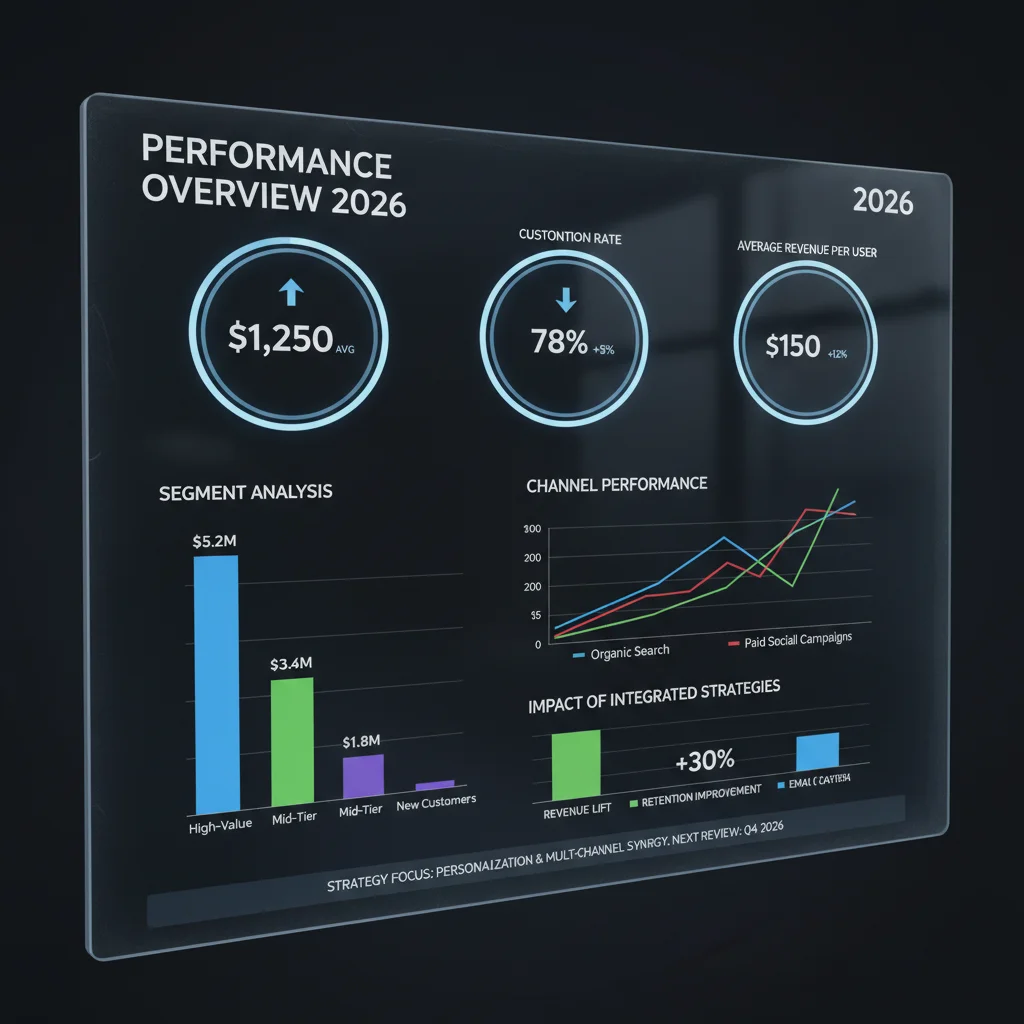
To ensure your efforts are yielding the desired 10% increase in CLTV by 2026, it’s crucial to establish clear KPIs and continuously monitor your performance. A robust cross-channel marketing strategy is only as good as its measurable outcomes.
- Customer Lifetime Value (CLTV): This is the ultimate metric. Track CLTV across different segments and compare it against your baseline to measure the direct impact of your cross-channel efforts.
- Customer Retention Rate: A key driver of CLTV. Monitor how many customers you retain over specific periods.
- Churn Rate: The inverse of retention. A lower churn rate indicates a more effective strategy.
- Average Order Value (AOV): Cross-selling and upselling through integrated channels can increase AOV, contributing to higher CLTV.
- Repeat Purchase Rate: How often do customers come back to buy again? A higher rate signifies stronger loyalty.
- Customer Engagement Metrics: Track open rates, click-through rates, time on site/app, social media interactions, and response rates across all channels to gauge overall engagement.
- Channel Attribution: Understand which channels contribute to conversions at different stages of the customer journey. This helps optimize budget allocation within your cross-channel marketing strategy.
- Customer Satisfaction (CSAT) / Net Promoter Score (NPS): These metrics provide qualitative insights into the customer experience, which directly influences loyalty and CLTV.
Optimizing Your Cross-Channel Marketing Strategy for 2026 and Beyond
The marketing landscape is constantly evolving, and a successful cross-channel marketing strategy must be adaptable and forward-looking. To sustain and even accelerate CLTV growth beyond 2026, consider these optimization tactics:
Embrace Emerging Channels
Keep an eye on new platforms and technologies that gain traction with your target audience in the US market. This could include new social media networks, interactive content formats, or even metaverse experiences. Integrate relevant emerging channels into your strategy as they become viable.
Hyper-Personalization and Predictive Analytics
Move beyond basic personalization to hyper-personalization, where every element of the customer experience is tailored. Utilize predictive analytics to anticipate customer needs and proactively offer solutions or products before they even realize they need them. This level of foresight, powered by your cross-channel marketing strategy, creates unparalleled customer delight.
First-Party Data Dominance
With increasing privacy regulations and the deprecation of third-party cookies, relying on robust first-party data collection and utilization will be critical. Strengthen your data collection methods and ensure your CDP is capable of handling and activating this valuable asset effectively.
Customer Feedback Loops
Actively solicit and integrate customer feedback across all channels. Use surveys, reviews, social listening, and direct interactions to understand what’s working and what needs improvement. This continuous feedback loop allows for rapid iteration and refinement of your cross-channel marketing strategy, ensuring it remains customer-centric.
Ethical AI and Transparent Data Usage
As AI becomes more prevalent, ensure your use of it is ethical and transparent. Customers are increasingly concerned about data privacy. Be clear about how you use their data to enhance their experience, building trust rather than eroding it.
Conclusion: The Future is Integrated with Cross-Channel Marketing Strategy
The pursuit of a 10% increase in US customer lifetime value by 2026 is an ambitious yet achievable goal for businesses willing to embrace the power of a comprehensive cross-channel marketing strategy. By moving beyond siloed efforts and fostering true synergy across all customer touchpoints, brands can create a unified, personalized, and engaging experience that cultivates deep loyalty and drives sustained growth.
From establishing a robust CDP and leveraging data for hyper-personalization to continuously mapping the customer journey and optimizing through rigorous testing, every aspect of your integrated approach contributes to a higher CLTV. The future of marketing in the US is undeniably cross-channel, and those who master its complexities will be the ones to thrive, building stronger customer relationships and securing their market position for years to come.
Start planning your integrated approach today. The 10% CLTV increase by 2026 is within reach, propelled by a smart, synergistic cross-channel marketing strategy.