Optimizing Customer Lifetime Value: New Metrics for US Startup Growth in 2026

Optimizing Customer Lifetime Value: New Metrics for US Startup Growth in 2026
In the dynamic and hyper-competitive landscape of US startups, sustainable growth isn’t just about acquiring new customers; it’s profoundly about retaining and maximizing the value of existing ones. The concept of customer lifetime value (CLV) has always been critical, but as we approach 2026, its significance is amplified by evolving market conditions, technological advancements, and heightened customer expectations. For startups aiming for enduring success, understanding, measuring, and optimizing CLV is no longer an option but a strategic imperative.
This comprehensive guide delves into the nuances of customer lifetime value, exploring why it’s the bedrock of sustainable growth for US startups. We’ll uncover traditional CLV metrics and, more importantly, introduce a suite of new, forward-thinking metrics tailored for the modern startup ecosystem. From predictive analytics to personalized engagement strategies, this article will equip you with the knowledge and tools to not only calculate but actively enhance your CLV, driving profitability and resilience in the years to come.
The Foundational Importance of Customer Lifetime Value for Startups
For any US startup, especially those operating in fast-paced sectors like SaaS, e-commerce, or fintech, the initial focus often gravitates towards user acquisition. While essential, this narrow focus can lead to a leaky bucket syndrome, where new customers are acquired at great expense only to churn shortly after. This is where customer lifetime value becomes the true north star.
CLV represents the total revenue a business can reasonably expect from a single customer account throughout their relationship with the company. A high CLV signifies not just immediate revenue but also long-term customer loyalty, reduced churn, and ultimately, a more stable and predictable revenue stream. In an environment where capital is not always abundant, maximizing the value of each customer becomes paramount. It reduces customer acquisition costs (CAC) over time, as retaining an existing customer is significantly cheaper than acquiring a new one. Furthermore, loyal customers are more likely to become advocates, driving organic growth through word-of-mouth referrals, which is invaluable for a burgeoning startup.
Understanding CLV allows startups to:
- Allocate resources effectively: Identify which customer segments are most valuable and focus marketing and retention efforts on them.
- Improve product development: Tailor features and services to meet the needs of high-value customers, enhancing their experience and increasing their loyalty.
- Optimize pricing strategies: Understand the long-term revenue potential of different customer tiers and adjust pricing accordingly.
- Forecast revenue more accurately: Gain a clearer picture of future income, aiding in strategic planning and investor relations.
- Enhance customer experience: Invest in strategies that foster deeper relationships and satisfaction, knowing the long-term return on investment.
Ignoring CLV is akin to building a house without a strong foundation. While the initial structure might appear impressive, it won’t withstand the test of time or market fluctuations. Therefore, a robust strategy centered around customer lifetime value is not just good business sense; it’s a critical component of a startup’s survival and prosperity in 2026.
Traditional CLV Metrics: A Refresher
Before diving into the innovative metrics, it’s crucial to have a firm grasp of the traditional ways customer lifetime value has been calculated. These foundational metrics still hold relevance and often form the basis for more advanced analyses.
Simple CLV Calculation:
The most straightforward calculation involves:
CLV = (Average Purchase Value) x (Average Purchase Frequency) x (Average Customer Lifespan)
- Average Purchase Value (APV): The average amount of money a customer spends per transaction.
- Average Purchase Frequency (APF): The average number of purchases a customer makes over a specific period.
- Average Customer Lifespan (ACL): The average duration a customer remains active with your business.
While simple, this formula provides a quick estimate and is useful for initial benchmarking.
Granular CLV Calculation:
A more detailed approach considers profit margins:
CLV = (Average Profit per Customer x Average Customer Lifespan)
Or, if you prefer a per-transaction approach:
CLV = (Average Order Value x Purchase Frequency Rate x Gross Margin x Average Customer Lifespan)
These traditional methods provide a solid starting point for understanding your customer base’s value. However, they often rely on historical data and may not fully capture the dynamic nature of customer behavior or the potential for future engagement. This limitation necessitates the exploration of new metrics that offer a more predictive and holistic view of customer lifetime value, especially for agile startups.
New Metrics for Optimizing Customer Lifetime Value in 2026
The digital age, fueled by AI, machine learning, and advanced data analytics, has opened doors to more sophisticated ways of understanding and predicting customer lifetime value. These new metrics move beyond historical averages to provide actionable insights into future customer behavior and potential.
1. Customer Health Score (CHS)
The Customer Health Score is a composite metric that assesses a customer’s current engagement and satisfaction level, acting as a powerful predictor of future churn or advocacy. Instead of waiting for churn to happen, CHS allows startups to proactively intervene.
How it works: CHS typically combines various data points, each weighted according to its impact on retention and value. These might include:
- Product Usage: Frequency of login, feature adoption, depth of engagement.
- Support Interactions: Number of tickets, resolution time, customer satisfaction with support.
- Engagement with Marketing: Open rates for emails, participation in webinars, response to surveys.
- Feedback: NPS (Net Promoter Score), CSAT (Customer Satisfaction Score), CES (Customer Effort Score).
- Billing History: On-time payments, upgrades/downgrades.
By assigning scores to each factor and aggregating them, a startup can categorize customers as ‘healthy,’ ‘at-risk,’ or ‘unhealthy.’ This allows for targeted interventions, such as proactive outreach to at-risk customers or rewarding healthy ones to foster deeper loyalty. Optimizing for a higher CHS directly contributes to a higher overall customer lifetime value.
2. Predictive CLV (PCLV)
Traditional CLV is backward-looking. Predictive CLV, on the other hand, leverages machine learning algorithms to forecast the future revenue a customer will generate. This is particularly valuable for startups with subscription models or recurring revenue.
How it works: PCLV models analyze historical data (purchase patterns, demographics, behavioral data, engagement metrics) and identify correlations to predict future spending. It considers factors like:
- Recency, Frequency, Monetary (RFM) analysis: How recently a customer purchased, how often they purchase, and how much they spend.
- Customer Segmentation: Different segments will have different predictive CLVs.
- Churn Probability: The likelihood of a customer churning, which directly impacts their potential future value.
PCLV allows startups to make data-driven decisions on where to invest their marketing and retention budgets, identifying high-potential customers early on and tailoring strategies to maximize their long-term value. This proactive approach to customer lifetime value is a game-changer.
3. Customer Engagement Score (CES)
While related to CHS, the Customer Engagement Score specifically focuses on the depth and quality of a customer’s interaction with your product or service. High engagement often correlates strongly with satisfaction and loyalty.
How it works: CES typically aggregates metrics such as:
- Feature Adoption Rate: How many key features a user utilizes.
- Time Spent in App/Platform: Duration and frequency of sessions.
- Interaction with Core Functionality: Specific actions taken that indicate value derived from the product.
- Content Consumption: Engagement with help articles, tutorials, or community forums.
A higher CES indicates a customer is deriving significant value, making them less likely to churn and more likely to expand their relationship with your startup. Monitoring and improving CES through better onboarding, intuitive UX, and relevant feature releases directly impacts customer lifetime value.
4. Net Revenue Retention (NRR) / Net Dollar Retention (NDR)
NRR (or NDR) is a crucial metric, especially for SaaS and subscription-based startups. It measures the percentage of recurring revenue retained from an existing cohort of customers over a specific period, factoring in upgrades, downgrades, and churn.
How it works:
NRR = (Starting MRR + Expansion MRR - Downgrade MRR - Churned MRR) / Starting MRR x 100
Where MRR is Monthly Recurring Revenue.
An NRR over 100% is the holy grail for many startups, indicating that expansion revenue from existing customers (upsells, cross-sells) more than offsets any revenue lost from churn and downgrades. A strong NRR is a powerful indicator of a healthy and growing customer lifetime value base, showing that your existing customers are not only staying but are also increasing their spend with your company.
Beyond direct revenue, the value a customer brings through referrals and advocacy is often underestimated. An Advocacy Score quantifies this indirect contribution to customer lifetime value.
5. Advocacy Score / Referral Value
- Net Promoter Score (NPS): Identifies promoters who are likely to recommend your service.
- Referral Program Participation: How many successful referrals a customer has made.
- Social Media Mentions: Positive reviews, shares, or testimonials.
- Case Study Participation: Willingness to be featured as a success story.
By understanding and encouraging advocacy, startups can leverage their most satisfied customers as a powerful, low-cost acquisition channel, significantly boosting the overall customer lifetime value of their entire customer base.
Strategies for Enhancing Customer Lifetime Value in 2026
Measuring CLV and its related metrics is only the first step. The real work lies in implementing strategies that actively boost these numbers. Here are key approaches for US startups:
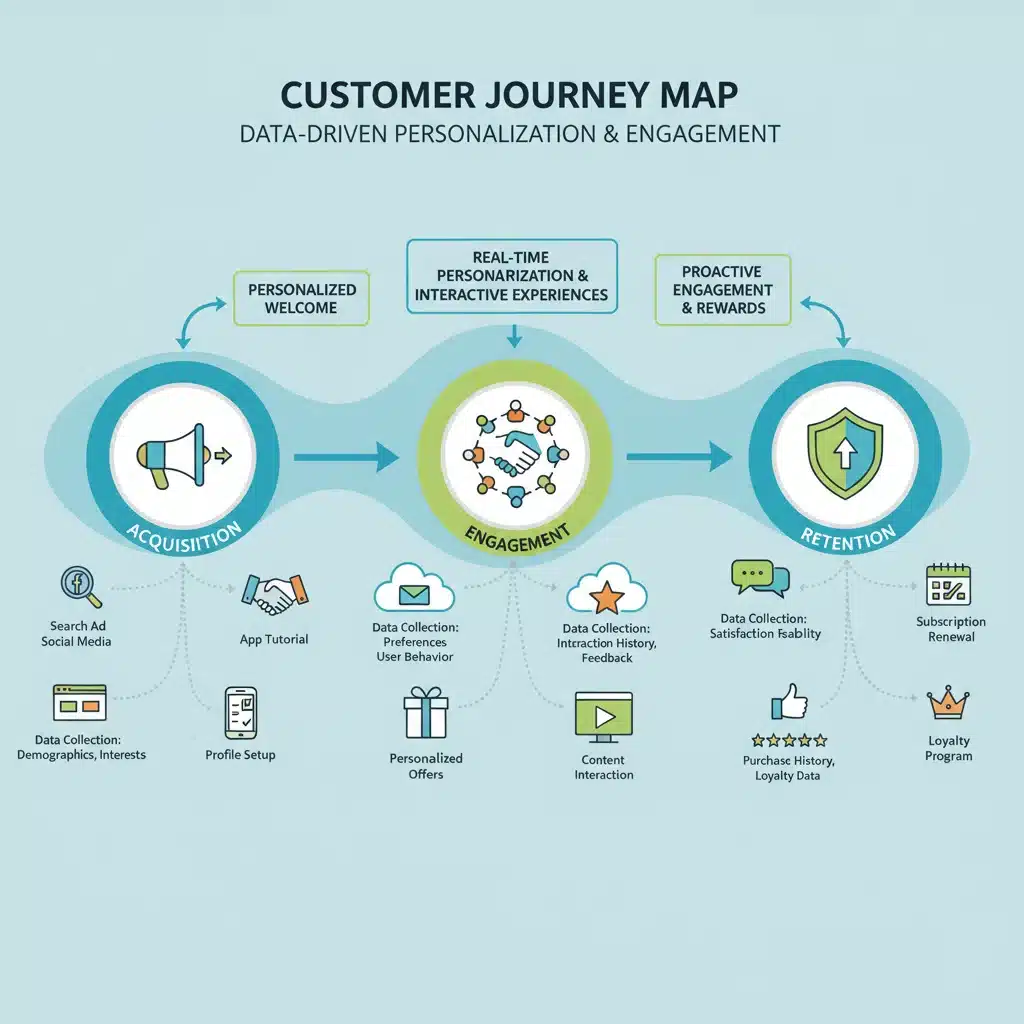
1. Hyper-Personalized Customer Journeys
Generic experiences are a relic of the past. In 2026, customers expect experiences tailored to their specific needs, preferences, and behaviors. Leverage AI and data analytics to:
- Dynamic Content: Deliver personalized content on your website, app, and emails based on user behavior.
- Product Recommendations: Suggest relevant products or features based on past purchases or interactions.
- Proactive Support: Anticipate customer issues and offer solutions before they even arise.
- Targeted Offers: Provide promotions or upgrades that align with a customer’s usage patterns and potential needs.
Personalization fosters a deeper connection, making customers feel valued and understood, thereby extending their customer lifetime value.
2. Robust Onboarding and Continuous Education
The first few interactions a customer has with your product or service are critical. A smooth, guided onboarding process ensures they quickly realize value. But the journey doesn’t end there.
- Interactive Onboarding: Use tutorials, walkthroughs, and in-app guides to help users master your product.
- Knowledge Base & FAQs: Create easily accessible resources for self-service problem-solving.
- Webinars & Workshops: Offer ongoing educational content to help users discover new features and get more out of your offering.
- Community Building: Foster a sense of belonging through forums or user groups where customers can share tips and support each other.
Continuous education ensures customers remain engaged and derive maximum benefit, directly impacting their customer lifetime value.
3. Proactive Customer Success Management
For SaaS and B2B startups, a dedicated customer success team is invaluable. Their role goes beyond reactive support; it’s about proactively ensuring customers achieve their desired outcomes.
- Regular Check-ins: Schedule calls or meetings to discuss progress, challenges, and opportunities.
- Health Score Monitoring: Use CHS to identify at-risk customers and intervene with targeted assistance.
- Value Realization: Help customers articulate and measure the ROI they gain from your product.
- Upsell/Cross-sell Opportunities: Identify and present relevant upgrades or complementary services when the time is right, boosting NRR and customer lifetime value.
4. Feedback Loops and Iterative Improvement
Listen to your customers, truly listen. Implement robust feedback mechanisms and act on the insights gained.
- In-app Surveys & Polls: Gather real-time feedback on user experience and satisfaction.
- Customer Advisory Boards: Engage key customers in product development discussions.
- Social Listening: Monitor social media for mentions and sentiment about your brand.
- Close the Loop: Respond to feedback, inform customers of changes made based on their input, and demonstrate that their voice matters.
This iterative process of listening, learning, and improving builds trust and loyalty, reinforcing customer lifetime value.
5. Loyalty Programs and Gamification
Reward loyal customers and incentivize desired behaviors. This can be particularly effective in consumer-facing startups.
- Tiered Loyalty Programs: Offer increasing benefits as customers spend more or engage deeper.
- Referral Bonuses: Reward both the referrer and the referred for successful new sign-ups.
- Gamified Experiences: Introduce points, badges, or leaderboards to make product usage more engaging and rewarding.
These programs encourage repeat purchases and advocacy, directly contributing to an increased customer lifetime value.

Implementing CLV Strategies: A Practical Roadmap for US Startups
Translating theoretical knowledge into actionable strategies requires a structured approach. Here’s a roadmap for US startups to effectively implement CLV optimization:
Phase 1: Data Collection and Infrastructure Setup
- Identify Key Data Sources: Pinpoint where customer data resides (CRM, analytics platforms, marketing automation, support tickets, billing systems).
- Integrate Systems: Break down data silos. Use integration platforms or build custom APIs to create a unified view of each customer. This is crucial for calculating accurate customer lifetime value.
- Define Data Governance: Establish protocols for data accuracy, privacy, and security, especially vital in the US with evolving data regulations.
- Invest in Analytics Tools: Utilize business intelligence (BI) tools, customer data platforms (CDPs), or dedicated CLV prediction software to process and analyze data effectively.
Phase 2: Metric Definition and Baseline Measurement
- Choose Relevant Metrics: Based on your business model, select a mix of traditional and new CLV metrics (e.g., PCLV, CHS, NRR).
- Establish Baselines: Calculate your current CLV and related metrics. This provides a benchmark against which future improvements will be measured.
- Segment Your Customers: Don’t treat all customers the same. Segment them based on demographics, behavior, acquisition channel, or product usage. Calculate CLV for each segment to identify high-value groups.
Phase 3: Strategy Development and Experimentation
- Hypothesis Generation: Based on your data and segment analysis, formulate hypotheses about what strategies could increase customer lifetime value (e.g., "Personalized onboarding will increase CHS by 15% for new users.").
- Design Interventions: Develop specific campaigns, product features, or customer success initiatives aligned with your hypotheses.
- A/B Testing: Implement A/B tests or controlled experiments to measure the impact of your interventions on CLV metrics. Start small and scale what works.
- Allocate Resources: Direct marketing, product, and customer success efforts towards strategies that show the most promise for improving customer lifetime value.
Phase 4: Monitoring, Optimization, and Culture Shift
- Continuous Monitoring: Regularly track CLV and associated metrics. Set up dashboards and alerts to monitor changes in customer health and value.
- Iterate and Optimize: Based on ongoing results, refine your strategies. What works today might need adjustment tomorrow.
- Foster a CLV-Centric Culture: Educate your entire team on the importance of customer lifetime value. Empower employees across departments to contribute to customer retention and satisfaction. From sales to support, everyone plays a role.
- Regular Reporting: Share CLV performance and insights with stakeholders, including investors, demonstrating sustainable growth and operational efficiency.
By following this roadmap, US startups can move beyond reactive customer management to a proactive, data-driven approach that systematically optimizes customer lifetime value, ensuring robust growth and competitive advantage in the market of 2026 and beyond.
Common Pitfalls to Avoid in CLV Optimization
While the benefits of optimizing customer lifetime value are clear, startups often encounter pitfalls that can hinder their efforts. Being aware of these can help you navigate the process more effectively:
- Ignoring Customer Segmentation: Treating all customers as a single entity will lead to generic strategies that fail to resonate with specific high-value segments. Tailored approaches are key.
- Focusing Solely on Acquisition: An overemphasis on new customer acquisition at the expense of retention will inevitably lead to a high churn rate and an unsustainable business model, eroding potential customer lifetime value.
- Inadequate Data Collection & Analysis: Without robust data infrastructure and analytical capabilities, CLV calculations will be inaccurate, and strategic decisions will be based on guesswork rather than insights.
- Lack of Cross-Functional Alignment: CLV is not just a marketing or sales metric; it requires collaboration across product, customer success, engineering, and finance. Siloed efforts will limit impact.
- Short-Term Thinking: Optimizing customer lifetime value is a long-term play. Expecting immediate, dramatic results can lead to abandoning effective strategies too soon. Patience and consistent effort are crucial.
- Over-reliance on a Single Metric: While CLV is central, relying on it in isolation without considering contributing factors like CHS, NRR, or CES can provide an incomplete picture. A holistic view is essential.
- Failing to Act on Feedback: Collecting customer feedback without implementing changes based on it is a wasted effort and can even damage customer trust and loyalty.
- Underestimating Churn: Not actively monitoring and understanding the reasons behind customer churn can prevent effective retention strategies from being developed, directly impacting overall customer lifetime value.
By proactively addressing these potential issues, US startups can build a more resilient and effective CLV optimization strategy.
Conclusion: The Future of Startup Growth is CLV-Driven
As the competitive landscape intensifies and customer expectations continue to rise, the traditional models of startup growth are being redefined. In 2026, the most successful US startups will be those that deeply understand, meticulously measure, and relentlessly optimize their customer lifetime value.
Moving beyond basic revenue calculations, the adoption of new metrics like Customer Health Score, Predictive CLV, Customer Engagement Score, Net Revenue Retention, and Advocacy Score provides a multi-faceted and forward-looking perspective on customer relationships. These metrics, combined with hyper-personalized strategies, robust customer success initiatives, and a culture of continuous improvement, form the bedrock of sustainable growth.
For any startup looking to not just survive but thrive in the coming years, investing in CLV optimization is an investment in long-term profitability, reduced acquisition costs, and a loyal customer base that acts as a powerful engine for organic growth. By prioritizing customer lifetime value, US startups can build resilient businesses that stand the test of time and market volatility, ensuring a prosperous future for their innovations.