From 0 to $1M ARR: Insider Secrets for US SaaS Startups in 2026
In the dynamic landscape of technology and innovation, the dream of building a successful SaaS company from the ground up is more attainable yet fiercely competitive than ever before. For US SaaS startups, the journey from ideation to achieving $1 million in Annual Recurring Revenue (ARR) by 2026 is a challenging but exhilarating one. This milestone isn’t just a number; it’s a testament to product-market fit, effective execution, and sustainable growth. This comprehensive guide will delve into the insider secrets, strategies, and actionable steps that will empower your SaaS startup to navigate the complexities of the US market and reach that coveted $1M ARR mark.
The United States remains the epicenter of SaaS innovation and investment, offering unparalleled opportunities but also demanding a robust strategy to stand out. Achieving $1M ARR requires more than just a great product; it demands a deep understanding of your target market, a scalable sales and marketing engine, efficient operations, and a relentless focus on customer success. We’ll break down the critical phases of this journey, providing you with the insights needed to make informed decisions and accelerate your SaaS startup growth.
Phase 1: Foundations and Product-Market Fit (Months 1-12)
Defining Your Niche and Solving Real Problems
The initial phase of any successful SaaS startup growth story is about laying a rock-solid foundation. This begins with identifying a specific problem within a defined market segment that your software can uniquely solve. Avoid the temptation to build a solution for everyone; instead, focus on a niche where your product can deliver exceptional value. Conduct extensive market research, talk to potential customers, and understand their pain points intimately. This isn’t just about market size; it’s about market need and your ability to meet it better than anyone else.
A key aspect of this phase is validating your assumptions. Before writing a single line of complex code, develop a Minimum Viable Product (MVP) that addresses the core problem. The MVP should be functional, user-friendly, and provide enough value to attract early adopters. These early adopters are invaluable; their feedback will shape your product’s evolution and help you iterate towards true product-market fit. This iterative process is crucial for sustainable SaaS startup growth.
Building a Strong Core Team
Your team is your greatest asset. In the early days, you need a lean, agile team with diverse skill sets and a shared vision. Look for individuals who are not only technically proficient but also possess an entrepreneurial spirit, problem-solving abilities, and a high degree of resilience. A co-founder with complementary skills can be a game-changer, providing both technical and business acumen. Foster a culture of open communication, collaboration, and continuous learning. This strong internal foundation is essential for navigating the challenges of rapid SaaS startup growth.
Initial Funding and Bootstrapping Strategies
Securing initial funding is often a chicken-and-egg situation. Many startups begin by bootstrapping, using personal savings or revenue generated from early customers to fund operations. This approach forces financial discipline and validates market demand. If external funding is necessary, focus on angel investors or pre-seed/seed rounds. These investors are typically looking for strong teams, a clear problem statement, a viable solution (even if it’s an MVP), and a large addressable market. Clearly articulate your vision and how their investment will accelerate your SaaS startup growth.
Phase 2: Achieving Product-Market Fit and Early Traction (Months 13-24)
Iterating Towards Product-Market Fit
Product-market fit (PMF) is the holy grail for any SaaS startup. It’s the point at which your product effectively satisfies a strong market demand. This isn’t a one-time achievement but an ongoing process of listening to your customers, analyzing usage data, and continuously refining your offering. Look for key indicators of PMF: high user engagement, low churn rates, positive customer feedback, and organic growth through word-of-mouth. Surveys, interviews, and A/B testing are critical tools in this phase.
Focus on delivering exceptional value. Your product should not just solve a problem; it should make your customers’ lives significantly better or more efficient. This focus on value creation will drive customer loyalty and reduce churn, both vital for long-term SaaS startup growth. Remember, retaining an existing customer is often far more cost-effective than acquiring a new one.
Developing Your Go-to-Market Strategy
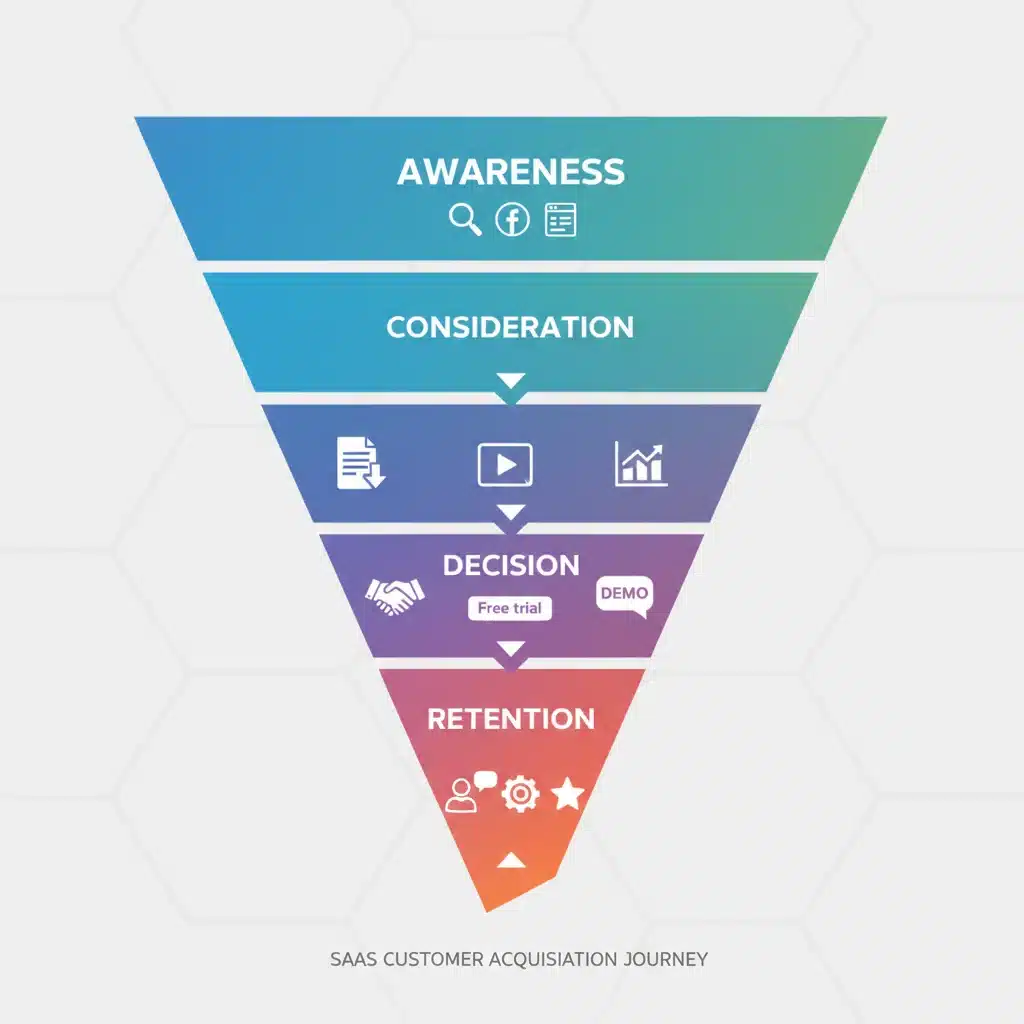
Once you have a solid product, it’s time to refine your go-to-market (GTM) strategy. This involves defining your ideal customer profile (ICP), understanding their buying journey, and choosing the most effective channels to reach them. For B2B SaaS, this often includes content marketing, SEO, paid advertising, partnerships, and direct sales. For B2C SaaS, social media, app store optimization, and influencer marketing might play a larger role. Tailor your messaging to resonate with your ICP and highlight the unique benefits your product offers.
Start with a lean GTM strategy, focusing on channels that offer the best return on investment. Experiment, measure, and optimize. The goal is to find repeatable and scalable customer acquisition channels that can fuel your SaaS startup growth without burning through your capital too quickly.
Early Customer Acquisition and Onboarding
Your first customers are your greatest advocates and your most valuable source of feedback. Focus on providing them with an exceptional onboarding experience that quickly demonstrates the value of your product. A smooth onboarding process reduces friction, increases engagement, and sets the stage for long-term customer satisfaction. Invest in clear documentation, tutorials, and responsive customer support.
Track key metrics from these early customers, such as activation rates, feature adoption, and time to value. These insights will help you further refine your product and customer journey. Positive early customer experiences are crucial for generating case studies and testimonials, which are powerful tools for future SaaS startup growth.
Phase 3: Scaling and Accelerating Towards $1M ARR (Months 25-36)
Building a Scalable Sales Engine
With product-market fit established and initial traction, the focus shifts to scaling your sales efforts. This means moving beyond founder-led sales to building a dedicated sales team. Define your sales process, from lead generation and qualification to demoing, closing, and onboarding. Implement a CRM system to manage your pipeline and track sales activities.
Recruit sales professionals who understand your product and target market. Provide them with comprehensive training, sales enablement tools, and clear performance metrics. Experiment with different sales models – inbound, outbound, self-service, or a hybrid – to find what works best for your product and customer segments. A well-oiled sales machine is paramount for accelerating your SaaS startup growth towards $1M ARR.
Optimizing Marketing for Growth
Your marketing efforts should now be focused on scaling customer acquisition and improving efficiency. Invest in robust analytics to understand your customer acquisition cost (CAC) and customer lifetime value (LTV). Optimize your marketing channels based on these metrics, doubling down on what works and refining or eliminating what doesn’t.
Content marketing, SEO, and thought leadership become even more critical in this phase. Establish your brand as an authority in your niche. Leverage customer success stories and testimonials to build social proof. Explore partnerships and integrations that can expand your reach and create new distribution channels. Continuous optimization of your marketing funnel is key to sustained SaaS startup growth.
Customer Success and Retention Strategies
Achieving $1M ARR isn’t just about acquiring new customers; it’s equally about retaining existing ones and expanding their value. Implement a proactive customer success strategy that focuses on helping customers maximize their use of your product. This includes regular check-ins, educational resources, and dedicated support.
Monitor customer health scores and proactively address any issues that might lead to churn. Identify opportunities for upselling and cross-selling additional features or higher-tier plans. A high retention rate and positive net revenue retention (NRR) are powerful drivers of SaaS startup growth and demonstrate the long-term viability of your business model. Happy customers are your best marketing channel.
Key Strategic Levers for Rapid SaaS Startup Growth
Data-Driven Decision Making
Throughout your journey, data should be your guiding light. Track everything: user engagement, conversion rates, churn, CAC, LTV, sales cycle length, and support tickets. Use this data to identify trends, pinpoint bottlenecks, and make informed decisions about product development, marketing spend, and sales strategies. Tools for analytics, CRM, and marketing automation are indispensable.
Continuous Product Innovation
The SaaS landscape is constantly evolving. To maintain your competitive edge and fuel ongoing SaaS startup growth, you must commit to continuous product innovation. Listen to customer feedback, monitor industry trends, and invest in R&D. Introduce new features, improve existing ones, and ensure your product remains cutting-edge and relevant to your target audience. Don’t rest on your laurels; innovation is a marathon, not a sprint.
Building a Strong Brand and Community
Beyond the product itself, cultivate a strong brand identity and foster a vibrant community around your solution. A strong brand builds trust and recognition, making it easier to attract and retain customers. Engage with your users through forums, social media, webinars, and events. A thriving community can provide valuable feedback, support, and advocacy, contributing significantly to your SaaS startup growth.
Strategic Partnerships and Ecosystem Building
Explore strategic partnerships with complementary businesses. These could be integration partners, co-marketing partners, or resellers. Partnerships can open new markets, expand your product’s capabilities, and accelerate customer acquisition without directly incurring high costs. Building an ecosystem around your product can create a network effect, further entrenching your solution in the market.
Talent Acquisition and Development
As you scale, attracting and retaining top talent becomes increasingly critical. Develop a strong employer brand, offer competitive compensation and benefits, and create a positive work environment that fosters growth and innovation. Invest in continuous learning and development for your team members. Your ability to scale your team effectively will directly impact your capacity for SaaS startup growth.

Common Pitfalls to Avoid on Your Journey to $1M ARR
Ignoring Product-Market Fit
One of the most common reasons for SaaS startup failure is scaling prematurely without having achieved solid product-market fit. Investing heavily in sales and marketing before your product truly resonates with a significant market segment is a recipe for high CAC and churn. Prioritize PMF above all else in the early stages.
Lack of Financial Discipline
Burn rate is a critical metric for startups. Without careful financial planning and discipline, even well-funded startups can run out of cash. Monitor your expenses, understand your unit economics, and ensure your revenue growth outpaces your cost growth. Avoid unnecessary expenditures and focus resources on activities that directly contribute to SaaS startup growth.
Poor Customer Experience
In the competitive SaaS landscape, customer experience is a key differentiator. Neglecting customer support, onboarding, or success can lead to high churn, negative reviews, and a damaged reputation. Invest in your customers; their satisfaction is directly linked to your recurring revenue.
Failing to Adapt
The market, technology, and customer needs are constantly changing. A rigid approach can quickly lead to obsolescence. Be agile, embrace change, and be willing to pivot if necessary. Continuous learning and adaptation are essential for long-term SaaS startup growth.
Underestimating Competition
Even in niche markets, competition exists, whether direct or indirect. Don’t underestimate your competitors. Understand their strengths and weaknesses, and continuously differentiate your product and value proposition. A healthy awareness of the competitive landscape will inform your strategic decisions.
Measuring Success: Key Metrics for $1M ARR
To effectively track your progress towards $1M ARR, you need to monitor a set of key performance indicators (KPIs) regularly. Here are some of the most important ones:
- Monthly Recurring Revenue (MRR): The predictable revenue your business expects to receive every month. Tracking MRR and its growth is fundamental to understanding your SaaS startup growth trajectory.
- Annual Recurring Revenue (ARR): Your MRR multiplied by 12. This is the ultimate goal, and tracking its progress is essential.
- Customer Acquisition Cost (CAC): The total sales and marketing expenses required to acquire a new customer. A lower CAC means more efficient growth.
- Customer Lifetime Value (LTV): The total revenue a business can reasonably expect from a single customer account over the duration of their relationship. Aim for a high LTV to CAC ratio (ideally 3:1 or higher).
- Churn Rate: The rate at which customers cancel their subscriptions. Both logo churn (number of customers) and revenue churn (amount of revenue) are critical. Low churn is vital for sustainable SaaS startup growth.
- Net Revenue Retention (NRR) / Net Dollar Retention (NDR): The percentage of recurring revenue retained from an existing cohort of customers over a period, including upgrades, downgrades, and churn. An NRR above 100% indicates healthy expansion revenue.
- Sales Cycle Length: The average time it takes to convert a lead into a paying customer. Shorter cycles mean faster revenue generation.
- Conversion Rates: From website visitor to lead, lead to MQL, MQL to SQL, SQL to customer. Optimizing these rates directly impacts your SaaS startup growth.
- Product Usage Metrics: Active users, feature adoption, time spent in-app. These indicate product health and customer engagement.
Regularly review these metrics, set clear targets, and make data-driven adjustments to your strategy. This analytical approach is what separates successful SaaS companies from those that struggle to scale.
The Future of US SaaS in 2026: Trends to Watch
As you plan your journey to $1M ARR by 2026, it’s important to be aware of emerging trends that will shape the US SaaS market:
- AI and Machine Learning Integration: AI will continue to be embedded into every aspect of SaaS, from intelligent automation to predictive analytics and hyper-personalization. Leveraging AI can provide a significant competitive advantage and accelerate SaaS startup growth.
- Vertical SaaS Dominance: Highly specialized SaaS solutions tailored to specific industries (e.g., healthcare, construction, legal) will gain further traction due to their ability to solve unique industry-specific problems more effectively than horizontal platforms.
- Composable SaaS and API-First Architectures: Businesses will increasingly demand flexible, modular software that can be easily integrated with other tools. An API-first approach and a focus on composability will be crucial for interoperability.
- Emphasis on Data Privacy and Security: With increasing data regulations and cyber threats, SaaS providers must prioritize robust data privacy and security features. Trust will be a significant factor in customer adoption.
- Product-Led Growth (PLG): The PLG model, where the product itself drives customer acquisition, activation, and retention, will become even more prevalent. Offering freemium models, free trials, and intuitive user experiences will be key for SaaS startup growth.
- Remote-First and Distributed Teams: The shift to remote and hybrid work models will continue to influence how SaaS products are designed and marketed, with a focus on collaboration, communication, and productivity tools.
By staying abreast of these trends and strategically incorporating them into your product roadmap and GTM strategy, you can position your SaaS startup for sustained success in the coming years.
Conclusion: Your Path to $1M ARR is Within Reach
Achieving $1M ARR by 2026 as a US SaaS startup is an ambitious but entirely attainable goal. It requires a clear vision, relentless execution, a customer-centric approach, and the agility to adapt. By focusing on deep product-market fit, building a scalable sales and marketing engine, prioritizing customer success, and leveraging data-driven insights, you can navigate the challenges and capitalize on the immense opportunities within the US SaaS market.
Remember, the journey is iterative. Celebrate small wins, learn from failures, and continuously optimize every aspect of your business. With dedication and the right strategies outlined in this guide, your SaaS startup growth can indeed take you from zero to $1M ARR and beyond, establishing a strong foundation for long-term success in the competitive and rewarding world of software as a service.