Conversational Commerce: Boost US Sales 15% by Q3 2026

In an increasingly digital-first world, the way consumers interact with brands is undergoing a profound transformation. The traditional e-commerce model, while effective, is evolving, giving way to more personalized, immediate, and human-like interactions. This evolution is encapsulated in the phenomenon known as conversational commerce growth. For US brands, embracing this shift isn’t just about staying competitive; it’s about unlocking unprecedented opportunities for sales uplift and deeper customer relationships. This article will delve into how US brands can strategically implement conversational commerce to achieve a remarkable 15% sales uplift by Q3 2026.
The Dawn of Conversational Commerce: A New Paradigm for Sales
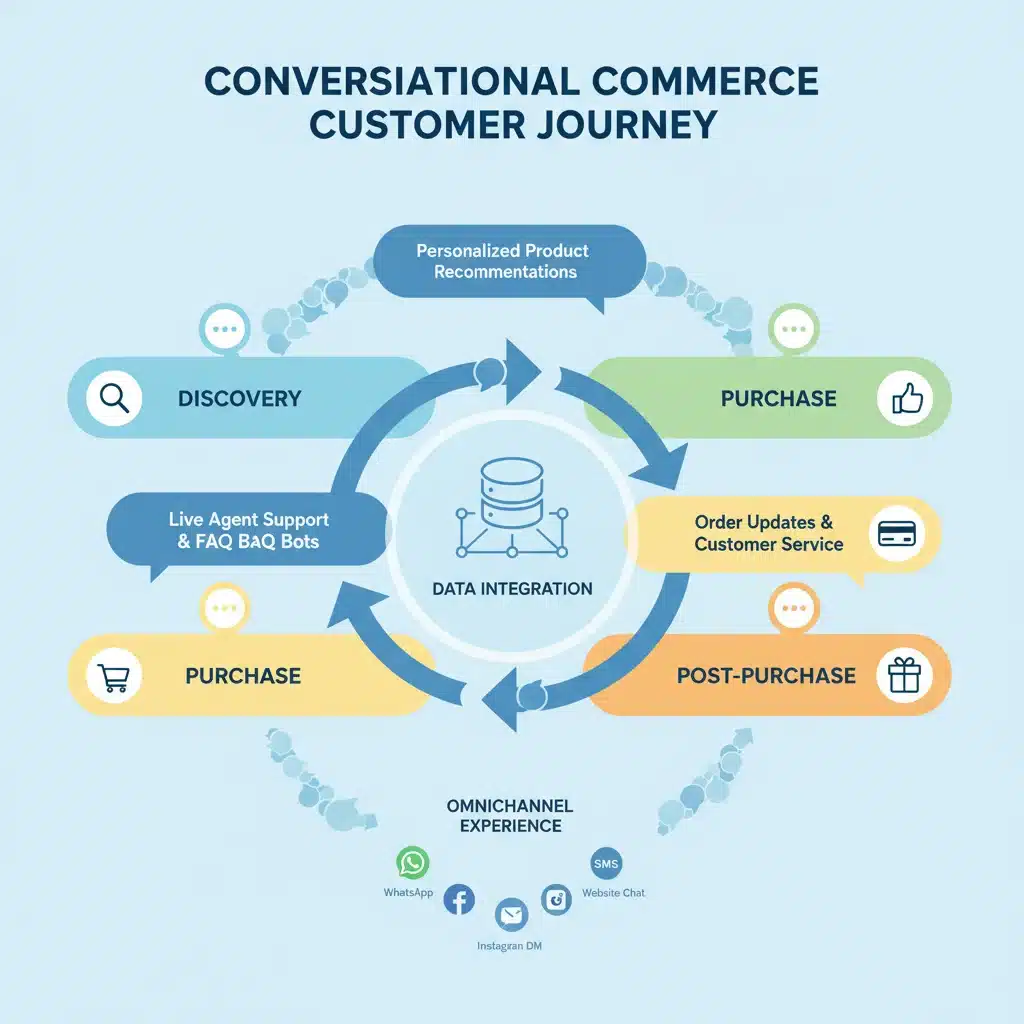
Conversational commerce refers to the intersection of messaging apps, AI, and e-commerce, enabling customers to interact with businesses through chat interfaces to discover products, get recommendations, make purchases, and receive support. It’s about bringing the convenience of a personal shopper or a knowledgeable sales assistant directly to the customer’s preferred messaging channel.
The rise of messaging platforms like WhatsApp, Facebook Messenger, Apple Business Chat, and even SMS, has created a fertile ground for this new commerce model. Consumers are already spending a significant portion of their digital lives on these platforms, making them ideal touchpoints for engaging with brands. The expectation for instant gratification and personalized service, fueled by the omnipresence of smartphones, further propels the need for seamless, conversational interactions.
Why Conversational Commerce is Critical for US Brands
The US market is particularly ripe for conversational commerce growth. American consumers are early adopters of technology and increasingly value convenience and personalized experiences. A recent study indicated that a significant percentage of consumers prefer to interact with businesses via messaging for customer service and even purchasing. This preference is not just a fleeting trend; it’s a fundamental shift in consumer behavior that brands must acknowledge and adapt to.
For US brands, the benefits extend beyond mere customer satisfaction:
- Enhanced Customer Experience: Providing instant, personalized support and product information elevates the overall customer journey.
- Increased Conversion Rates: Guiding customers through the sales funnel with real-time assistance can significantly reduce cart abandonment.
- Improved Customer Loyalty: Personalized interactions foster stronger relationships and repeat business.
- Valuable Data Insights: Conversational data offers a rich source of information about customer preferences, pain points, and product interests.
- Operational Efficiency: AI-powered chatbots can handle routine queries, freeing up human agents for more complex issues.
The goal of a 15% sales uplift by Q3 2026 through conversational commerce is ambitious but entirely achievable for brands that commit to a well-planned and executed strategy.
Laying the Foundation: Strategic Implementation for Success
Achieving significant sales growth through conversational commerce requires more than just deploying a chatbot. It demands a holistic strategy that integrates technology, people, and processes.
1. Define Your Conversational Commerce Goals
Before diving into implementation, clearly define what you aim to achieve. Is it primarily about lead generation, customer support, direct sales, or a combination? For a 15% sales uplift, the focus will primarily be on direct sales and conversion optimization. Specific KPIs might include:
- Increase in chat-driven sales.
- Higher average order value (AOV) from conversational channels.
- Reduced cart abandonment rates.
- Improved customer satisfaction scores (CSAT) related to chat interactions.
2. Choose the Right Platforms and Technologies
The landscape of conversational commerce tools is vast. US brands need to select platforms that align with their target audience’s preferences and their business objectives. Key considerations include:
- Messaging Apps: WhatsApp Business API, Facebook Messenger, Apple Business Chat, Instagram Direct, and potentially SMS for broader reach.
- AI Chatbot Platforms: Solutions like LivePerson, Intercom, Zendesk, or custom-built bots using frameworks like Google Dialogflow or IBM Watson Assistant. These platforms offer varying levels of AI sophistication, natural language processing (NLP), and integration capabilities.
- CRM Integration: Seamless integration with your existing Customer Relationship Management (CRM) system (e.g., Salesforce, HubSpot) is crucial for personalized interactions and a unified customer view.
- E-commerce Platform Integration: The conversational platform must integrate smoothly with your e-commerce backend (e.g., Shopify, Magento) to handle product catalogs, inventory, order processing, and payment gateways.
3. Craft Compelling Conversational Flows
The quality of your conversational experience will directly impact your conversational commerce growth. This involves designing flows that are:
- Intuitive and Natural: The conversation should feel human-like, even if it’s AI-driven. Avoid robotic or overly scripted responses.
- Personalized: Leverage customer data (purchase history, browsing behavior) to offer relevant product recommendations and tailored assistance.
- Efficient: Get to the point quickly, provide clear options, and minimize the steps required to complete an action.
- Goal-Oriented: Each conversation should guide the user towards a desired outcome, whether it’s answering a question, providing information, or facilitating a purchase.
- Escalation Paths: Ensure a smooth handover to a human agent when the bot cannot resolve an issue or when a customer requests it.
Strategies for Accelerating Sales Uplift
To achieve a 15% sales uplift, US brands must go beyond basic implementation and employ advanced strategies that maximize the potential of conversational commerce.
A. Proactive Engagement and Personalized Recommendations
Don’t wait for customers to initiate contact. Proactive outreach, based on browsing behavior or past purchases, can significantly drive sales.
- Abandoned Cart Recovery: Send automated messages to customers who left items in their cart, offering assistance or special discounts.
- Product Recommendations: Use AI to suggest relevant products based on browsing history, purchase patterns, or even real-time conversation cues. For example, if a customer is asking about running shoes, the bot could suggest complementary apparel or accessories.
- Post-Purchase Engagement: Follow up after a purchase with order status updates, delivery notifications, and even personalized recommendations for future purchases, fostering repeat business.

B. Seamless Integration of Payments and Checkout
The ultimate goal of conversational commerce is to facilitate purchases directly within the chat interface. This requires robust integration with payment gateways.
- In-Chat Checkout: Allow customers to complete their purchase without leaving the messaging app. This reduces friction and improves conversion rates.
- Secure Payment Options: Offer a variety of secure payment methods, including credit cards, digital wallets (Apple Pay, Google Pay), and even buy-now-pay-later options.
- Order Confirmation and Tracking: Provide instant order confirmations and easy access to tracking information directly through the chat.
C. Leveraging Live Agents for High-Value Interactions
While AI is powerful, human interaction remains critical for complex issues, high-value sales, and building trust. The key is to find the right balance.
- Intelligent Handoffs: Train your AI to recognize when a conversation requires human intervention and seamlessly transfer the customer to a live agent, providing the agent with the full chat history.
- Human-in-the-Loop: Use human agents to monitor conversations, step in when necessary, and train the AI to improve its responses over time.
- Specialized Sales Teams: For high-ticket items or complex product configurations, dedicated sales agents can provide expert advice and close deals directly via chat.
D. Data-Driven Optimization and Continuous Improvement
The success of your conversational commerce growth strategy hinges on continuous analysis and optimization.
- Analyze Chat Transcripts: Regularly review conversations to identify common questions, pain points, and opportunities for improvement in your bot’s responses or human agent training.
- A/B Testing: Experiment with different conversational flows, messaging styles, and offers to see what resonates best with your audience.
- Customer Feedback: Actively solicit feedback from customers about their chat experience and use it to refine your strategy.
- Performance Metrics: Track key metrics like conversion rates, response times, resolution rates, and customer satisfaction to measure the impact of your efforts.
Overcoming Challenges and Ensuring Scalability
While the potential for conversational commerce growth is immense, US brands will encounter challenges that need to be addressed strategically.
Data Privacy and Security
With increased personalization comes the responsibility of handling customer data securely and transparently. Brands must:
- Comply with Regulations: Adhere to data privacy regulations like CCPA and others relevant to the US market.
- Transparent Data Usage: Clearly communicate how customer data is used to personalize interactions.
- Secure Platforms: Choose conversational commerce platforms that offer robust security features and encryption.
Maintaining a Consistent Brand Voice
Whether it’s an AI chatbot or a human agent, the brand’s voice and tone must remain consistent across all conversational channels. This requires:
- Style Guides: Develop clear guidelines for conversational tone, language, and response protocols.
- AI Training: Train AI models with brand-specific language and examples to ensure alignment.
- Agent Training: Provide comprehensive training to human agents on maintaining brand consistency during chat interactions.
Scalability and Resource Allocation
As conversational commerce scales, brands need to ensure they have the resources to support the increased volume of interactions.
- Hybrid Models: Implement a hybrid approach where AI handles routine queries, and human agents focus on complex or high-value interactions.
- Automation for Repetitive Tasks: Continuously identify and automate repetitive tasks to optimize agent efficiency.
- Dynamic Staffing: Adjust human agent staffing based on peak hours and anticipated demand.
Real-World Examples and Future Outlook
Numerous US brands are already seeing significant returns from their investment in conversational commerce. Retailers are using chatbots for personalized styling advice and instant checkout, while travel companies are facilitating bookings and itinerary changes through messaging. Financial institutions are providing secure account information and transaction services. These early successes underscore the immense potential for widespread conversational commerce growth.
Looking ahead to Q3 2026, the landscape of conversational commerce will likely be even more sophisticated. Expect advancements in:
- Generative AI: More human-like and contextually aware conversations.
- Voice Commerce: Integration with voice assistants for hands-free shopping experiences.
- Augmented Reality (AR) Integration: Allowing customers to visualize products within their environment directly through chat interfaces.
- Proactive Personalization: Bots anticipating customer needs before they are explicitly stated, based on advanced predictive analytics.
For US brands, the window of opportunity to establish a strong foothold in this evolving space is now. Those who act decisively and strategically will be best positioned to capture market share and achieve substantial sales uplift.
Conclusion: Seizing the Conversational Commerce Opportunity
The journey to a 15% sales uplift by Q3 2026 through conversational commerce is a strategic imperative for US brands. It requires a commitment to understanding evolving consumer behaviors, investing in the right technologies, and continuously optimizing the customer experience. By embracing AI-powered chatbots, integrating seamlessly with popular messaging platforms, and maintaining a human touch where it matters most, brands can transform their sales funnels and build lasting customer relationships.
The future of commerce is conversational. Brands that recognize this and proactively adapt will not only achieve their sales targets but also forge a deeper, more meaningful connection with their customers in an increasingly competitive digital marketplace. The time for US brands to capitalize on the immense potential of conversational commerce growth is now.