Voice Search Optimization: 6 Marketing Adjustments for US Businesses by Q4 2026

The digital landscape is in constant flux, and one of the most significant shifts we’ve witnessed in recent years is the exponential rise of voice search. As smart speakers become ubiquitous in American homes and voice assistants integrate seamlessly into our smartphones and vehicles, the way consumers interact with businesses and discover information is undergoing a profound transformation. For US businesses, this isn’t just a trend to observe; it’s a critical imperative to adapt to. By Q4 2026, businesses that fail to optimize their marketing strategies for voice search will undoubtedly find themselves at a significant disadvantage.
This comprehensive guide will delve into the six key marketing adjustments US businesses must implement to master voice search optimization. We’re not just talking about minor tweaks; we’re discussing fundamental shifts in strategy that will redefine your digital presence and ensure you remain competitive in an increasingly voice-first world.
The Irreversible Rise of Voice Search: Why It Matters Now More Than Ever
Before we dive into the ‘how,’ it’s crucial to understand the ‘why.’ Voice search isn’t a fad; it’s a fundamental change in user behavior. Consider these statistics: a significant percentage of US adults use voice assistants regularly, and this number is projected to grow substantially. People are using voice for everything from checking the weather and playing music to making purchases and finding local businesses. The convenience and hands-free nature of voice search make it incredibly appealing, especially for on-the-go consumers.
For businesses, this shift presents both challenges and unparalleled opportunities. The challenge lies in adapting traditional SEO and content strategies to cater to conversational queries. The opportunity, however, is immense: by effectively implementing voice search optimization, you can capture a growing segment of the market, build stronger brand authority, and enhance the user experience for your customers. The urgency to act is now, with Q4 2026 serving as a critical benchmark for strategic implementation.
1. Embrace Conversational Keywords and Long-Tail Queries for Voice Search Optimization
One of the most significant differences between text-based and voice-based searches is the natural language used. When typing, we tend to use short, concise keywords (e.g., “best Italian restaurant NYC”). With voice, however, queries are far more conversational and often longer (e.g., “Hey Google, what’s the best Italian restaurant near me that’s open right now and has outdoor seating?”).
To excel in voice search optimization, your keyword strategy must evolve. This means moving beyond single keywords and focusing on long-tail keywords and natural language phrases that mimic how people speak. Here’s how to do it:
- Analyze Your Audience’s Questions: Think about the questions your customers are likely to ask a voice assistant when looking for your products or services. Tools like AnswerThePublic, AlsoAsked, and even Google’s “People also ask” section can provide valuable insights into these conversational queries.
- Focus on Question-Based Content: Structure your content to directly answer common questions. Use question-and-answer formats, FAQs, and clear, concise answers within your blog posts and product descriptions. For example, instead of just listing product features, answer questions like “What are the benefits of X product?” or “How do I use Y service?”
- Leverage Semantic SEO: Voice search relies heavily on understanding the intent behind a query, not just matching keywords. Implement semantic SEO by using related terms and concepts throughout your content, providing a holistic understanding of your topic. This helps search engines connect your content with a wider range of voice queries.
- Consider Local Modifiers: Many voice searches are local in nature (e.g., “coffee shop near me”). Integrate local keywords and phrases into your content and ensure your Google My Business profile is meticulously optimized.
By shifting your keyword strategy to embrace conversational and long-tail queries, you’ll be better positioned to capture the intent of voice search users and drive relevant traffic to your business. This is a foundational step in effective voice search optimization.
2. Optimize for Featured Snippets and Position Zero
When a user conducts a voice search, the assistant typically provides a single, concise answer, often pulled directly from a featured snippet (also known as position zero) on Google’s search results page. This means that if you want your business to be the answer a voice assistant gives, you absolutely must aim for these coveted spots.
Achieving featured snippets requires a strategic approach to content creation:
- Provide Direct and Concise Answers: For common questions related to your industry, create content that offers a clear, summary-style answer at the beginning of a section or article. Think of it as answering the question in a single paragraph or bulleted list.
- Use Structured Data (Schema Markup): Schema markup helps search engines understand the context and meaning of your content. By structuring your data (e.g., using schema for FAQs, how-to guides, recipes, product information), you make it easier for voice assistants to extract relevant information and present it as an answer. This is a powerful tool for voice search optimization.
- Format for Scannability: Use headings, subheadings, bullet points, and numbered lists to break up your content. This not only improves readability for human users but also makes it easier for search engine algorithms to identify and extract key information for featured snippets.
- Target “What,” “How,” “When,” “Where,” and “Who” Questions: These types of questions are prime candidates for featured snippets. Create dedicated content pieces that answer these questions comprehensively and directly.
Securing featured snippets is paramount for voice search optimization, as it directly impacts your visibility and authority in the voice-first world. It’s often the difference between being heard and being invisible.
3. Prioritize Local SEO and Google My Business Optimization
A significant portion of voice searches has local intent. People frequently use voice assistants to find businesses “near me,” check opening hours, get directions, or make reservations. For any US business with a physical location, robust local SEO is not just important; it’s non-negotiable for effective voice search optimization.
Here’s how to supercharge your local SEO:
- Optimize Your Google My Business (GMB) Profile: This is the cornerstone of local SEO. Ensure your GMB profile is 100% complete and accurate. Include your full business name, address, phone number, website, hours of operation, categories, and high-quality photos. Regularly update your GMB profile with posts, offers, and Q&A responses.
- Consistency of NAP Information: Your Name, Address, and Phone Number (NAP) must be consistent across all online directories, your website, social media profiles, and GMB. Inconsistencies can confuse search engines and voice assistants, hindering your local search rankings.
- Encourage and Respond to Reviews: Positive customer reviews significantly impact local search rankings and build trust. Actively encourage customers to leave reviews on Google and other relevant platforms, and always respond to both positive and negative feedback professionally.
- Create Location-Specific Content: If you have multiple locations, create unique landing pages for each one, featuring local keywords, landmarks, and community information. This helps voice assistants provide highly relevant results to users in specific geographic areas.
- Consider “Near Me” Searches: While you shouldn’t keyword stuff, naturally integrate phrases like “near me” into your content where appropriate, particularly in FAQs or service descriptions, to directly address common voice queries.
By focusing on these local SEO strategies, your business will be the answer to those crucial “near me” voice searches, driving foot traffic and conversions.

4. Enhance Website Speed and Mobile Responsiveness
The speed and responsiveness of your website are critical factors for all forms of SEO, but they take on even greater importance with voice search optimization. Voice search users expect instant answers. If your website is slow to load, or difficult to navigate on a mobile device, it can negatively impact your rankings and user experience.
Here’s why and what to do:
- Speed is King: Search engines prioritize fast-loading websites. Voice assistants, in particular, need to quickly access and process information to provide rapid answers. Use tools like Google PageSpeed Insights to identify and rectify performance bottlenecks. Optimize images, leverage browser caching, and consider a Content Delivery Network (CDN) to improve loading times.
- Mobile-First Indexing: Google primarily uses the mobile version of your content for indexing and ranking. Since most voice searches originate from mobile devices (smartphones, smart speakers), having a perfectly optimized mobile site is non-negotiable. Ensure your website is fully responsive, meaning it adapts seamlessly to any screen size.
- User Experience (UX) Matters: A clunky or confusing mobile experience can deter users and signal to search engines that your site isn’t user-friendly. Voice search emphasizes convenience, so your website should reflect that. Ensure clear calls to action, easy navigation, and accessible content.
- Core Web Vitals: Google’s Core Web Vitals (Largest Contentful Paint, First Input Delay, Cumulative Layout Shift) are crucial metrics for assessing user experience. Optimizing these will directly benefit your voice search optimization efforts.
A fast, mobile-friendly website ensures that when a voice assistant finds your content, it can quickly and efficiently deliver the information to the user, enhancing both your SEO and customer satisfaction.
5. Develop Voice-Friendly Content and FAQs
Beyond keywords and technical SEO, the actual content you produce needs to be tailored for voice. Voice search results are often read aloud, so the content needs to be easy to understand, direct, and concise. Think about how a person would naturally speak and listen.
Strategies for creating voice-friendly content:
- Adopt a Conversational Tone: Write as if you’re speaking directly to a person. Avoid overly formal language and jargon. Use a natural, friendly tone that resonates with how people communicate verbally.
- Create Comprehensive FAQ Sections: FAQs are a goldmine for voice search optimization. They directly answer common questions in a clear, concise format. Ensure your FAQs are thorough, cover a wide range of inquiries, and are structured using schema markup.
- Structure Content with Clear Headings: Use H1, H2, and H3 tags effectively to organize your content logically. This helps voice assistants identify key topics and extract specific answers. Each heading should ideally summarize the content that follows.
- Focus on Clarity and Conciseness: Voice assistants prefer short, to-the-point answers. While comprehensive content is good, ensure that the core answer to a question is easily identifiable and can be read aloud without losing meaning.
- Anticipate Follow-Up Questions: When answering a question, consider what the next logical question might be and address it within your content. This helps create a more complete and helpful resource for voice users.
Content that is specifically designed to be read aloud and easily understood by a voice assistant will significantly improve your chances of being featured in voice search results.
6. Leverage Structured Data and Schema Markup Extensively
We touched upon structured data briefly when discussing featured snippets, but its importance for voice search optimization cannot be overstated. Structured data, or schema markup, is code that you can add to your website to help search engines better understand the content on your pages. This understanding is crucial for voice assistants, which rely on context and meaning to deliver accurate answers.
How to effectively use structured data:
- Implement FAQ Schema: As mentioned, this is vital for question-based voice queries. Marking up your FAQs with schema helps search engines display them directly in search results and allows voice assistants to easily extract answers.
- Product Schema: For e-commerce businesses, product schema (including price, availability, reviews, and descriptions) is essential. Voice search users can ask about product details, and structured data ensures that information is readily available.
- Local Business Schema: This is critical for local SEO. Mark up your business’s name, address, phone number, hours, and other details to improve your visibility in local voice searches.
- How-To Schema: If you have step-by-step guides or tutorials, how-to schema can help voice assistants walk users through instructions, making your content incredibly valuable.
- Review and Rating Schema: Voice users often ask for recommendations. Marking up reviews and ratings can help your business stand out when users ask for “the best X in Y.”
- Event Schema: For businesses hosting events, event schema can help voice assistants inform users about dates, times, locations, and ticket information.
By implementing a robust structured data strategy, you are essentially speaking the language of search engines and voice assistants, making it far easier for them to find, understand, and present your information to users. This is a powerful, yet often underutilized, aspect of voice search optimization.
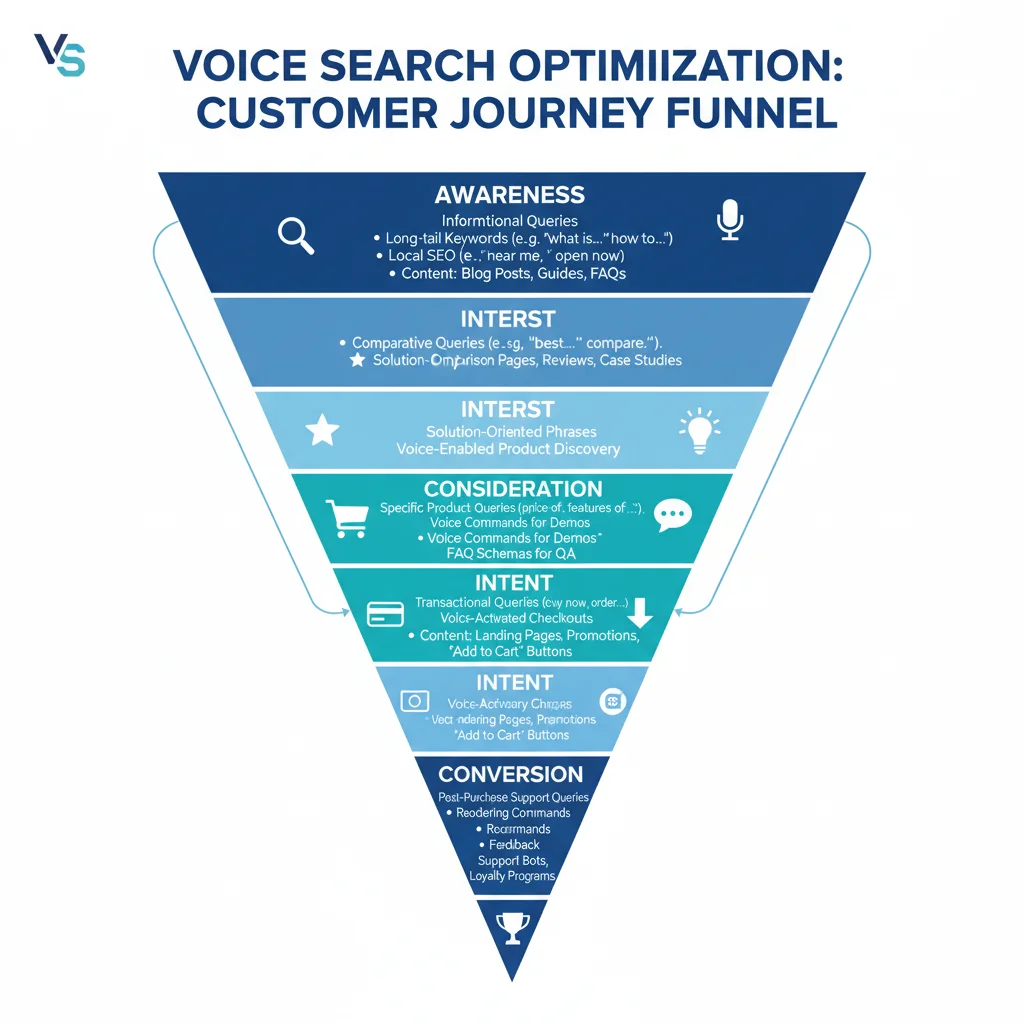
The Future is Conversational: Preparing Your Business for Q4 2026 and Beyond
The landscape of search is evolving at an unprecedented pace. While text-based search will continue to be relevant, the growing dominance of voice search cannot be ignored. For US businesses, the period leading up to Q4 2026 represents a critical window to adapt, innovate, and implement these crucial marketing adjustments. Procrastination in voice search optimization is not an option; it’s a direct path to being left behind.
Why the Urgency?
- Competitive Advantage: Early adopters of voice search optimization will gain a significant edge, capturing market share and building brand loyalty among a new generation of users.
- Changing Consumer Expectations: Consumers are increasingly expecting instant, convenient, and personalized interactions. Voice search delivers on all these fronts.
- Algorithm Shifts: Search engine algorithms are continually evolving to prioritize user experience. As voice search becomes more prevalent, the algorithms will naturally favor content optimized for this modality.
A Holistic Approach to Voice Search Optimization
It’s important to view voice search optimization not as a standalone task, but as an integral part of your overall digital marketing strategy. The six adjustments outlined above are interconnected and work synergistically. For instance, creating voice-friendly content is enhanced by robust structured data, and both are more effective on a fast, mobile-responsive website.
Regularly monitor your analytics, pay attention to how users are interacting with your content, and refine your strategies based on performance data. The world of voice search is dynamic, and continuous adaptation will be key to long-term success.
Conclusion: Act Now for Voice Search Dominance
The clock is ticking. By Q4 2026, the businesses that have proactively embraced and implemented voice search optimization strategies will be the ones thriving in the digital marketplace. This isn’t just about making your website discoverable; it’s about making your business speak directly to your customers, answering their questions, and meeting their needs in the most natural and convenient way possible.
Start today by auditing your current digital presence through the lens of voice search. Identify areas for improvement in keyword strategy, content creation, local SEO, website performance, and structured data implementation. Invest in the tools and expertise needed to make these adjustments, and commit to a future where your business is not just seen, but heard.
Your journey towards voice search dominance begins now. Don’t let your competitors get ahead; make these critical marketing adjustments and secure your place in the voice-first future.