DEI in 2026: 3 Actionable Steps for US Employers

The landscape of the American workforce is continually evolving, demanding that employers adapt and innovate to remain competitive and foster truly thriving environments. At the heart of this evolution lies Diversity, Equity, and Inclusion (DEI), a critical framework that is no longer just a buzzword but a fundamental pillar of sustainable business success. As we look towards 2026, the imperative for US employers to not only embrace but actively implement robust DEI strategies has never been clearer. This article delves into three actionable steps that will empower US employers to build genuinely inclusive workplaces, drive innovation, and attract top talent in the coming years. Understanding and executing these steps will be crucial for any organization aiming to future-proof its operations and cultivate a culture where every employee feels valued, respected, and empowered to contribute their best.
The Shifting Tides: Why DEI is More Critical Than Ever for US Employers by 2026
Before diving into specific actions, it’s essential to grasp the profound shifts that make DEI an undeniable priority for US employers. The demographic makeup of the United States workforce is becoming increasingly diverse. By 2026, this trend will only intensify, bringing with it a rich tapestry of perspectives, experiences, and skills. Companies that fail to recognize and leverage this diversity risk falling behind competitors who actively cultivate inclusive environments. Furthermore, younger generations entering the workforce, particularly Gen Z, place a significantly higher value on social responsibility and inclusive workplace cultures. They seek employers whose values align with their own, and a strong commitment to DEI is often a non-negotiable factor in their career choices. This means that to attract and retain the best talent, US employers must demonstrate a genuine and measurable dedication to DEI.
Beyond talent acquisition and retention, the business case for DEI is overwhelmingly strong. Research consistently shows that diverse teams are more innovative, make better decisions, and generate higher revenues. Companies with strong DEI practices are also more resilient in times of crisis and experience higher levels of employee engagement and satisfaction. In a rapidly changing global economy, the ability to adapt, innovate, and connect with a diverse customer base is paramount. DEI initiatives directly contribute to these capabilities, making them not just a moral imperative but a strategic business advantage. By 2026, organizations that have successfully embedded DEI into their core operations will be far better positioned for long-term growth and success than those that view it as a mere compliance exercise or a ‘nice-to-have’.
The legal and ethical landscapes are also continuously evolving. While many US employers are familiar with anti-discrimination laws, the focus is increasingly shifting towards proactive measures that ensure equity and inclusion. Ignoring these shifts can lead to legal challenges, reputational damage, and a decline in public trust. Therefore, for US employers, approaching DEI strategically by 2026 is about more than just avoiding pitfalls; it’s about actively shaping a brighter, more equitable future for their employees and their organizations. It requires a commitment that permeates every level of the company, from leadership to individual contributors, and is supported by clear goals, measurable outcomes, and continuous improvement.
Actionable Step 1: Develop and Implement Data-Driven DEI Strategies
The first and arguably most crucial step for US employers in their DEI journey towards 2026 is to move beyond good intentions and implement strategies that are firmly grounded in data. Many organizations express a desire for diversity and inclusion, but without concrete data, their efforts often lack direction, impact, and accountability. A data-driven approach allows US employers to identify specific areas of improvement, measure progress effectively, and demonstrate the tangible return on investment (ROI) of their DEI initiatives.
Conducting Comprehensive DEI Audits
The starting point for any data-driven strategy is a thorough DEI audit. This involves collecting and analyzing data across various aspects of the employee lifecycle, including:
- Recruitment and Hiring: Analyze applicant pools, interview success rates, and hiring demographics across different roles and departments. Look for potential biases in job descriptions, sourcing channels, and interview processes. Are certain groups underrepresented in your applicant pipeline or at specific stages of the hiring process?
- Compensation and Benefits: Conduct pay equity audits to ensure that employees in similar roles with comparable experience and performance are compensated fairly, regardless of gender, race, or other demographic factors. Review benefits packages to ensure they meet the diverse needs of your workforce.
- Promotions and Career Development: Examine promotion rates, access to leadership development programs, and mentorship opportunities across different demographic groups. Are there any systemic barriers preventing certain groups from advancing within the organization?
- Employee Experience and Culture: Utilize anonymous employee surveys to gather feedback on feelings of belonging, psychological safety, experiences with microaggressions, and perceptions of fairness. Analyze this data by demographic segment to identify disparities in employee experience.
- Exit Interviews: Systematically collect and analyze data from exit interviews to understand why employees from diverse backgrounds choose to leave the organization. This can reveal critical insights into systemic issues that need addressing.
Setting Measurable Goals and KPIs
Once the audit is complete, US employers must translate the findings into specific, measurable, achievable, relevant, and time-bound (SMART) goals. These goals should be tied to key performance indicators (KPIs) that allow for continuous monitoring and evaluation. Examples of measurable goals and KPIs include:
- Increase representation of underrepresented groups in leadership positions by X% by 2026.
- Reduce gender pay gap by Y% within the next two years.
- Improve employee perception of inclusion and belonging by Z points in annual engagement surveys.
- Increase retention rates for diverse talent by A% year-over-year.
- Diversify supplier base by B% through inclusive procurement practices.
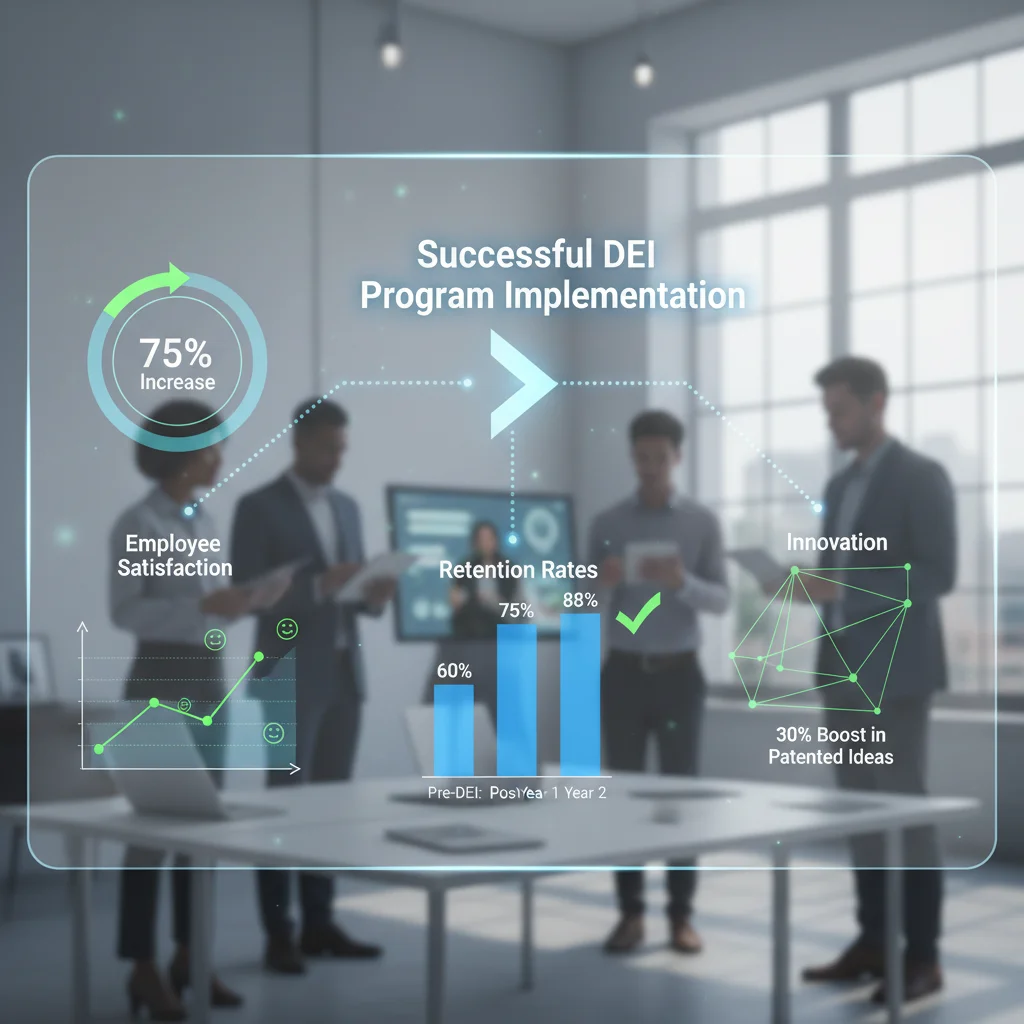
Establishing these metrics is not enough; US employers must also assign ownership for these goals and regularly report on progress to senior leadership and the entire organization. Transparency in reporting, both successes and challenges, builds trust and reinforces the organization’s commitment to DEI. This data-driven approach transforms DEI from an abstract concept into a concrete business strategy, allowing US employers to make informed decisions, allocate resources effectively, and demonstrate tangible progress towards a more equitable and inclusive workplace by 2026.
Actionable Step 2: Integrate DEI into Core Business Practices and Leadership Accountability
The second critical step for US employers is to embed DEI not as a standalone initiative, but as an integral part of all core business practices. This means moving beyond HR-centric programs and making DEI a fundamental aspect of how the organization operates, from strategic planning to daily decision-making. Crucially, this integration must be championed and driven by leadership, with clear accountability structures in place.
Weaving DEI into Every Business Function
For DEI to truly thrive, it needs to be woven into the fabric of the organization. Here’s how US employers can achieve this:
- Strategic Planning: DEI considerations should be part of all strategic planning sessions. How will new products or services impact diverse customer segments? Are our market expansion plans inclusive?
- Product Development and Innovation: Diverse teams are more likely to create innovative products and services that cater to a broader customer base. Ensure that diverse perspectives are included at every stage of product conception, design, and testing.
- Marketing and Communications: Review all external communications, marketing materials, and branding to ensure they are inclusive and representative of diverse populations. Avoid stereotypes and actively showcase the diversity within your organization and customer base.
- Procurement and Supply Chain: Implement inclusive procurement policies that prioritize working with diverse suppliers, including minority-owned, women-owned, veteran-owned, and LGBTQ+-owned businesses. This not only supports economic equity but also diversifies your supply chain and fosters innovation.
- Customer Service: Train customer service teams to be culturally competent and equipped to serve a diverse customer base effectively. Understand and address the unique needs and preferences of different customer segments.
Leadership Buy-in and Accountability
Without strong leadership commitment, DEI efforts often falter. US employers must ensure that:
- Leadership Champions DEI: Senior leaders must not only endorse DEI but actively champion it through their words and actions. They should participate in DEI training, speak openly about its importance, and visibly support initiatives. Their commitment sets the tone for the entire organization.
- Accountability is Formalized: DEI goals should be integrated into leadership performance reviews and compensation structures. This means that leaders are held accountable for achieving DEI objectives within their departments or teams. For example, a manager’s bonus might be tied to their team’s diversity metrics or their participation in inclusive leadership training.
- Inclusive Leadership Training: Provide ongoing training for all levels of management on inclusive leadership practices, unconscious bias, and how to foster psychological safety within their teams. Leaders need the skills to effectively manage diverse teams and create environments where everyone can thrive.
- Sponsorship and Mentorship Programs: Establish formal sponsorship and mentorship programs specifically designed to support the career advancement of employees from underrepresented groups. Leaders should be encouraged to act as sponsors, advocating for their protégés and helping them navigate career paths.
- Resource Allocation: Leaders must allocate sufficient resources – financial, human, and time – to DEI initiatives. This demonstrates a tangible commitment and ensures that programs are adequately supported to achieve their objectives.
By integrating DEI into every facet of the business and ensuring robust leadership accountability, US employers can move beyond performative gestures to create deeply ingrained, sustainable change. This holistic approach ensures that by 2026, DEI is not just an add-on, but a fundamental operating principle that drives success and fosters an truly equitable workplace.
Actionable Step 3: Foster a Culture of Continuous Learning and Psychological Safety
The third crucial step for US employers aiming for robust DEI by 2026 is to cultivate a workplace culture that prioritizes continuous learning and psychological safety. DEI is not a one-time project; it’s an ongoing journey that requires constant adaptation, education, and a safe environment for open dialogue and growth. Without these elements, even well-intentioned initiatives can struggle to gain traction or create lasting impact.
Prioritizing Continuous DEI Education and Training
Learning in DEI is not just about initial awareness training; it’s about ongoing development for everyone in the organization. US employers should implement:
- Regular Unconscious Bias Training: Move beyond a single session. Implement regular, interactive unconscious bias training that helps employees and leaders recognize and mitigate their biases in hiring, performance reviews, and daily interactions. These sessions should be dynamic, incorporating real-world scenarios and discussions.
- Cultural Competency Workshops: Offer workshops that enhance cultural competency, helping employees understand and appreciate different communication styles, cultural norms, and perspectives. This is particularly important in a diverse workforce and globalized market.
- Inclusive Language Guidelines: Provide clear guidelines and training on inclusive language, ensuring that communication, both internal and external, is respectful and affirming of all identities. This includes avoiding jargon, stereotypes, and gendered language where appropriate.
- DEI Resource Libraries and Learning Platforms: Create accessible resources, such as curated reading lists, online courses, webinars, and internal forums, where employees can continue their DEI education at their own pace.
- Reverse Mentorship Programs: Implement programs where junior employees, particularly those from underrepresented groups, mentor senior leaders on topics related to diversity, technology, and emerging cultural trends. This fosters mutual learning and breaks down hierarchical barriers.
The goal of continuous education is to build empathy, challenge assumptions, and equip employees with the knowledge and skills to contribute positively to an inclusive environment. It’s about fostering a growth mindset where individuals are open to learning from their mistakes and continuously improving their understanding of DEI principles.
Building Psychological Safety for Open Dialogue
Psychological safety is the belief that one will not be punished or humiliated for speaking up with ideas, questions, concerns, or mistakes. It is the bedrock of a truly inclusive culture where diverse voices can be heard without fear of retribution. For US employers, creating this environment by 2026 is paramount:
- Encourage and Reward Vulnerability: Leaders must model vulnerability by admitting mistakes, asking for help, and actively seeking feedback. This signals to employees that it’s safe to do the same.
- Create Safe Spaces for Dialogue: Establish employee resource groups (ERGs) or affinity groups that provide safe spaces for individuals with shared identities or experiences to connect, share concerns, and advocate for their needs.
- Implement Bystander Intervention Training: Equip employees with the tools and confidence to intervene safely when they witness non-inclusive behavior or microaggressions. This empowers everyone to be an active participant in maintaining an inclusive environment.
- Foster a Culture of Feedback: Promote regular, constructive feedback that is delivered with respect and focuses on growth. Ensure that feedback mechanisms are equitable and that all voices are heard.
- Address Incidents Promptly and Fairly: When incidents of discrimination, harassment, or non-inclusive behavior occur, US employers must address them promptly, transparently, and fairly. A clear, well-communicated process for reporting and resolving issues is essential for building trust and psychological safety.

By investing in continuous learning and consciously building psychological safety, US employers create a dynamic environment where employees feel empowered to bring their whole selves to work, contribute diverse perspectives, and engage in the uncomfortable but necessary conversations that drive genuine DEI progress. This commitment ensures that DEI is not just a policy, but a living, breathing aspect of the organizational culture by 2026.
The Path Forward for US Employers: Embracing DEI as a Strategic Imperative
As we approach 2026, the call for US employers to prioritize and implement robust Diversity, Equity, and Inclusion initiatives grows louder and more urgent. The three actionable steps outlined – developing data-driven strategies, integrating DEI into core business practices with leadership accountability, and fostering a culture of continuous learning and psychological safety – provide a clear roadmap for organizations committed to building a truly inclusive future. These are not isolated actions but interconnected elements that, when pursued collectively, create a powerful synergy that transforms workplaces for the better.
The benefits of a strong DEI framework extend far beyond compliance or public relations. They touch every aspect of an organization’s health and performance: enhanced innovation, improved decision-making, higher employee engagement and retention, stronger financial performance, and a more positive brand reputation. In an increasingly diverse and interconnected world, the ability to attract, develop, and retain talent from all backgrounds is a competitive advantage that no US employer can afford to ignore.
The journey towards full DEI maturity is ongoing and requires unwavering commitment, courage, and a willingness to adapt. It demands that leaders at all levels actively engage, challenge their own biases, and champion equity. It necessitates open dialogue, a willingness to learn from mistakes, and a persistent focus on creating environments where every individual feels they belong and can contribute their unique talents. By proactively taking these actionable steps, US employers can not only meet the evolving expectations of their workforce and customers but also build more resilient, innovative, and equitable organizations that are truly prepared for the challenges and opportunities of 2026 and beyond. The time to act is now, to lay the groundwork for a future where diversity is celebrated, equity is systemic, and inclusion is the norm.