US Agricultural Technology: 6 Innovations Driving 12% Efficiency by 2026
US Agricultural Technology: 6 Innovations Driving 12% Efficiency by 2026
The landscape of agriculture is perpetually evolving, driven by the relentless pursuit of greater yields, reduced waste, and enhanced sustainability. In the United States, a vibrant ecosystem of innovation is fostering a paradigm shift, promising to redefine how food is grown and brought to our tables. The convergence of cutting-edge technology with traditional farming practices is not merely incremental; it’s a transformative wave. By 2026, experts predict that the strategic adoption of advanced US AgTech will catapult operational efficiency by an impressive 12%. This substantial increase in efficiency will not only bolster food security but also address critical challenges such as labor shortages, climate change impacts, and the ever-growing demand for sustainable production.
The journey towards this enhanced efficiency is paved with groundbreaking innovations. From the microscopic precision of genetic engineering to the sprawling networks of IoT sensors, new tools are empowering farmers to make more informed decisions, optimize resource allocation, and automate tedious tasks. This article will delve into six pivotal US agricultural technology innovations that are at the forefront of this revolution. Each of these advancements contributes uniquely to the overarching goal of a more productive, resilient, and environmentally friendly agricultural sector.
Understanding these developments is crucial for anyone involved in agriculture, from farmers and policymakers to investors and consumers. The future of food production in the US, and indeed globally, hinges on the successful integration and scaling of these ingenious solutions. Let’s explore the technologies that are setting the stage for a more efficient and sustainable agricultural future.
1. Precision Agriculture with AI and Machine Learning
Precision agriculture, a methodology that aims to optimize farm inputs by tailoring them to specific conditions within a field, has been a buzzword for years. However, its true potential is now being unlocked by the power of Artificial Intelligence (AI) and Machine Learning (ML). These advanced computational techniques are transforming raw data into actionable insights, making precision agriculture smarter and more effective than ever before. AI algorithms can analyze vast datasets gathered from various sources, including satellite imagery, drone footage, soil sensors, and weather stations. This comprehensive analysis allows farmers to identify subtle variations in soil composition, moisture levels, nutrient deficiencies, and pest infestations across their fields with unprecedented accuracy.
For instance, instead of uniformly applying fertilizers across an entire field, AI-driven systems can pinpoint exact areas requiring specific nutrients and recommend the precise amount needed. This targeted approach minimizes waste, reduces environmental impact, and significantly lowers input costs. Machine learning models are also becoming adept at predicting crop yields, identifying disease outbreaks before they spread, and optimizing irrigation schedules based on real-time and historical data. The ability to predict and proactively manage these variables leads directly to a substantial boost in US AgTech Efficiency. Farmers can now respond to challenges with surgical precision, reducing losses and maximizing output.
The integration of AI extends beyond mere analysis. AI-powered farm management software is becoming increasingly sophisticated, offering farmers decision support systems that integrate all aspects of their operations. From planting schedules to harvest forecasting, these systems provide a holistic view, enabling farmers to make data-driven choices that were previously impossible. This level of intelligent automation and predictive analytics is a cornerstone of the projected 12% efficiency increase in US agriculture by 2026.
2. Advanced Agricultural Robotics and Automation
The labor shortage in the agricultural sector is a persistent and growing concern. Robotics and automation offer a powerful solution, addressing this challenge while simultaneously enhancing efficiency and precision. The advent of advanced agricultural robotics is revolutionizing tasks that are traditionally labor-intensive, repetitive, or hazardous. These robots are not just replacing human hands; they are performing tasks with a level of accuracy and consistency that humans often cannot match.
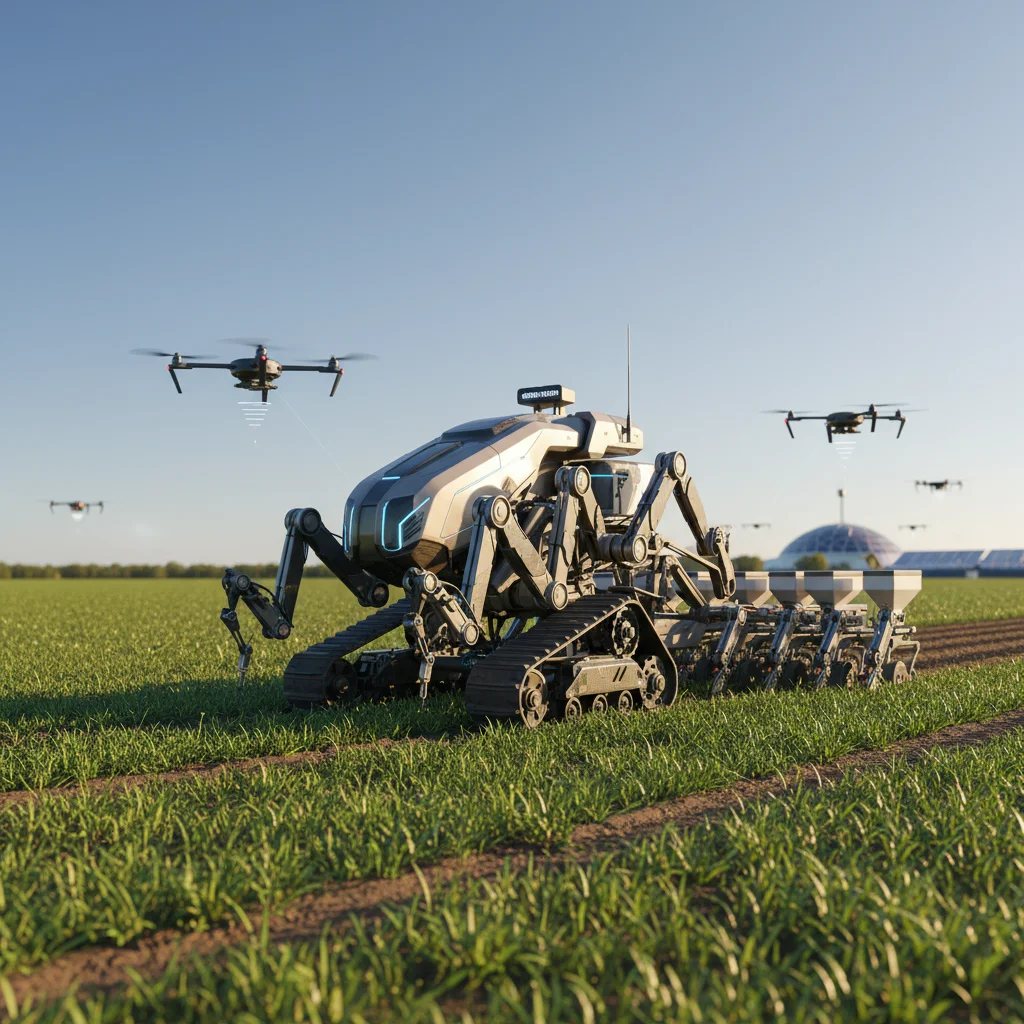
Consider autonomous tractors, which can navigate fields using GPS and AI, performing tasks like plowing, planting, and spraying with minimal human intervention. These machines can operate around the clock, unaffected by fatigue or weather conditions that might deter human workers. Beyond tractors, specialized robots are emerging for highly specific tasks. Robotic harvesters, for example, are being developed to pick delicate fruits and vegetables, identifying ripeness with computer vision and handling produce with gentle precision, thereby reducing damage and waste. Weeding robots use cameras and AI to distinguish weeds from crops, then precisely remove them with mechanical arms or targeted micro-doses of herbicide, significantly reducing the need for broad-spectrum chemical application.
The impact of robotics on US AgTech Efficiency is multifaceted. It addresses labor scarcity, reduces operational costs, and improves the quality and consistency of agricultural processes. Furthermore, these robots can collect valuable data as they work, feeding into the precision agriculture systems described earlier, creating a powerful feedback loop for continuous improvement. As these technologies become more affordable and scalable, their adoption will undoubtedly accelerate, playing a crucial role in achieving the efficiency targets for 2026.
3. IoT Sensors and Connectivity for Real-time Monitoring
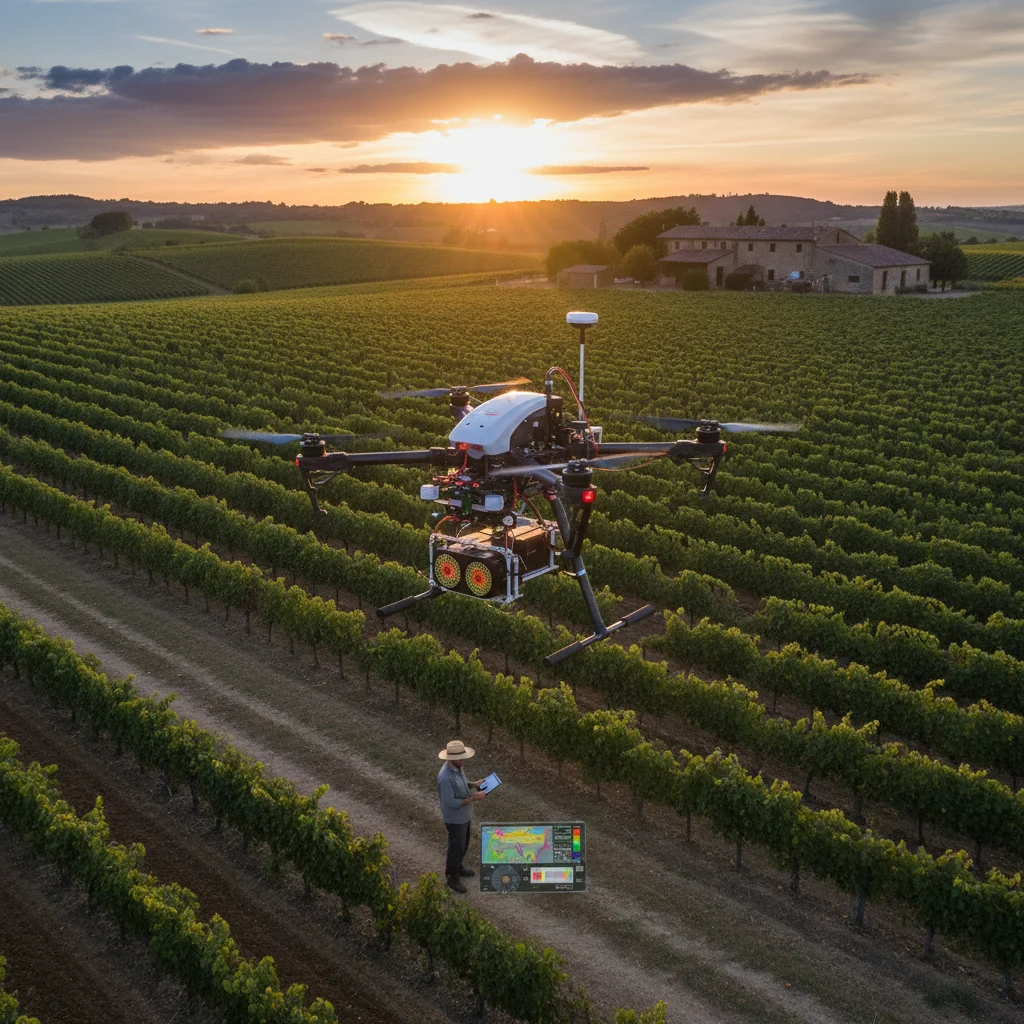
The Internet of Things (IoT) is fundamentally changing how farmers monitor and manage their operations. By deploying a network of interconnected sensors across fields, barns, and storage facilities, farmers gain access to a continuous stream of real-time data, providing unparalleled visibility into their agricultural ecosystems. This constant flow of information is vital for proactive management and rapid response to changing conditions, directly contributing to improved US AgTech efficiency.
Soil sensors, for instance, can continuously measure moisture levels, temperature, pH, and nutrient content at various depths. This data, transmitted wirelessly, allows farmers to optimize irrigation schedules, ensuring crops receive exactly the right amount of water at the right time, preventing both under-watering and over-watering. Weather stations equipped with IoT capabilities provide hyper-local forecasts and real-time conditions, enabling farmers to make timely decisions regarding planting, spraying, and harvesting, mitigating risks associated with unpredictable weather patterns.
Beyond fields, IoT sensors are transforming livestock management. Wearable sensors on animals can monitor health metrics, activity levels, and even reproductive cycles, alerting farmers to potential health issues or optimal breeding times. This proactive approach to animal welfare can significantly reduce losses due to disease and improve overall herd productivity. In storage facilities, IoT sensors monitor temperature, humidity, and atmospheric gas levels, crucial for preserving the quality of harvested crops and preventing spoilage.
The sheer volume and immediacy of data provided by IoT networks empower farmers to move away from reactive decision-making to a more predictive and optimized approach. This real-time monitoring capability is a game-changer for resource management, pest and disease control, and overall farm productivity, making it a cornerstone of the projected 12% efficiency boost.
4. Vertical Farming and Controlled Environment Agriculture (CEA)
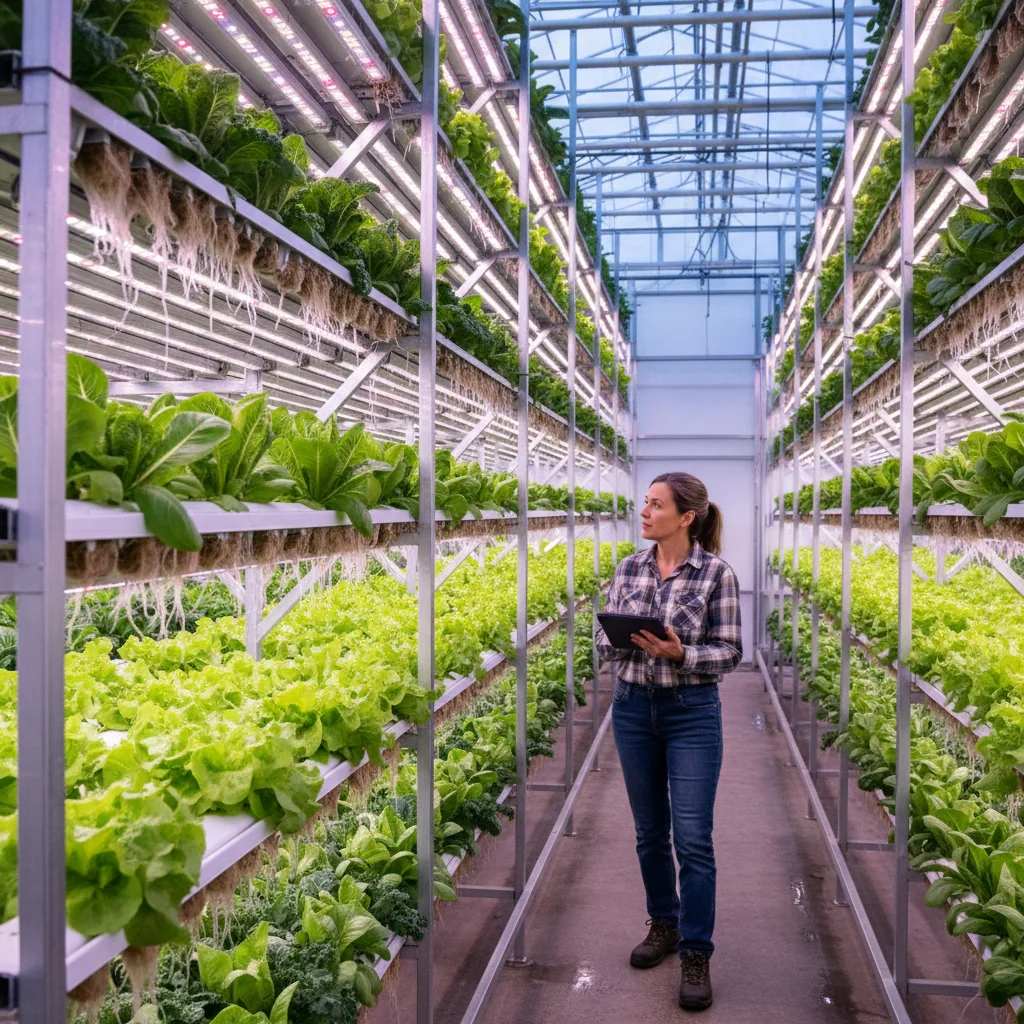
As arable land becomes scarcer and urban populations grow, vertical farming and Controlled Environment Agriculture (CEA) are emerging as critical solutions for sustainable food production. These innovative farming methods allow for crop cultivation in stacked layers, often indoors, under precisely controlled conditions. This approach drastically reduces the land footprint, conserves water, and enables year-round production regardless of external climate conditions, making a significant contribution to US AgTech Efficiency.
Vertical farms utilize hydroponics, aeroponics, or aquaponics systems, which deliver nutrients directly to plant roots in water-based solutions, eliminating the need for soil. This method can reduce water usage by up to 95% compared to traditional field farming. LED lighting systems are tuned to specific light spectrums that optimize plant growth, while environmental controls regulate temperature, humidity, and CO2 levels, creating ideal growing conditions for maximum yield and quality. The absence of soil and controlled environment also minimizes the risk of pests and diseases, reducing or eliminating the need for pesticides.
The benefits extend beyond resource efficiency. Vertical farms can be located in urban areas, significantly reducing transportation costs and emissions associated with bringing produce to market. This ‘farm-to-fork’ proximity ensures fresher produce for consumers and a more resilient supply chain. While initial setup costs can be higher, the long-term operational efficiencies, consistent yields, and premium product quality make vertical farming an increasingly attractive and viable option, particularly for high-value crops. The continued development and scaling of CEA technologies are vital for diversifying food production and enhancing overall agricultural output in the US.
5. Advanced Crop Genetics and Biotechnology
While often controversial, advancements in crop genetics and biotechnology continue to offer unparalleled opportunities to enhance agricultural productivity and resilience. Modern biotechnology allows scientists to develop crops that are not only higher yielding but also more resistant to pests, diseases, and environmental stresses such as drought and salinity. These genetic improvements are foundational to boosting US AgTech efficiency and ensuring food security in a changing climate.
Techniques like CRISPR gene editing enable precise modifications to plant DNA, allowing for the introduction of desirable traits without the controversies often associated with older methods of genetic modification. For example, researchers are developing crops that can utilize nitrogen more efficiently, reducing the need for synthetic fertilizers and their associated environmental impact. Others are focused on enhancing the nutritional content of staple crops, addressing issues of malnutrition.
Beyond genetic engineering, traditional plant breeding combined with genomic selection is accelerating the development of new, improved varieties. By analyzing the genetic makeup of plants, breeders can identify and select for desirable traits much faster than through conventional methods, leading to quicker development cycles for new, high-performing crops. This rapid innovation in crop varieties is critical for adapting to new agricultural challenges and capitalizing on opportunities for increased yield and quality.
The ongoing research and development in agricultural biotechnology are creating a portfolio of crops that are inherently more efficient in their use of resources, more resilient to environmental pressures, and more productive. This biological side of US AgTech is a powerful complement to the mechanical and digital innovations, together driving the agricultural sector towards unprecedented levels of efficiency and sustainability.
6. Blockchain Technology for Supply Chain Transparency
While not directly involved in the physical act of farming, blockchain technology is poised to significantly enhance US AgTech efficiency by revolutionizing agricultural supply chains. Transparency, traceability, and trust are paramount in the food industry, and blockchain offers an immutable and decentralized ledger that can record every step a product takes from farm to fork. This innovation addresses critical issues such as food safety, fraud prevention, and waste reduction.
With blockchain, each agricultural product can be tagged and tracked, providing consumers and retailers with verifiable information about its origin, growing conditions, processing, and transportation. This level of transparency builds consumer trust and allows for rapid identification and recall of contaminated products, minimizing public health risks and financial losses. For farmers, blockchain can streamline payment processes, reduce administrative burdens, and ensure fair compensation by providing clear records of transactions.
Furthermore, blockchain can help optimize inventory management and reduce food waste. By providing real-time data on product movement and freshness, it enables more efficient logistics and reduces the likelihood of spoilage due to delays or mismanagement. The enhanced data integrity offered by blockchain also supports compliance with food safety regulations and certification standards, simplifying audits and reducing regulatory complexities.
The integration of blockchain into agricultural supply chains is a crucial step towards a more efficient, secure, and trustworthy food system. It underpins the other technological advancements by ensuring that the benefits of increased productivity and quality are communicated and verified throughout the entire value chain, ultimately contributing significantly to overall US AgTech Efficiency.
The Cumulative Impact on US AgTech Efficiency by 2026
The six innovations discussed – precision agriculture with AI, advanced robotics, IoT sensors, vertical farming, crop biotechnology, and blockchain – are not isolated advancements. Their true power lies in their synergistic application. When combined, these technologies create a comprehensive ecosystem that optimizes every facet of agricultural production, from seed to sale. The projected 12% increase in US AgTech efficiency by 2026 is a testament to this integrated approach.
This efficiency gain translates into tangible benefits: higher yields from less land, reduced water and fertilizer usage, minimized pesticide application, lower labor costs, decreased food waste, and a more resilient and transparent supply chain. Farmers will be empowered with unprecedented levels of data and automation, allowing them to focus on strategic decision-making and sustainable practices.
However, realizing this potential requires continued investment in research and development, supportive policies, and widespread adoption by the agricultural community. Education and training will be vital to ensure that farmers are equipped with the skills to leverage these sophisticated tools. The journey to 2026 will be one of continuous adaptation and learning, but the trajectory is clear: technology is the engine driving a more productive, sustainable, and efficient future for US agriculture.
Challenges and Opportunities on the Road Ahead
While the promise of a 12% increase in US AgTech efficiency by 2026 is exciting, the path is not without its challenges. The initial capital investment required for many of these technologies can be substantial, posing a barrier to entry for smaller farms. Ensuring equitable access to these innovations, perhaps through government subsidies, grants, or innovative financing models, will be crucial for widespread adoption. Furthermore, the digital divide in rural areas, where reliable internet access can be limited, needs to be addressed to fully leverage IoT and AI-driven solutions.
Data privacy and security are also growing concerns. As farms become increasingly data-rich, protecting sensitive information from cyber threats and ensuring ethical data usage will be paramount. Farmers need assurances that their data will be used to their benefit and not exploited. Moreover, the integration of diverse technologies from different vendors requires robust interoperability standards to avoid siloed systems and maximize efficiency gains.
Despite these hurdles, the opportunities presented by these agricultural technologies far outweigh the challenges. The ability to produce more food with fewer resources, mitigate the impacts of climate change, and enhance the economic viability of farming communities represents a profound positive shift. The US is uniquely positioned with its strong research institutions, innovative tech sector, and entrepreneurial spirit to lead this agricultural revolution. By proactively addressing challenges and fostering an environment of collaboration, the vision of a highly efficient and sustainable agricultural sector by 2026 is well within reach.
Conclusion: A Future Harvested by Innovation
The future of US agriculture is inextricably linked to technological innovation. The six advancements discussed – precision agriculture with AI, advanced robotics, IoT sensors, vertical farming, crop biotechnology, and blockchain – are not just individual tools but interconnected components of a holistic strategy to enhance US AgTech efficiency. Their collective impact is projected to deliver a remarkable 12% increase in productivity and sustainability by 2026, fundamentally reshaping the industry.
This transformation promises a future where farming is more precise, less labor-intensive, more resilient to environmental shocks, and more transparent to consumers. It’s a future where resources are conserved, waste is minimized, and food security is strengthened. While challenges related to investment, infrastructure, and data management remain, the drive for innovation and the imperative for sustainable food production will continue to propel the agricultural sector forward.
The journey towards 2026 is an exciting one, marked by the rapid adoption and refinement of these groundbreaking technologies. By embracing these innovations, US agriculture is not only securing its own future but also setting a global benchmark for efficiency, sustainability, and resilience. The harvest of tomorrow will truly be a harvest of innovation.