US Space Economy Boom: Trillion-Dollar Market by 2030
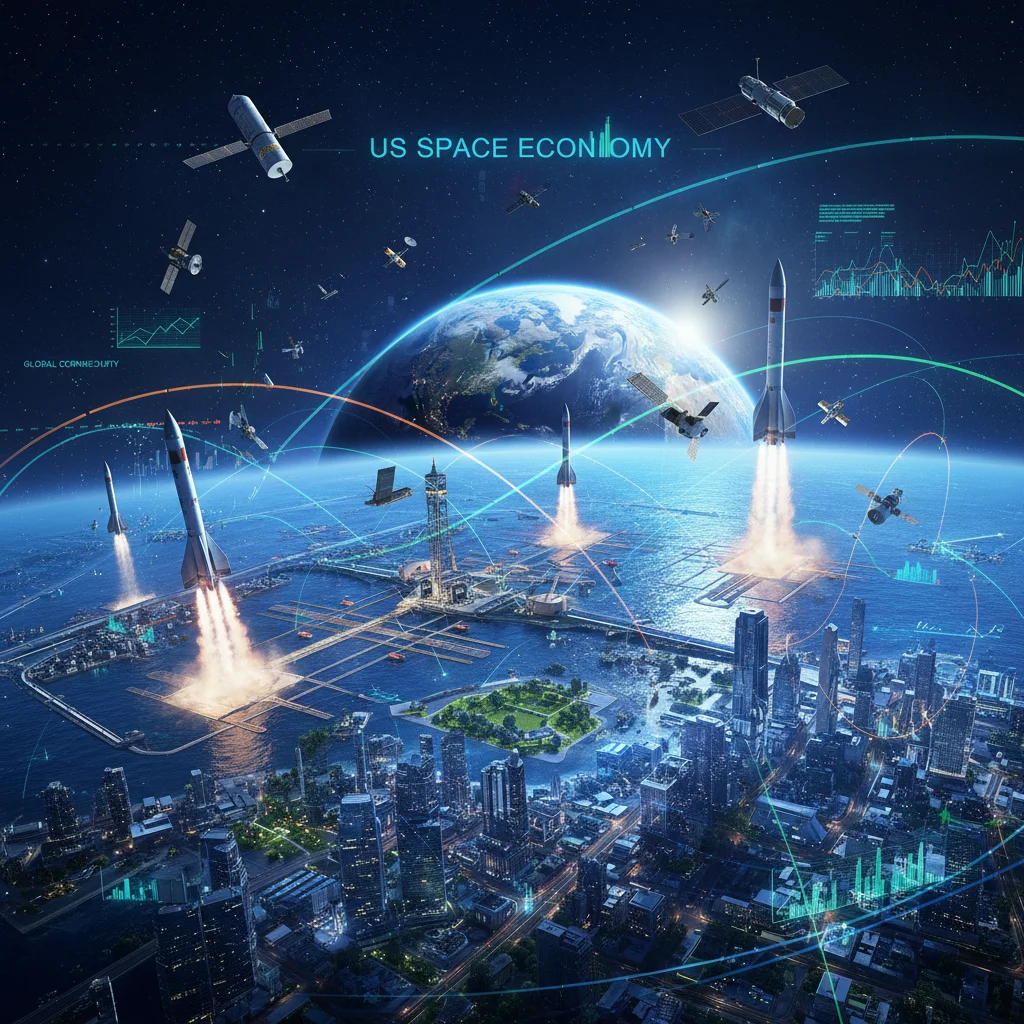
The cosmos, once the exclusive domain of government agencies and scientific endeavors, has rapidly transformed into a vibrant and burgeoning economic frontier. The US Space Economy, in particular, stands at the cusp of an extraordinary expansion, with projections indicating it could reach an astounding trillion-dollar valuation by 2030. This isn’t merely a speculative forecast; it’s a meticulously calculated trajectory based on an accelerating confluence of technological innovation, private sector investment, evolving policy frameworks, and an ever-increasing demand for space-derived services and products. This comprehensive analysis will delve deep into the multifaceted drivers powering this monumental growth, explore the key sectors poised for significant impact, and examine the challenges and opportunities that lie ahead for the US Space Economy.
The Astounding Growth Trajectory of the US Space Economy
For decades, space exploration was primarily a state-funded enterprise, driven by geopolitical competition and scientific curiosity. However, the last decade has witnessed a paradigm shift, largely spearheaded by the United States. The commercialization of space has unlocked unprecedented levels of private investment and entrepreneurial spirit, catalyzing rapid advancements and democratizing access to space. This transformation is not just about launching rockets; it’s about building an entire ecosystem that supports everything from satellite broadband to in-orbit manufacturing, lunar resource extraction, and even space tourism.
From Billions to Trillions: Understanding the Scale
Currently, the global space economy is valued at approximately $469 billion, with the US contributing a significant portion of this. Various analysts and consulting firms, including reputable names like Morgan Stanley and McKinsey & Company, have independently projected the global space market to exceed $1 trillion, and potentially even $3 trillion, by 2040. The US, with its foundational infrastructure, leading aerospace companies, robust venture capital ecosystem, and innovative startups, is expected to capture a substantial share of this growth, driving its own US Space Economy to the trillion-dollar mark well within the next decade.
This projected growth isn’t linear. It’s an exponential curve fueled by decreasing launch costs, miniaturization of technology, increased demand for data, and the emergence of entirely new space-based services. The shift from government-led monolithic projects to agile, privately funded ventures has drastically reduced development cycles and fostered a competitive environment that pushes the boundaries of what’s possible.
Key Drivers Propelling the US Space Economy Towards a Trillion-Dollar Future
Several interconnected factors are acting as powerful engines for the expansion of the US Space Economy. Understanding these drivers is crucial to appreciating the scale and scope of the impending boom.
1. Private Sector Investment and Entrepreneurship
Perhaps the most significant catalyst has been the influx of private capital. Companies like SpaceX, Blue Origin, and Rocket Lab, often funded by visionary entrepreneurs, have revolutionized access to space. They’ve introduced reusable rockets, significantly lowering launch costs and increasing launch frequency. This has, in turn, opened doors for thousands of other startups focused on downstream applications, satellite constellations, in-orbit services, and more. Venture capital funding in space tech has surged, indicating strong investor confidence in the long-term profitability of the sector.
2. Technological Advancements and Miniaturization
Breakthroughs in materials science, propulsion systems, artificial intelligence, and miniaturized electronics have made space technology more accessible and affordable. Small satellites (smallsats and CubeSats) can now perform tasks that once required massive, expensive spacecraft. This miniaturization has enabled the deployment of large constellations for global broadband internet (e.g., Starlink, Project Kuiper), Earth observation, and IoT connectivity, fundamentally changing how we interact with space. The development of advanced manufacturing techniques, including 3D printing in space, is further accelerating innovation.
3. Expanding Demand for Space-Based Services
The utility of space is no longer limited to national security and scientific research. Commercial and civilian demand for space-derived services is skyrocketing. This includes:
- Satellite Broadband: Providing high-speed internet to underserved areas globally.
- Earth Observation: Monitoring climate change, agricultural yields, urban expansion, and disaster response.
- GPS and Navigation: Essential for countless industries, from logistics to autonomous vehicles.
- Satellite Communications: Critical for remote operations, broadcasting, and military applications.
- In-Orbit Servicing and Manufacturing: Extending satellite lifespans, refueling, repairing, and even constructing structures in space.
4. Government Support and Policy Frameworks
While private enterprise leads the charge, government agencies like NASA, the Department of Defense, and the Department of Commerce play a crucial role. NASA, for instance, has shifted its focus to partnering with commercial entities for cargo and crew transport to the International Space Station (ISS) and for future lunar missions (Artemis Program). This public-private partnership model stimulates innovation, creates a stable market for services, and reduces the financial burden on taxpayers. Favorable regulatory environments and strategic investments in foundational technologies also bolster the US Space Economy.
5. Decreasing Costs of Access to Space
The advent of reusable rockets has been a game-changer. Companies like SpaceX have drastically reduced the cost per kilogram to orbit, making space accessible to a broader range of players, from academic institutions to small businesses. This cost reduction is a critical enabler for the proliferation of satellite constellations and the development of new space-based applications.
Sectors Poised for Explosive Growth in the US Space Economy
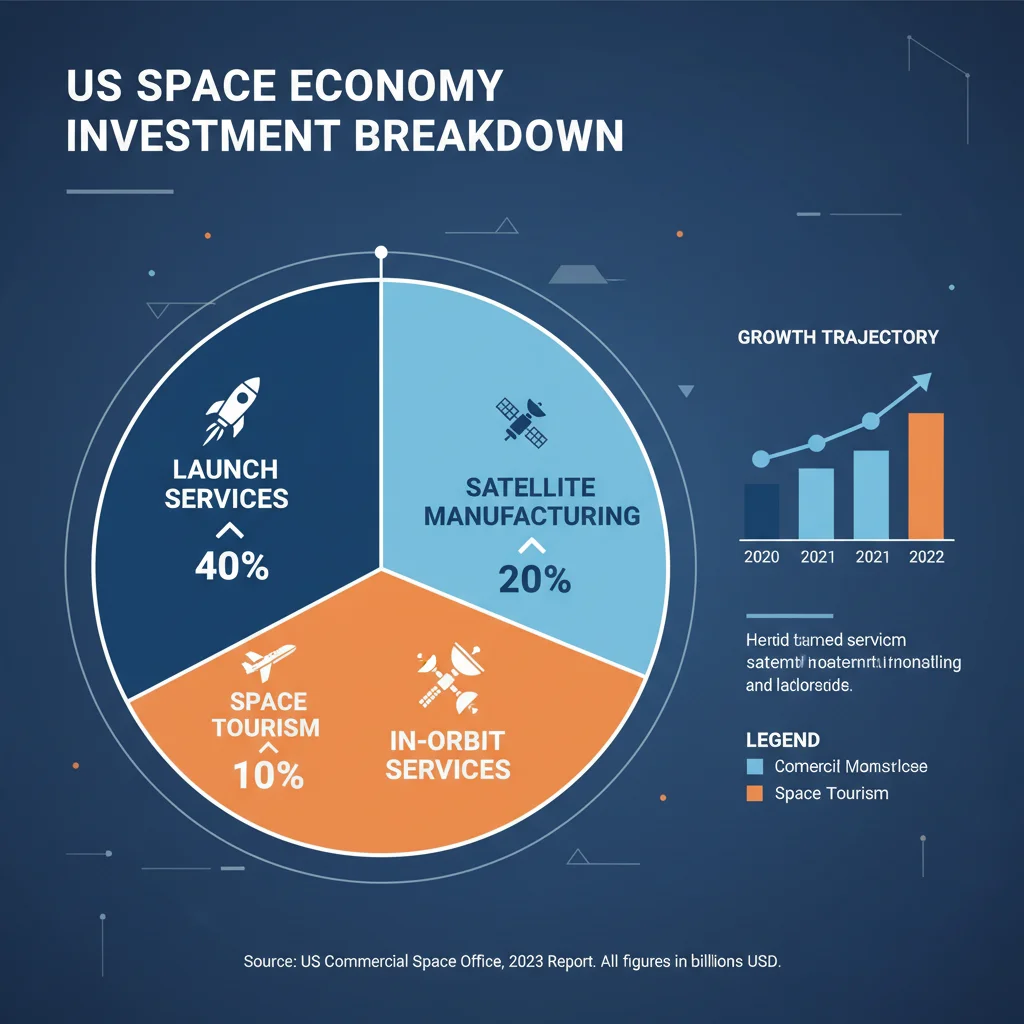
The trillion-dollar projection for the US Space Economy isn’t based on a single breakthrough but on the simultaneous expansion and innovation across multiple interconnected sectors. Here are some of the areas expected to see the most significant growth:
Launch Services
While dominated by a few key players, the demand for launch services continues to grow. New entrants and established companies are developing diverse launch vehicles, from heavy-lift rockets to smallsat launchers, catering to a wide array of payloads. Competition and technological advancements will continue to drive down costs and increase launch cadence, making this a foundational and expanding segment of the US Space Economy.
Satellite Manufacturing and Operations
The proliferation of satellite constellations, particularly for broadband internet and Earth observation, is fueling a boom in satellite manufacturing. Companies are innovating with modular designs, mass production techniques, and advanced materials to build thousands of satellites efficiently. Beyond manufacturing, the operational aspects, including ground stations, data processing, and constellation management, also represent a significant growth area.
Downstream Applications and Data Analytics
This is arguably where the most significant value creation will occur. Raw data from space is invaluable, but its true power lies in its analysis and application. Companies are developing sophisticated AI and machine learning algorithms to extract insights from satellite imagery, GPS data, and communication streams. These insights are then used across diverse industries, including agriculture (precision farming), finance (market intelligence), environmental monitoring, urban planning, and logistics. The downstream market is vast and continually expanding as new uses for space data are discovered.
In-Orbit Servicing, Assembly, and Manufacturing (ISAM)
ISAM represents a frontier that promises to revolutionize space operations. Imagine satellites that can be refueled, repaired, or upgraded in space, extending their operational lives and reducing space debris. Or the ability to assemble large structures, like telescopes or space stations, directly in orbit, bypassing the constraints of launch vehicle fairings. This sector is still nascent but holds immense potential for efficiency, sustainability, and entirely new capabilities within the US Space Economy.
Space Tourism and Human Spaceflight
While still a niche market, space tourism is gaining momentum with companies like Virgin Galactic and Blue Origin offering suborbital flights, and SpaceX planning orbital journeys. As costs decrease and safety records improve, this segment could attract a broader clientele. Beyond tourism, commercial human spaceflight for research, manufacturing, and future lunar/Martian exploration will also contribute significantly to the US Space Economy.
Lunar and Martian Economy
The long-term vision for the US Space Economy extends beyond Earth orbit. The Artemis program, aiming to return humans to the Moon and establish a sustained presence, is laying the groundwork for a lunar economy. This includes resource extraction (e.g., lunar ice for propellant), scientific research facilities, and potentially even space manufacturing using lunar materials. Similar ambitions exist for Mars, though on a longer timeline.
Challenges and Opportunities for the US Space Economy
While the trajectory towards a trillion-dollar US Space Economy is compelling, it’s not without its challenges. Addressing these will be critical for sustained growth.
Regulatory Frameworks and Space Traffic Management
The rapid increase in launches and satellite constellations necessitates robust regulatory frameworks. Ensuring safe operations, managing space traffic to prevent collisions, and addressing the growing problem of space debris are paramount. The US government is actively working on modernizing its regulatory approach to keep pace with innovation while maintaining international leadership in space governance.
Talent Gap and Workforce Development
The booming space industry requires a highly skilled workforce, from engineers and scientists to technicians and data analysts. There’s a growing concern about a potential talent gap. Investing in STEM education, vocational training, and fostering a diverse and inclusive workforce will be crucial to meet the demands of the expanding US Space Economy.
Cybersecurity in US Industries
As space assets become increasingly interconnected and vital to national infrastructure, cybersecurity becomes a critical concern. Protecting satellites, ground stations, and data links from malicious attacks is essential to ensure the reliability and resilience of space-based services. This will drive significant investment in space cybersecurity solutions.
Sustainable Space Practices
The long-term health of the space environment depends on sustainable practices. This includes designing satellites for deorbiting, developing technologies for active debris removal, and promoting responsible orbital usage. The US Space Economy has an opportunity to lead in establishing and adhering to these crucial environmental standards.
Global Competition and Collaboration
While the US leads in many aspects of the space economy, it operates within a global competitive landscape. Nations like China, Russia, and emerging space powers are also heavily investing in their space capabilities. International collaboration on scientific missions, regulatory harmonization, and market access will be vital for the continued growth and stability of the global, and by extension, the US Space Economy.
The Role of Innovation Hubs and Ecosystems
The concentration of talent, capital, and infrastructure in specific regions has created powerful innovation hubs that are driving the US Space Economy forward. Areas like California (Silicon Valley, Southern California aerospace corridor), Texas (Houston, Boca Chica), Florida (Space Coast), and Colorado (aerospace cluster) are hotbeds of activity. These ecosystems foster collaboration between startups, established aerospace giants, universities, and government research labs, accelerating the pace of innovation and commercialization.
Venture capital firms specializing in space tech are increasingly active, providing crucial funding for early-stage companies. Incubators and accelerators dedicated to space startups are also playing a vital role in nurturing new ideas and bringing them to market. This robust support system is a unique strength of the US Space Economy.
Looking Ahead: The Future of the US Space Economy
The journey to a trillion-dollar US Space Economy by 2030 is not merely about economic metrics; it represents a profound shift in human capabilities and our relationship with the cosmos. It signifies a future where space is not just a distant frontier but an integral part of our daily lives, driving innovation, creating jobs, and solving some of Earth’s most pressing challenges.
Imagine a world where global broadband internet is universally accessible, powered by vast satellite constellations. Picture advanced materials manufactured in the microgravity of space, leading to breakthroughs in industries from medicine to electronics. Envision a future where Earth’s resources are conserved through lunar mining, and humanity’s reach extends to permanent outposts on other celestial bodies.
The path forward requires continued investment in research and development, a commitment to fostering entrepreneurial spirit, and thoughtful policy-making that balances innovation with responsibility. The collaboration between government, industry, and academia will be paramount. As the US Space Economy expands, it will undoubtedly face new challenges, but the ingenuity and determination that have historically defined American space endeavors will be key to overcoming them.
Conclusion
The projection of a trillion-dollar US Space Economy by 2030 is ambitious, yet entirely plausible given the current trajectory and the confluence of powerful drivers. From the relentless innovation of private companies and the decreasing costs of launch to the burgeoning demand for space-based services and supportive government policies, all signs point to a transformative decade ahead. The challenges, though significant, are being actively addressed, paving the way for a future where space is fully integrated into our economic fabric. This expansion will not only generate immense wealth but will also push the boundaries of human knowledge and capability, solidifying the United States’ position as a leader in the final frontier.