
The relentless march of technological innovation continues to reshape the global job market, with the United States at the forefront of this transformation. As we look towards 2026, certain tech roles are not just growing; they are exploding, driven by advancements in artificial intelligence, big data, cloud computing, and cybersecurity. For individuals seeking to future-proof their careers or pivot into high-growth sectors, understanding these emerging opportunities and the skills required to seize them is paramount. This comprehensive guide delves into the top 4 in-demand tech roles projected to dominate the U.S. landscape by 2026, offering a roadmap for upskilling and career advancement.
The digital revolution isn’t just about new gadgets; it’s about entirely new ways of working, new industries, and new skill sets. The COVID-19 pandemic further accelerated digital adoption across all sectors, making tech proficiency more crucial than ever. Businesses are increasingly reliant on robust digital infrastructures, intelligent data analysis, and impenetrable security measures. This demand translates directly into a booming job market for specialized tech professionals. The key to navigating this evolving terrain lies in proactive learning and strategic upskilling.
The Evolving Landscape of Tech Employment
Before we dive into specific roles, it’s essential to grasp the broader shifts occurring in the tech employment landscape. Automation, while sometimes viewed with apprehension, is creating a wealth of new, higher-skilled jobs that focus on designing, implementing, and managing these automated systems. Artificial intelligence (AI) and machine learning (ML) are not just theoretical concepts; they are practical tools being deployed across industries, from healthcare to finance, fundamentally changing how decisions are made and services are delivered. Cloud computing has moved from a niche solution to the backbone of modern enterprise IT, demanding experts who can manage and optimize these complex distributed systems. Finally, the ever-present threat of cyberattacks means that cybersecurity professionals are no longer just an IT department’s concern but a strategic imperative for every organization.
Understanding these macro trends provides the context for why certain future tech roles are experiencing such significant growth. It’s not arbitrary; it’s a direct response to the technological challenges and opportunities of our time. For anyone considering a career in tech, or looking to advance within it, recognizing these foundational shifts is the first step towards informed decision-making.
1. Cybersecurity Analyst: Guardians of the Digital Frontier
In an increasingly interconnected world, the threat of cyberattacks looms larger than ever. From individual data breaches to nation-state sponsored espionage, the digital landscape is a constant battleground. This makes the role of a Cybersecurity Analyst not just important, but absolutely critical for businesses, governments, and individuals alike. As our reliance on digital infrastructure grows, so does the sophistication of cyber threats, driving an insatiable demand for skilled professionals who can protect sensitive information and systems.
What Does a Cybersecurity Analyst Do?
A Cybersecurity Analyst is responsible for protecting an organization’s computer systems and networks from cyber threats. Their duties are multifaceted and include:
- Monitoring Security Systems: Continuously watching for unusual activity or potential breaches.
- Incident Response: Investigating security incidents, containing threats, and recovering compromised data or systems.
- Vulnerability Assessments: Identifying weaknesses in systems and recommending solutions.
- Implementing Security Measures: Deploying firewalls, encryption, and other security tools.
- Developing Security Policies: Creating and enforcing protocols to ensure data integrity and confidentiality.
- Educating Staff: Training employees on best security practices.
Why is This Role In-Demand?
The demand for Cybersecurity Analysts is skyrocketing due to several factors:
- Escalating Cyber Threats: The volume and complexity of cyberattacks are constantly increasing.
- Regulatory Compliance: Strict data protection regulations (e.g., GDPR, CCPA) mandate robust security measures.
- Digital Transformation: More businesses are moving operations online and to the cloud, expanding their attack surface.
- Data Value: Data is the new oil, making its protection paramount.
The U.S. Bureau of Labor Statistics projects employment of information security analysts to grow 32 percent from 2022 to 2032, much faster than the average for all occupations. This translates to approximately 16,800 openings each year. This makes it one of the most promising future tech roles.
Key Skills for Aspiring Cybersecurity Analysts:
- Networking Fundamentals: Deep understanding of TCP/IP, routing, firewalls, and network protocols.
- Operating Systems: Proficiency in Windows, Linux, and macOS security.
- Programming Languages: Python, PowerShell, or Bash for scripting and automation.
- Security Tools: Experience with SIEM, IDS/IPS, vulnerability scanners, and penetration testing tools.
- Risk Management: Ability to identify, assess, and mitigate security risks.
- Analytical Thinking & Problem-Solving: Essential for investigating incidents and finding solutions.
- Communication Skills: To explain complex issues to non-technical stakeholders.
To upskill for this role, consider certifications like CompTIA Security+, Certified Ethical Hacker (CEH), or CISSP (for more experienced professionals). Online courses, bootcamps, and degree programs in cybersecurity are also excellent pathways.

2. Data Scientist: Unlocking Insights from Information Overload
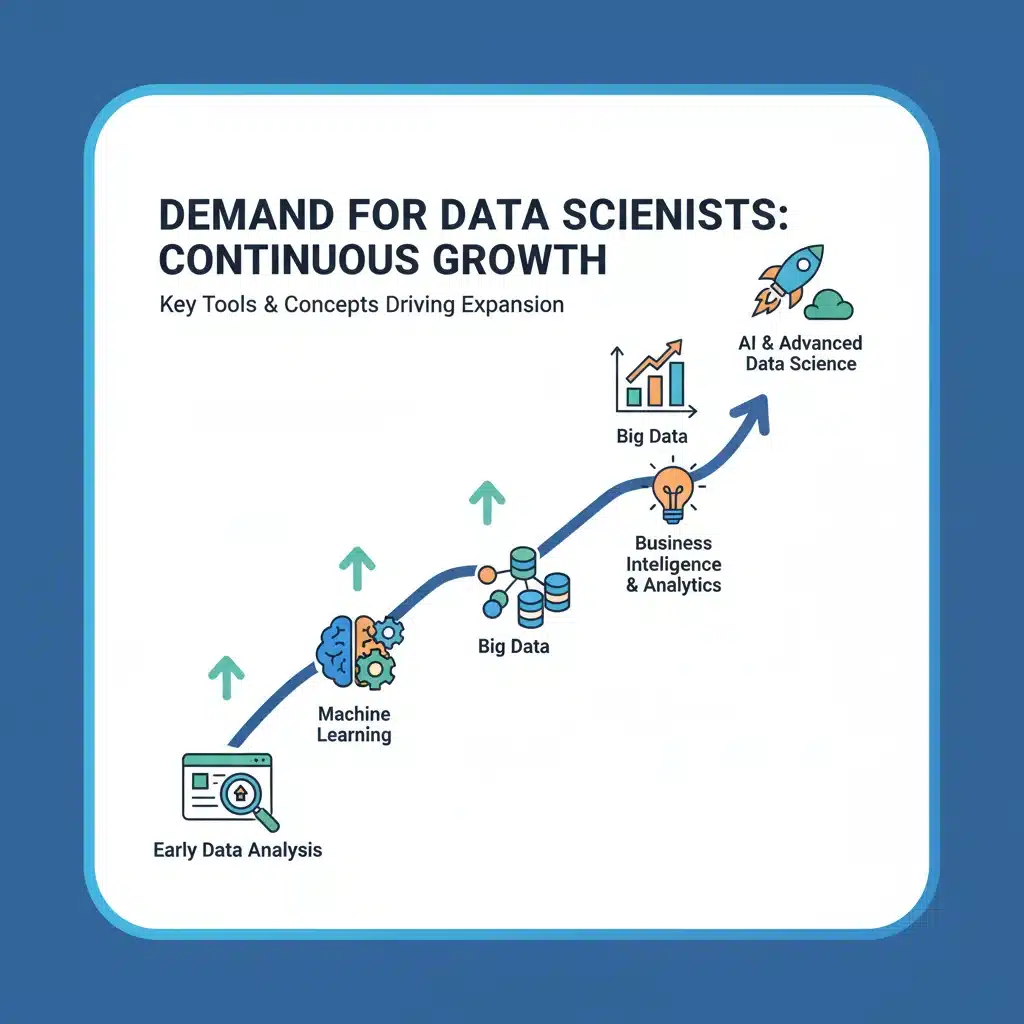
In an age of unprecedented data generation, Data Scientists are the alchemists who transform raw information into actionable insights. Every click, transaction, and interaction generates data, and businesses are eager to harness this wealth of information to make better decisions, predict trends, and gain competitive advantages. This makes Data Scientist one of the most critical future tech roles, pivotal for any data-driven organization.
What Does a Data Scientist Do?
A Data Scientist combines statistical knowledge, programming expertise, and domain understanding to extract meaningful patterns and insights from large datasets. Their responsibilities typically include:
- Data Collection & Cleaning: Sourcing, cleaning, and preparing data for analysis.
- Statistical Modeling: Applying statistical methods and machine learning algorithms to uncover trends.
- Predictive Analytics: Building models to forecast future outcomes and behaviors.
- Data Visualization: Presenting complex data findings in an understandable and compelling manner.
- Business Strategy: Translating data insights into practical recommendations for business growth.
Why is This Role In-Demand?
The demand for Data Scientists continues to surge due to:
- Big Data Explosion: The sheer volume of data being generated requires specialized skills to process and analyze.
- Competitive Advantage: Data-driven decisions lead to improved efficiency, customer satisfaction, and profitability.
- AI & Machine Learning Integration: Data scientists are crucial for developing and deploying AI/ML solutions.
- Industry Versatility: Applicable across almost all sectors, including healthcare, finance, retail, and tech.
The U.S. Bureau of Labor Statistics projects a 35 percent growth for data scientists from 2022 to 2032, resulting in about 17,700 new jobs each year. This rapid growth underscores its status as a top future tech role.
Key Skills for Aspiring Data Scientists:
- Programming Languages: Python (with libraries like Pandas, NumPy, Scikit-learn) and R are essential.
- Statistics & Mathematics: Strong foundation in probability, linear algebra, calculus, and statistical modeling.
- Machine Learning: Understanding of various algorithms (regression, classification, clustering, deep learning).
- Database Skills: SQL for querying and managing databases.
- Data Visualization Tools: Tableau, Power BI, Matplotlib, Seaborn for effective communication of insights.
- Domain Expertise: Understanding the business context to ask the right questions and interpret results accurately.
- Communication & Storytelling: Ability to explain complex findings to non-technical audiences.
To upskill, consider pursuing a Master’s degree in Data Science, Statistics, or Computer Science. Numerous online platforms offer specialized courses and bootcamps, and certifications from major tech companies can also enhance your resume.
3. AI/Machine Learning Engineer: Building Intelligent Systems
As artificial intelligence moves from research labs to practical applications, the need for skilled AI/Machine Learning Engineers has never been greater. These professionals are at the forefront of designing, building, and deploying intelligent systems that can learn from data, make predictions, and automate complex tasks. From recommending products to powering autonomous vehicles, AI/ML is transforming industries, making this one of the most exciting and impactful future tech roles.
What Does an AI/Machine Learning Engineer Do?
AI/ML Engineers bridge the gap between theoretical AI models and practical, scalable applications. Their core responsibilities include:
- Developing ML Models: Designing and training machine learning models using various algorithms and frameworks.
- Data Pipelining: Building robust data pipelines to feed data into models.
- Model Deployment: Integrating ML models into production systems and applications.
- Performance Optimization: Monitoring and optimizing the performance and efficiency of AI systems.
- Research & Experimentation: Staying updated with the latest AI research and experimenting with new techniques.
- Collaboration: Working closely with data scientists, software engineers, and product managers.
Why is This Role In-Demand?
The explosive growth of AI/ML applications across nearly every industry fuels the demand for these engineers:
- Automation & Efficiency: Businesses seek to automate repetitive tasks and optimize processes.
- Innovation: AI powers new products and services, from virtual assistants to predictive maintenance.
- Competitive Edge: Companies leveraging AI gain significant advantages in market intelligence and customer experience.
- Scalability: The ability to deploy AI at scale requires specialized engineering expertise.
While specific BLS data for ‘AI/Machine Learning Engineer’ is still emerging as a distinct category, it falls under the broader Computer and Information Research Scientists, which is projected to grow 23 percent from 2022 to 2032, much faster than the average for all occupations. Many roles also overlap with Software Developers, who are projected to grow 25 percent. This indicates a robust and growing market for these future tech roles.
Key Skills for Aspiring AI/Machine Learning Engineers:
- Programming Languages: Python is dominant, with strong knowledge of libraries like TensorFlow, PyTorch, Keras, and Scikit-learn.
- Mathematics & Statistics: Solid understanding of linear algebra, calculus, probability, and optimization.
- Machine Learning Algorithms: Deep knowledge of supervised, unsupervised, and reinforcement learning techniques.
- Data Structures & Algorithms: Strong computer science fundamentals.
- Cloud Platforms: Experience with AWS, Google Cloud, or Azure for deploying and managing AI services.
- Software Engineering Principles: Best practices for writing clean, maintainable, and scalable code.
- Problem-Solving: Ability to tackle complex, unstructured problems.
To upskill, consider advanced degrees in Computer Science or AI, specialized online courses from platforms like Coursera or Udacity, and hands-on projects to build a strong portfolio. Contributing to open-source AI projects can also be highly beneficial.
4. Cloud Architect/Engineer: Building the Digital Infrastructure
Cloud computing has revolutionized how businesses store data, run applications, and manage their IT infrastructure. No longer just a trend, it’s the standard. This shift has created an immense demand for Cloud Architects and Engineers – the masterminds who design, build, and maintain these complex cloud environments. As organizations increasingly migrate to and optimize their presence in the cloud, these future tech roles become indispensable.
What Does a Cloud Architect/Engineer Do?
Cloud Architects and Engineers are responsible for the entire lifecycle of an organization’s cloud infrastructure. Their duties include:
- Designing Cloud Solutions: Creating scalable, secure, and cost-effective cloud architectures (e.g., IaaS, PaaS, SaaS).
- Implementing & Deploying: Setting up and configuring cloud services (e.g., EC2, S3, Lambda on AWS; Azure VMs, Blob Storage; Google Compute Engine).
- Migration Strategy: Planning and executing the migration of on-premise applications and data to the cloud.
- Cost Optimization: Managing cloud spending and identifying areas for efficiency.
- Security & Compliance: Ensuring cloud environments meet security standards and regulatory requirements.
- Automation: Using tools like Terraform or CloudFormation for infrastructure as code (IaC).
- Troubleshooting: Resolving issues related to cloud infrastructure and services.
Why is This Role In-Demand?
The pervasive adoption of cloud technology is the primary driver:
- Scalability & Flexibility: Cloud allows businesses to scale resources up or down rapidly.
- Cost Efficiency: Reduces the need for expensive on-premise hardware and maintenance.
- Innovation Acceleration: Provides access to cutting-edge services (AI, ML, IoT) without heavy upfront investment.
- Disaster Recovery & Business Continuity: Enhanced resilience through cloud backup and recovery solutions.
While specific BLS data for ‘Cloud Architect/Engineer’ is not separately categorized, it falls under the broader category of Computer Network Architects, which is projected to grow 4 percent from 2022 to 2032. However, industry reports consistently show much higher demand and growth for cloud-specific roles, reflecting the specialized nature and critical importance of cloud expertise in today’s IT landscape. Many roles also overlap with Software Developers and Systems Administrators, both showing strong growth, further solidifying cloud roles as key future tech roles.
Key Skills for Aspiring Cloud Architects/Engineers:
- Cloud Platform Expertise: In-depth knowledge of at least one major cloud provider (AWS, Azure, Google Cloud).
- Networking: Understanding of cloud networking concepts (VPCs, subnets, VPNs, load balancers).
- Operating Systems: Proficiency in Linux and Windows server administration.
- Programming/Scripting: Python, PowerShell, or Bash for automation and scripting.
- Containerization: Experience with Docker and Kubernetes.
- Infrastructure as Code (IaC): Tools like Terraform, CloudFormation, or Ansible.
- Security: Knowledge of cloud security best practices and identity and access management (IAM).
- DevOps Principles: Understanding of CI/CD pipelines and agile methodologies.
To upskill, focus on obtaining certifications from major cloud providers (e.g., AWS Certified Solutions Architect, Azure Solutions Architect Expert, Google Cloud Professional Cloud Architect). Hands-on experience with cloud platforms through personal projects or internships is invaluable.
General Strategies for Upskilling in Tech
Regardless of which of these future tech roles you aspire to, the path to success involves continuous learning and strategic skill development. Here are some general strategies:
- Formal Education: Degrees in Computer Science, Data Science, or specialized Master’s programs provide a strong theoretical foundation.
- Online Courses & MOOCs: Platforms like Coursera, edX, Udacity, and Udemy offer specialized courses and professional certificates often developed by leading universities and tech companies.
- Bootcamps: Intensive, short-term programs designed to equip you with practical skills for specific tech roles.
- Certifications: Industry-recognized certifications (e.g., CompTIA, AWS, Azure, Google Cloud, CISSP) validate your expertise and are highly valued by employers.
- Hands-on Projects: Building a portfolio of personal projects demonstrates your ability to apply learned skills. This is often more important than formal qualifications for many tech roles.
- Networking: Connect with professionals in your desired field, attend tech meetups, and participate in online communities.
- Mentorship: Seek out experienced professionals who can guide your learning journey and offer career advice.
- Stay Updated: The tech landscape changes rapidly. Regularly read industry blogs, research papers, and news to stay abreast of new technologies and trends.
The investment in upskilling for future tech roles is an investment in your career longevity and earning potential. The demand for these specialized skills will only intensify, making now the opportune time to act.
Conclusion: Seizing the Future of Tech Employment
The U.S. job market of 2026 will be significantly shaped by the continuing evolution of technology. Cybersecurity Analysts, Data Scientists, AI/Machine Learning Engineers, and Cloud Architects/Engineers stand out as the top 4 in-demand tech roles, offering immense opportunities for career growth and impact. These roles are not just jobs; they are pivotal positions at the heart of innovation, driving progress across every sector.
For aspiring tech professionals and those looking to transition or advance their careers, the message is clear: proactive upskilling is not merely an advantage; it’s a necessity. By focusing on developing the core competencies for these future tech roles – whether through formal education, certifications, bootcamps, or self-directed learning – you can position yourself for a highly rewarding and future-proof career. The digital frontier is expanding, and with the right skills, you can be among those leading the charge.